Colour / Reading Time 7 1/2 mins Approx
Your brain doesn’t simply experience your life. It interprets it. And sometimes, the story it tells you is considerably more terrifying than the truth.
Imagine waking up tomorrow and discovering that the world hasn’t changed, but everything looks different.
Your job is the same. Your relationships are the same. Your bank balance is still doing that thing where it looks personally offended by your spending habits.
Yet somehow, the future seems less hopeless.
The awkward conversation wasn’t a catastrophe. That mistake wasn’t proof of your incompetence. And the person who didn’t reply to your message might actually be busy rather than secretly organising a committee dedicated to hating you.
Nothing changed.
Except the story.
Because your brain isn’t a security camera recording reality with admirable impartiality. It’s more like an overworked film director with a suspicious imagination, a questionable budget and an alarming fondness for psychological thrillers.
It takes what happens, fills in the gaps and hands you a version of events that feels absolutely, undeniably true. The problem?
Feeling true and being true are not the same thing.
And if you’ve been living inside a story that makes you feel powerless, inadequate or permanently one minor inconvenience away from a nervous breakdown, it might be time to question the director.
Your Brain Isn’t Showing You the Whole Picture
Let’s establish something important:
Your brain is not trying to ruin your life.
It’s trying to make sense of it.
Your brain is constantly interpreting information, drawing conclusions and looking for patterns.
But your brain doesn’t have unlimited time or information. It relies on past experiences, expectations, emotional states and mental shortcuts to help it decide what things mean.
Psychologists call one of these shortcuts Confirmation Bias: our tendency to favour information that supports what we already believe.
Suppose you’ve decided you’re terrible at your job.
You make a mistake? Evidence.
Your manager gives you constructive feedback? Evidence.
Your manager says you’ve done a good job? Suspicious. What are they after?
Meanwhile, the dozen things you handled competently have been quietly escorted from the courtroom.
Your brain has reached a verdict and is now collecting evidence to justify it.
This doesn’t mean every negative belief is false.
Sometimes there really is a problem.
Sometimes your manager is a nightmare.
Sometimes the job genuinely isn’t right for you.
But there’s a difference between examining the evidence and interpreting every event in a way that confirms your worst suspicions.
One helps you understand your circumstances.
The other turns your life into a courtroom drama in which you’re somehow always the guilty party.
When Your Inner Narrator Becomes the Villain
In Oculus, a supernatural horror film about a seemingly malevolent mirror, perception becomes a terrifying liability. Memories, expectations and present events become tangled until the characters struggle to establish what’s actually happening.
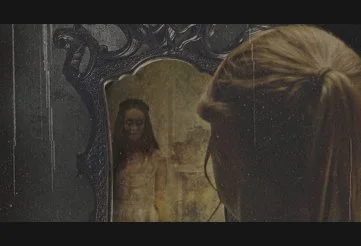
It’s an unsettling premise because it attacks something we generally take for granted: our ability to trust our own experience.
Our minds can distort interpretations in surprisingly ordinary ways.
You receive a short message from a friend. Your brain supplies the missing tone. They’re annoyed with you. You replay your last conversation, searching for the thing you might have said wrong. You consider whether you’ve been too needy, too distant, too much or not enough.
Within twenty minutes, you’ve constructed an elaborate emotional disaster from six words and a full stop.
Your friend, meanwhile, was standing in a supermarket queue.
This is how an interpretation can become a problem of its own. You react to what you believe is happening, and that reaction can create consequences that weren’t there in the first place.
You withdraw because you think someone is angry with you. They notice you’re distant and ask what’s wrong. You interpret their question as criticism and become defensive. Now there’s an actual uncomfortable interaction to worry about.
Your feelings are real. But the explanation your brain attaches to them still deserves examination.
Anxiety can make uncertainty feel dangerous.
Shame can make a mistake feel like a verdict on your character.
Exhaustion can make an ordinary problem look like the final collapse of civilisation.
That doesn’t mean ignoring your feelings. It means listening without automatically accepting their version of events as the complete truth.
Your inner narrator might have some useful information. It might also need to stop auditioning for the lead role in a psychological horror franchise.
The Stories You Tell Yourself Become the World You Live In
Consider Jacob’s Ladder, in which a Vietnam veteran experiences increasingly disturbing visions and struggles to make sense of what he’s seeing.
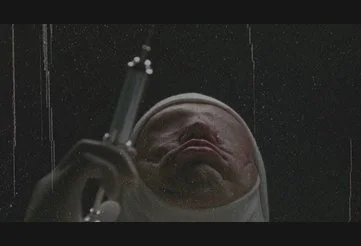
The film keeps you questioning what’s real, what’s a distortion and whether the explanation you’ve settled on can actually account for everything happening.
But we, too, construct explanations from incomplete information.
Imagine two people receiving exactly the same feedback at work. One thinks, I’ve got some things to learn. The other thinks, I’ve been exposed. Everyone now knows I’m incompetent.
Same feedback. Different interpretation.
The first person might ask questions, develop a skill and improve. The second might spend the next week avoiding their manager and interpreting every subsequent interaction as evidence that they’re about to be fired.
Their circumstances were identical at the beginning. Their responses weren’t.
If you believe you’re incapable of handling difficult situations, you may avoid them. Avoidance brings temporary relief, but it also prevents you from discovering that you might have managed perfectly well.
Over time, the absence of evidence that you can cope starts looking like evidence that you can’t.
The belief reinforces the behaviour. The behaviour reinforces the belief.
The same pattern appears in relationships, creativity, work and personal growth.
If you believe nobody takes you seriously, you might stop expressing your opinions.
If you believe you’re bad at making decisions, you might keep asking other people what you should do.
If you believe you’re too old to start something new, you might never discover whether that’s true.
Your perspective doesn’t control everything that happens to you. Life contains genuine limitations, unfairness, other people’s decisions and circumstances you cannot simply think your way out of.
But the meaning you attach to events can influence what you notice, how you respond and which possibilities you consider.
You have more influence over your next chapter than your worst assumptions would have you believe.
You Are Not Required to Believe Every Thought You Have
In They Live, a man discovers that special sunglasses reveal a hidden reality beneath the world around him. Ordinary advertising becomes propaganda, and familiar messages reveal a different purpose.

It’s a wonderfully unsubtle film about the difference between what we see and what might be happening underneath it.
What if some of the assumptions you’ve been living by deserve a closer look?
I’m terrible at this.
People always leave.
It’s too late for me.
I’ll never change.
Everyone else has their life together.
These thoughts can feel like observations. But they’re often conclusions built from selected experiences, old beliefs and a generous helping of emotional guesswork.
You don’t have to stand in front of the mirror declaring that you’re magnificent while your laundry develops its own ecosystem. You need a more balanced relationship with your thoughts.
Instead of asking, How do I make myself believe something positive? try asking: How do I know this is the whole truth?
If you think you’re terrible at something, what does the evidence actually show? Are you genuinely incapable, or are you inexperienced? Have you failed every time, or are you remembering the failures more vividly than the successes?
If you think someone dislikes you, what have they actually done? Are you responding to their behaviour, or filling in the gaps with a fear you’ve carried for years?
If you believe you’ve missed your chance, is that an established fact or a prediction about a future that hasn’t happened yet?
You don’t need to prove the opposite is true. You only need to recognise that your first interpretation isn’t necessarily the only interpretation available.
That’s not denial. It’s intellectual honesty.
And frankly, it’s a much better use of your brain than spending three hours mentally prosecuting yourself for an interaction nobody else remembers.
How to Change Your Perspective Without Pretending Everything is Fine
Perspective isn’t about slapping a cheerful filter over reality and insisting the burning building has excellent natural lighting.
Some situations are genuinely difficult, and you don’t have to manufacture a silver lining.
You do, however, have the option of looking at a situation from more than one angle.
1. Separate What Happened From What You Think it Means
When something upsets you, write down the event as plainly as possible.
Your colleague didn’t acknowledge you in the corridor - that’s the event.
They think I’m incompetent. Everyone at work secretly dislikes me - those are interpretations.
The point is to distinguish what you know from what you’ve inferred.
Ask yourself:
What actually happened?
What am I assuming it means?
What information am I missing?
Is there another plausible explanation?
You don’t need to invent a happy ending. You just need to stop treating an unverified theory as a confirmed fact.
2. Look for the Evidence Your Current Story Keeps Ignoring
If your brain insists you’re a failure, don’t immediately argue that you’re a spectacular success. Investigate.
What have you managed, learned, survived or improved? Where have you made progress that you’ve dismissed because it wasn’t dramatic enough?
Equally, if you’re convinced a situation is entirely someone else’s fault, consider whether there might be anything you could do differently.
Your brain is very good at spotting whatever you’ve instructed it to look for. Give it a slightly more useful assignment.
3. Ask What Changes If you Interpret the Situation Differently?
Imagine you’re struggling with a project.
One interpretation is: I’m not capable of doing this. Another is: I haven’t worked out how to do this yet. Neither guarantees success. But they suggest different next steps.
The first encourages you to give up or hide. The second leaves room to ask for help, break the task down, learn something new or decide that the project isn’t right for you.
That’s the practical value of perspective. It doesn’t magically change reality. It can change the options you see within it.
And sometimes, that’s enough to get you moving again.
You Don’t Have to Live Inside the First Version of the Story
There’s a particular kind of freedom in realising that you can question your own interpretation without invalidating your experience.
You can look at a life that isn’t working and consider whether the problem is as permanent, personal or hopeless as you’ve been telling yourself.
Or perhaps the situation really is as difficult as you think it is. That’s possible, too.
Changing your perspective doesn’t mean choosing the most comforting explanation. It means being willing to consider the most accurate one, even when it isn’t the one you started with.
Because the goal isn’t to convince yourself that everything is fine.
It’s to stop making things harder by assuming the worst before you have all the information.
You don’t have to believe every scene.
You can pause. Look again. Ask a better question.
You can decide that the story needs another draft.
And perhaps that’s the most useful thing to remember when life starts looking particularly dark:
You are experiencing your life. You are also interpreting it. Those are not always the same thing.
So the next time your mind presents you with a terrifying conclusion, don’t immediately accept the verdict.
Turn the lights on.
Check the evidence.
And for the love of all things unsettling, make sure you’re not mistaking the shadow on the wall for the monster itself.
DID THIS ONE SPEAK TO YOU? HEART IT.


IN ODD WE TRUST Presents
A FIELD NOTES FROM THE DARK Production
Starring YOU, the protagonist in your own psychological thriller
Produced by A LIFETIME OF QUESTIONABLE DECISIONS
Directed by EXISTENTIAL DREAD Story by THAT VOICE IN YOUR HEAD AT 3AM
Costume Design WE’RE ALL MAD HERE TEE Music by DISSONANT SYNTH and REGRET
Feeling seen? You Belong with us, Join THE CULT OF ODD Your backstage pass to PSYCHOLOGICAL
SURVIVAL GUIDES, HORROR COPING RITUALS and EMOTIONALLY UNSTABLE T-SHIRTS