Who’s Coming to Save Me? The Burnout of Being the Responsible One

Colour / Reading Time 7 mins Approx
At some point you stop asking for help and start wondering why no one notices you need it. You’re capable. Reliable. Calm in a crisis. And quietly exhausted in a way that doesn’t look dramatic enough to deserve rescue. Welcome to the burnout of being the responsible one — where you hold everyone else together while slowly unraveling offscreen.
There’s a specific kind of exhaustion that doesn’t come from doing too much. It comes from being the one who always handles it.
The one who remembers.
The one who plans.
The one who stays calm.
The one who doesn’t fall apart because everyone else already is.
You don’t scream.
You don’t spiral.
You don’t “lose it.”
You adapt.
And that’s exactly why no one comes to save you. Because in every group, family, workplace, and relationship, there’s an unspoken rule: The responsible one doesn’t need help.
They are the help.
And horror movies? They know this character well.
The Responsible One Is the First to Be Sacrificed
Let’s be honest — responsibility is rarely rewarded with care. It’s rewarded with more responsibility.
You become the default:
Problem solver
Emotional container
Backup plan
Voice of reason
Emergency contact
You don’t volunteer. You’re assigned. Because you’re capable. Which is how you slowly become invisible.
In horror, this character is never the one people worry about. They’re the one holding the flashlight while everyone else panics.
Horror Movie Lesson #1: The Caretaker Is Always Left Alone

In Rosemary’s Baby, Rosemary isn’t hysterical.
She isn’t dramatic.
She isn’t “difficult.”
She’s polite. Reasonable. Accommodating.
And that’s why no one believes her. Her needs are minimised. Her instincts dismissed. Her exhaustion reframed as nerves.
Sound familiar?
The responsible one doesn’t get protected — they get managed.
“You’re strong.”
“You can handle it.”
“You always do.”
Which is just a nicer way of saying: We’re comfortable not showing up for you.
You Become the Adult in Every Room (Even When You’re Not Okay)
Somewhere along the line, you became the emotional adult.
Maybe it was childhood.
Maybe it was trauma.
Maybe it was necessity.
But now?
You’re the one who:
Doesn’t lose their temper
Doesn’t fall apart publicly
Doesn’t need reassurance (apparently)
So everyone relaxes. But you don’t. Because being the adult means you never get to stop. Being the adult doesn’t mean being wise. It means being useful.
It means reading the room faster than everyone else. Anticipating emotional weather. Adjusting your tone so others stay comfortable.
You learn to swallow reactions mid-sentence. You learn which truths are “too much.” You learn that your feelings can wait — indefinitely.
And the cost of this emotional adulthood? You don’t get witnesses.
No one sees the effort it takes to stay regulated when you’re exhausted. No one applauds the internal restraint. No one notices the grief you’ve been carrying quietly because you didn’t want to add to the pile.
So you become emotionally fluent and relationally alone. That’s not maturity.
That’s survival dressed up as virtue.
Being Responsible Means You Don’t Get a Breakdown Arc
Here’s the cruel part. People rally around breakdowns. They show up when someone collapses spectacularly. They intervene when there’s chaos.
But quiet burnout? That gets ignored.
You’re still functioning.
Still answering emails.
Still showing up.
So clearly you’re fine. Right?
The responsible one never gets the cinematic collapse.
No sobbing on the kitchen floor with swelling violins.
No dramatic intervention.
No sudden clarity from others.
Your breakdown happens in fragments:
Forgetting words mid-sentence
Crying at nothing
Fantasising about disappearing into a hotel room alone
It’s subtle enough to be dismissed. Persistent enough to be dangerous. And because you’re still “functioning,” people assume you’re coping.
Functioning, by the way, is not the same as living. It just means the lights are on.
Horror Movie Lesson #2: Survival ≠ Being Saved
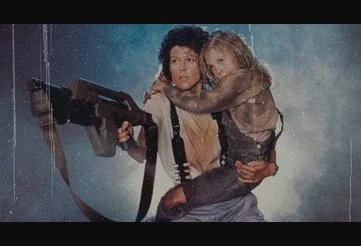
In Aliens, Ripley survives because she’s competent.
She follows protocol.
She stays alert.
She keeps everyone else alive.
But notice something important: No one comes to save her.
She saves herself — alone, exhausted, and changed.
The responsible one doesn’t get rescued. They get survival mode. And survival mode is not the same thing as support.
You’re Not Selfless — You’re Conditioned
Let’s clear this up gently but firmly. You’re not “just like this.” You were trained.
Trained to:
Stay composed
Anticipate needs
De-escalate situations
Carry emotional weight quietly
Responsibility isn’t a personality trait. It’s often a trauma response wearing a cardigan. And it’s damn exhausting.
No one is born knowing how to disappear for the sake of harmony. That skill is taught. It’s learned in environments where chaos existed and someone had to stay calm. Where emotional volatility punished honesty. Where being “easy” felt safer than being real.
Responsibility becomes your armour. Competence becomes your camouflage. And the longer you wear it, the harder it is to remember what you’re like without it.
You stop asking: What do I want? What do I need? Because those questions feel indulgent — or worse — destabilising.
You Become the Emergency Exit Everyone Else Uses
Here’s how it works.
Someone else panics — you stabilise.
Someone else forgets — you remember.
Someone else drops the ball — you catch it.
Which means you never get to drop yours. Because what would happen if you did?
Everything.
And that’s terrifying.
Horror Movie Lesson #3: The House Doesn’t Collapse — It Leans on You
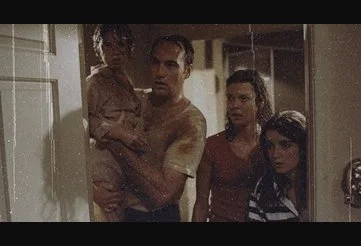
In Poltergeist, the house doesn’t just haunt the family. It uses them.
The haunting escalates because the structure itself is unstable — and the family keeps trying to hold it together.
That’s responsibility burnout in a nutshell.
You’re not overwhelmed because you’re weak. You’re overwhelmed because you’re being used as structural support for systems that should’ve collapsed already.
The Lie of “If I Stop, Everything Falls Apart”
This belief keeps you trapped.
“If I don’t do it, no one will.”
“If I step back, things will get worse.”
“I can’t afford to rest.”
But here’s the truth no one tells the responsible one: If everything depends on you, something is already broken. And it’s not you.
What happens when the responsible one stops?
Things wobble.
People panic.
Systems reveal cracks.
And that’s not your fault. That’s proof you were carrying too much.
You Don’t Ask for Help Because You’re Afraid It Won’t Come
Let’s talk about the real fear. It’s not that you don’t need help. It’s that you’re terrified to ask and be met with:
Silence
Minimisation
“You’re fine though”
So you stop asking.
You stop expecting.
You stop hoping.
And that’s when burnout becomes grief.
The question you’re afraid to ask out loud: “Who’s coming to save me?” And the scarier follow-up: “What if the answer is… no one?”
That realisation hurts in a very specific way. Because you don’t want a hero. You just want someone to notice you’re drowning while smiling.
Why No One Notices You’re Struggling
You’re never bad enough for intervention.
You’re not crying at work.
You’re not missing deadlines.
You’re not imploding.
You’re just… hollowed out. Which means your pain never triggers alarms. It just echoes.
Here’s the most brutal truth of all: People don’t ignore your burnout out of cruelty. They ignore it because you’ve taught them how.
You’ve shown them that you’ll keep going.
That you won’t complain.
That you’ll figure it out.
And humans — even good ones — follow patterns. If nothing appears broken, they assume nothing needs fixing. Which means the responsible one doesn’t get checked on — they get depended on.
Again.
And again.
And again.
Until the question shifts from “Who’s coming to save me?” to “How did this become my entire life?”
Responsibility makes you emotionally low-maintenance (which is a trap).
You don’t complain.
You don’t demand.
You don’t “need much.”
Which makes you easy to overlook. People assume you’re good because you don’t take up space. But low-maintenance people still need care. They just don’t know how to ask without feeling like a burden.
Responsibility Turns Into Resentment (Then Shame)
First, you’re proud of being reliable.
Then you’re tired.
Then you’re resentful.
Then you feel guilty for being resentful.
And now you’re exhausted and ashamed.
A perfect emotional trap.
You Start Fantasising About Disappearing (Not Dying — Just Resting)
This is important. Burnout fantasies aren’t always dramatic.
Sometimes they’re quiet:
Running away
Getting sick enough to rest
A “minor emergency” that forces someone else to step in
That’s not a death wish. That’s a rescue wish. Let’s sit with this one longer. These fantasies aren’t violent. They’re gentle.
You imagine:
A quiet illness that forces rest
A cancelled obligation that no one argues with
A version of you who doesn’t answer the phone
That’s not weakness. That’s your nervous system asking for mercy in the only language it has left.
When the body can’t stop, the mind dreams of escape. And if no one is coming to save you, your imagination tries to do the job instead.
You Don’t Need Saving — You Need Redistribution
Here’s the reframe. You don’t need someone to swoop in dramatically.
You need:
Less weight
Shared responsibility
Fewer unspoken expectations
Rescue isn’t always a person.
Sometimes it’s a boundary.
Sometimes it’s letting something fail.
Sometimes it’s choosing disappointment over depletion.
You don’t need to be rescued like a damsel or dude in distress. You need the load shifted.
You need:
Fewer emotional roles
Clearer boundaries
Less silent expectation
You need to stop being the glue. Because glue doesn’t get held. It just gets used until it dries out.
Let things wobble. Let someone else be uncomfortable. Let a system reveal its flaws. That discomfort is not failure. It’s honesty.
The Real Horror Isn’t That No One Saves You
It’s that you were never supposed to save everyone else. Responsibility burnout isn’t noble. It’s unsustainable.
And horror movies don’t glorify the character who sacrifices themselves quietly. They warn us about them.
The truth is, you’re allowed to be held too.
You don’t need to earn rest by breaking.
You don’t need to collapse to deserve care.
You don’t need to be the strongest person in the room forever.
If you’re waiting for someone to save you, maybe this is the moment you stop being the only one holding everything together.
Not because you failed. But because you’re human. And even the most capable survivors deserve backup.
Final Thought: The Responsible One Is Allowed to Step Out of the Fire
Here’s the truth no one tells the responsible one: You don’t need to be saved — but you do need to stop sacrificing yourself quietly and calling it strength.
You are allowed to disappoint people who benefit from your endurance.
You are allowed to rest before you break.
You are allowed to stop being the emotional infrastructure of everyone else’s life.
If no one is coming to save you, maybe that’s the moment you stop standing in the doorway holding everything open.
Step aside.
Let the noise happen.
Let the illusion crack.
Because the most radical thing the responsible one can do isn’t collapsing dramatically.
It’s choosing — calmly, deliberately — to put the weight down.
And to walk away intact.
If this feels familiar, there’s a small guide here.


IN ODD WE TRUST Presents
A FIELD NOTES FROM THE DARK Production
Starring YOU, the protagonist in your own psychological thriller
Produced by A LIFETIME OF QUESTIONABLE DECISIONS
Directed by EXISTENTIAL DREAD Story by THAT VOICE IN YOUR HEAD AT 3AM
Costume Design WELCOME TO MY NIGHTMARE TEE Music by DISSONANT SYNTH and REGRET
Feeling seen? You Belong with us, Join THE CULT OF ODD Your backstage pass to PSYCHOLOGICAL
SURVIVAL GUIDES, HORROR COPING RITUALS and EMOTIONALLY UNSTABLE T-SHIRTS