10 Brutal Life Lessons The Shining Taught Us (Whether You Asked for Them or Not)
Colour / Reading Time 7 mins Approx
There’s a reason The Shining crawls under your skin and refuses to leave, long after the credits roll and the blood elevator has receded back into cinematic legend…
It’s not just fear. It’s recognition.
Most horror movies let you distance yourself from the terror. You can say, Well, I’d never go into the basement, or I wouldn’t read the cursed book, or Why don’t they just leave?
The Shining doesn’t give you that luxury.
Because the Overlook Hotel doesn’t look like a nightmare at first. It looks like a job opportunity. A fresh start. A quiet place to finally focus. A promise that this time things will be different. And that’s the real trick — the way dysfunction often arrives dressed as responsibility, ambition, or “doing the right thing.”
Which is why this film hits harder the older you get. As a kid, it’s scary. As an adult, it’s confrontational. Suddenly, Jack Torrance isn’t a monster — he’s a warning label.
Let’s just say it: The Shining isn’t just a horror movie. It’s a psychological mirror. A cautionary tale wrapped in axe blades, ghost bartenders, and a whole lotta bad energy. It’s what happens when cabin fever meets suppressed rage meets “I’m a writer, I swear!”
But here’s the twist: buried beneath the haunted hotel vibes and “REDRUM” chants are ten juicy, uncomfortable, weirdly relatable life lessons. Think of it as your horror-themed self-help crash course. Only instead of journal prompts, you get twin girls in a hallway and Jack Nicholson losing his damn mind.
Let’s unpack the madness, shall we?
1. Isolation Will F*ck You Up
Say it with me: solitude is not therapy. You can’t just drag your dysfunction into the mountains and expect inner peace. That’s not healing. That’s just you, your ego, and a typewriter slowly driving you off the deep end.
Jack Torrance thought he needed space to write. What he needed was a damn therapist. But instead, he got a haunted hotel, emotional repression, and weeks of unchecked cabin fever. Lesson? If you’re already spiralling, being alone with your thoughts is not always the reset button. It’s a loading screen for madness.
There’s also something deeply modern about Jack’s isolation. Today, we don’t need snowstorms to trap us — we do it voluntarily. We work from home. We retreat into routines. We convince ourselves that cutting people off will make us more focused, more productive, more “at peace.”
But isolation without emotional honesty doesn’t create clarity. It creates echo chambers. And eventually, the only voice left is the loudest, angriest one in your head.
The Overlook didn’t corrupt Jack. It gave his worst thoughts a microphone.
2. Trust Your Gut — Or Your Psychic Kid
Little Danny wasn’t just having a rough childhood. He was literally tuned into the spiritual AM station. And what did his parents do? They waved it off as imagination.
Here’s the life lesson: instincts are real. Whether it’s your inner voice, your gut, or your five-year-old son warning you with his creepy finger friend, don’t gaslight your intuition. Trust it. It’s there to save your ass.
Danny’s “shining” is also a metaphor for sensitivity — something society loves to shame out of people, especially children. Being perceptive gets labeled as dramatic. Emotional awareness gets dismissed as weakness. And yet, those are often the people who sense danger first.
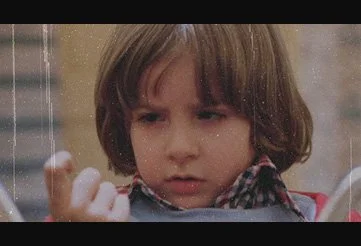
The tragedy isn’t that Danny sees too much. It’s that no one wants to believe him.
How many times have you ignored your own discomfort because it wasn’t “logical enough”? How many red flags did you explain away because you didn’t want to seem difficult?
Intuition isn’t irrational. It’s information you haven’t translated yet.
3. All Work and No Play Makes You Psychotic
This one’s obvious. But real.
Burnout isn’t a badge of honour. It’s a prequel to an axe-wielding breakdown. Jack didn’t just lose his job or his mind — he lost all sense of reality. Why? Because he was drowning in pressure, perfectionism, and a creeping sense of failure he wouldn’t name.
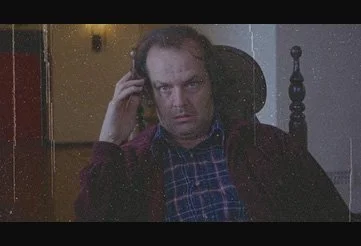
Work without rest, without joy, without boundaries, doesn’t make you successful. It makes you dangerous. Even if only to yourself.
Jack’s typewriter is another quiet villain in the story. It becomes a symbol of obsession — of tying your entire identity to output. To results. To proving something at any cost. And that’s painfully relatable in a culture that worships productivity.
When rest feels guilty.
When downtime feels dangerous.
When stopping feels like failure.
Burnout doesn’t always look like collapse. Sometimes it looks like fixation. Tunnel vision. The inability to imagine life outside the grind.
The scariest part? Jack thinks he’s being responsible.
4. Hotels Remember Everything — And So Do You
The Overlook Hotel is basically one big trauma sponge. It’s soaked up decades of violence, secrets, and psychotic meltdowns, and guess what? You have one of those too. It’s called a subconscious.
You can redecorate your life all you want, but the emotional blood stains don’t just disappear. You have to confront them. Or they show up like a rotting woman in Room 237.
The Overlook doesn’t just remember trauma — it preserves it. Polishes it. Romanticises it. That’s why the ghosts are dressed so elegantly. That’s why the past looks seductive.
Trauma often masquerades as nostalgia. As “the good old days.” As stories we repeat without questioning who got hurt along the way. Healing doesn’t mean erasing the past. It means refusing to let it run the building.
5. Not Everything That Glitters Is Gold
Sometimes it’s a 1920s ghost party full of literal demons.
Jack thought he was getting respect, success, and vintage vibes. What he got was manipulation, madness, and ghosts in tuxedos. Just because something feels good doesn’t mean it’s safe. Translation? Glamour is a liar. Nostalgia is a trap. And the past has fangs.
There’s a reason the ghosts appeal to Jack’s ego. They don’t challenge him. They don’t ask for accountability. They tell him he deserves more.
Be wary of anything — or anyone — who flatters you out of self-reflection. Real growth is rarely glamorous. It’s awkward. Humbling. Often boring. And it usually doesn’t come with jazz music and free drinks.
6. Alcohol Might Not Be Your Friend

Fun fact: when you’re chatting up a bartender who’s been dead for decades, maybe it’s time to re-evaluate your relationship with booze.
Jack’s alcoholism wasn’t just a subplot — it was the gas that lit the match. And whether your vice is whiskey, validation, or avoidance, the result is the same: self-destruction in slow motion.
What makes Jack’s drinking so unsettling is how normalised it is — even to him. He doesn’t see it as a problem. He sees it as a coping mechanism. And that’s how most destructive habits survive. They sneak in under the banner of survival.
“I need this to relax.”
“I deserve this.”
“It’s not that bad.”
Until it is.
The Overlook doesn’t force Jack to drink. It simply removes the barriers that once kept him from spiralling.
7. The Real Horror Is Generational Dysfunction
Yes, the ghosts are scary. But scarier? Watching how inherited trauma festers.
Jack didn’t just snap. He followed a pattern. Violence. Silence. Denial. Passed down like some twisted heirloom. Danny’s powers weren’t just supernatural; they were symptoms. Kids feel it all, even what you won’t say out loud.
Break the cycle, or it breaks you.
Danny’s trauma response isn’t violent — it’s hyper-awareness. He watches. He listens. He adapts.
Children raised in volatile environments often develop emotional radar. They learn to read rooms the way others read books. It keeps them safe — but it costs them peace.
Breaking generational cycles doesn’t just mean “being better.” It means being honest about what you inherited and choosing not to pass it on.
8. Your Partner’s “Creative Retreat” Might Be Hell in Disguise
Wendy signed up to support Jack’s writing dream. She ended up locked in a haunted hotel while her husband tried to kill her.
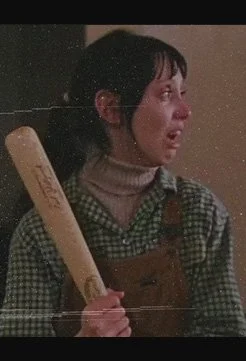
Just because someone says they’re “working on themselves” doesn’t mean you’re obligated to be their emotional punching bag. If love comes with dread, danger, or daily terror, it’s not love. It’s a death trap.
Wendy’s character is often misunderstood. She’s framed as weak, hysterical, annoying. But look closer.
She adapts. She survives. She protects her child under extreme psychological pressure. She doesn’t romanticise Jack’s suffering — she responds to reality.
Strength doesn’t always roar. Sometimes it trembles and keeps going anyway.
9. Hallways Are Never Just Hallways
Ever notice how Jack just keeps walking in circles? Hallways, mazes, dead ends. That’s not just creepy cinematography. That’s a metaphor for being stuck. Repetition. Routine. Madness disguised as movement. You think you’re getting somewhere but you’re just running laps around your own dysfunction.
Wake up. Break the loop.
The hedge maze mirrors the interior maze Jack is already lost inside. That’s the genius of it.
You can be trapped without bars.
Lost without leaving home.
Running without moving forward.
Routine becomes dangerous when it replaces reflection.
If every day feels the same and nothing is changing, it’s not because you haven’t tried hard enough — it’s because the pattern itself needs breaking.
The Overlook Hotel teaches a brutal lesson: stay trapped in the same environment, the same thoughts, and the same routines for long enough, and they start to feel normal.
If you’ve ever wondered whether your own life has become a kind of psychological Overlook Hotel, read Redrum Your Routine.
10. Run. Even If You’re Barefoot in the Snow.
Wendy didn’t reason with Jack. She didn’t make excuses. She fought, protected her kid, and RAN.
Sometimes survival looks messy, irrational, desperate. Good. That means it’s working. You don’t owe explanations to monsters. You owe yourself a damn exit strategy.
The Overlook Hotel doesn’t hunt people randomly. It feeds on cracks. On exhaustion. On resentment. On people who refuse to look at themselves too closely.
That’s why The Shining endures. Not because it scares us — but because it recognises us.
It asks an uncomfortable question:
What happens if you don’t listen to your inner warning signs?
What happens if you keep going “just a little longer”?
What happens if you mistake endurance for strength?
Every horror movie leaves clues. The Shining left an entire survival manual hidden between the blood elevators and hedge mazes.
If you’re interested in the broader lessons hidden inside Kubrick’s nightmare, continue your investigation with 10 Brutal Life Lessons The Shining Taught Us.
Final Thought:
The Shining isn’t about ghosts.
It’s about you. Your patterns. Your pressure. Your unspoken demons. It’s about what happens when you don’t listen to your inner scream until it turns into an axe through the bathroom door.
So take this as your haunted wake-up call: You don’t need to be perfect. You don’t need to be fearless. You just need to recognise when you’re halfway to the Overlook and turn the damn snowcat around.
Because baby? If The Shining teaches us anything, it’s this:
You don’t have to become the monster just because the walls are closing in.
You’re allowed to stop.
You’re allowed to leave.
And you’re definitely allowed to rewrite the ending.
The Overlook Hotel didn’t change Jack overnight.
Most transformations happen slowly. So does losing yourself.
This Doesn’t Feel Like Me is a guide for finding your way back.


IN ODD WE TRUST Presents
A FIELD NOTES FROM THE DARK Production
Starring YOU, the protagonist in your own psychological thriller
Produced by A LIFETIME OF QUESTIONABLE DECISIONS
Directed by EXISTENTIAL DREAD Story by THAT VOICE IN YOUR HEAD AT 3AM
Costume Design FRAGILE LIKE A BOMB TEE Music by DISSONANT SYNTH and REGRET
Feeling seen? You Belong with us, Join THE CULT OF ODD Your backstage pass to PSYCHOLOGICAL
SURVIVAL GUIDES, HORROR COPING RITUALS and EMOTIONALLY UNSTABLE T-SHIRTS