How Horror Movies Help You Deal With Real Life: The Psychology Behind Why Horror Heals
Colour / Reading Time 8 mins Approx
“Most people spend their lives trying to avoid fear. Horror fans buy popcorn and invite it in.”
That sounds slightly unhinged until you realise something strange: the people willingly walking into haunted houses every Friday night often seem better equipped to deal with the metaphorical ones waiting for them on Monday morning. Maybe horror isn’t teaching us to fear monsters. Maybe it’s teaching us to recognise them. Maybe horror movies aren’t just for cheap thrills or late-night scream-fests. They’re a dark, campy, blood-soaked survival manual for real life.
Here’s a theory.
Maybe horror has been misunderstood this whole time.
People dismiss it as mindless violence, cheap jump scares and buckets of fake blood. They see chainsaws, possessed dolls and masked killers and assume the genre exists purely to frighten us.
But horror has never been about monsters.
Not really.
It’s about surviving them.
Strip away the vampires, ghosts and things lurking in the basement, and almost every great horror film is asking the same question:
What do ordinary people do when life becomes unrecognisable?
That’s why horror has always felt strangely personal.
The monsters just happen to wear different costumes.
Sometimes they’re grief, shambling through your life like The Babadook. Sometimes they’re anxiety, following you everywhere like It Follows. Sometimes they’re toxic relationships draining you dry like Dracula, or burnout quietly whispering “All work and no play…” until you’re one bad day away from becoming Jack Torrance.
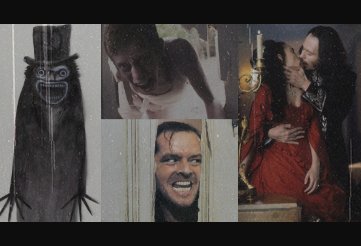
The monster changes. The lesson doesn’t.
Horror understands something that most self-help books desperately try to avoid:
Life is frightening.
People leave.
Dreams fail.
Bodies change.
Parents die.
Relationships become haunted.
Plans collapse.
Sometimes you lose yourself for a while.
Horror doesn’t insult us by pretending those things aren’t real.
It looks fear straight in the eye and says,
“Right then… now what?”
That’s why horror fans often leave a film feeling strangely lighter instead of heavier.
Not because they’ve escaped reality.
Because for ninety minutes they practised surviving it.
Every haunted house becomes a lesson in uncertainty.
Every Final Girl and every Final Guy becomes a lesson in resilience.
Every monster becomes a metaphor wearing better make-up than most therapists.
That’s Where Horror Heals.
Not because it convinces us the monsters aren’t real.
But because it quietly reminds us that people have been surviving them all along.
Meet the Dark Copers
If everything you’ve just read felt less like a revelation and more like someone had been secretly reading your diary… there’s a reason.
Psychologists have a name for people who instinctively lean into darker stories, darker humour and darker subjects when life gets difficult.
They’re called Dark Copers.
Despite sounding like an obscure 80s horror punk band, Dark Copers are people who use horror, true crime, black comedy and other “darker” forms of media to process stress, anxiety and uncertainty. Instead of running from uncomfortable emotions, they deliberately engage with them in a safe environment.
In other words, while someone else might unwind with a cosy rom-com, you’re halfway through Hereditary and listening to a podcast about Victorian murderers and somehow feeling… calmer.
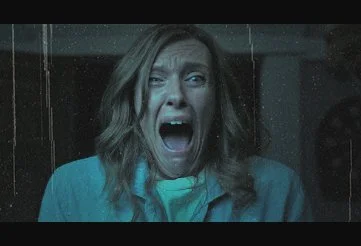
It sounds backwards. Until you realise what you’re actually doing.
You’re practising.
Dark Copers don’t watch horror because they enjoy being terrified.
They often find themselves drawn to horror because it allows them to experience fear with a safety net.
Their heart races, their palms sweat, their imagination lights up - but when the credits roll, their brain gets an important message: “We felt fear… and we survived.”
That’s a surprisingly powerful lesson.
Each film becomes a controlled rehearsal for uncertainty.
A chance to experience panic without real danger.
To sit with uncomfortable emotions instead of immediately trying to distract yourself from them.
To prove, over and over again, that fear is something you can move through - not something you have to spend your life avoiding.
Ironically, horror fans are often accused of being obsessed with darkness.
The opposite is usually true.
Most of us don’t watch horror because we enjoy suffering.
We watch it because we’re looking for the light switch.
Five Things Horror Understands About Life That Most Self-Help Doesn’t
Most self-help promises to make you feel better.
Horror promises to tell you the truth.
That’s the difference.
Self-help often says, “Don’t be afraid.”
Horror says, “You’re going to be afraid. Here’s what to do next.”
It doesn’t pretend life is always fair.
It doesn’t guarantee happy endings.
It doesn’t tell you to manifest your way out of grief or positive-think your way through burnout.
Instead, it quietly teaches lessons that most of us spend our entire adult lives trying to learn.
Fear Isn’t The Enemy - Avoidance Is
Every great horror film begins with someone ignoring the warning signs.
“It’s probably nothing.”
“Let’s split up.”
“I’ll just investigate that strange noise in the basement.”
Sound familiar?
Real life works the same way.
We ignore the anxiety that’s trying to tell us something.
We stay in the wrong job because change feels scarier than staying put.
We avoid difficult conversations until they become impossible conversations.
Horror reminds us that monsters don’t usually disappear because we pretend they aren’t there.
Sometimes the bravest thing you can do is turn the light on.
Every Monster Represents Something Real
The best horror films were never really about the monster.
They’re about what the monster represents.
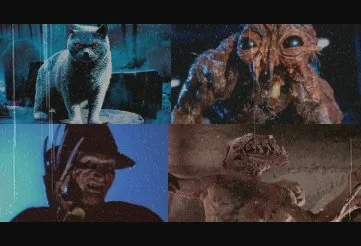
Pet Sematary isn’t just about bringing the dead back. It’s about grief convincing us that refusing to let go might somehow hurt less than saying goodbye.
The Fly isn’t just body horror. It’s the fear of losing who you are.
Freddy Krueger isn’t just a man with knives for fingers. He’s the anxiety you can’t escape because even sleep isn’t safe.
The Thing isn’t just a shape-shifting creature. It’s paranoia. The terrifying moment you realise you no longer know who - or what - you can trust.
When you start recognising the metaphor, something strange happens.
You stop asking, “Why do I love horror?”
…and start asking, “What is this monster trying to teach me?”
That’s why the best horror villains refuse to stay trapped inside the cinema.
You leave the theatre… and suddenly recognise them at work.
In your family.
In your relationship.
Sometimes… in yourself.
That’s when horror stops being entertainment and starts becoming a survival manual.
You Can Practise Surviving the Unknown
Here’s something horror understands better than almost any other genre:
The scariest part usually isn’t the monster.
It’s not knowing when ( or if ) it’s coming.
That feeling should sound familiar.
Waiting for test results.
Wondering if the relationship is over.
Starting a new job.
Sending the message.
Handing in your notice.
Launching the business.
Waiting for the phone to ring.
Our brains are terrible with uncertainty. Faced with an unanswered question, they’ll often skip straight to the worst possible ending.
“They hate me.”
“I’m going to fail.”
“Everything’s falling apart.”
It’s like having a tiny Stephen King living in your head, constantly pitching increasingly catastrophic plot twists.
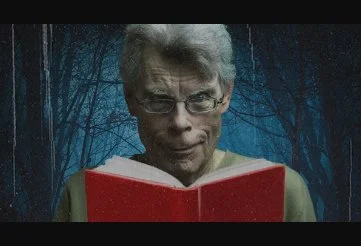
Horror gives that overactive imagination somewhere safer to play. That’s one reason many people find horror movies surprisingly helpful for anxiety and stress.
For ninety minutes, your brain gets to experience uncertainty in a controlled environment. Your heart races. Your muscles tense. Your mind starts trying to solve the mystery before the characters do.
Then one of two things happens.
The monster appears… or it doesn’t.
Either way, your nervous system learns something important: You can tolerate not knowing.
That might not sound revolutionary. Until you realise how much of adulthood is simply learning to live without guarantees.
No one knows if the new job will work out.
Nobody knows whether the relationship will last.
Nobody knows exactly what they’re doing, despite what LinkedIn would have you believe.
The people who cope best with uncertainty aren’t the ones who eliminate it.
They’re the ones who stop expecting certainty before they’re willing to live.
Horror quietly teaches that lesson every time someone opens the basement door.
Not because they know what’s waiting.
Because sometimes the only way forward… is through.
Survival Has Never Looked Glamorous
Hollywood loves superheroes.
Horror loves ordinary people. Teachers. Nurses. Students. Single parents.
People who had absolutely no intention of becoming heroes until life gave them no other choice.
People who were just trying to get through Tuesday before something with far too many teeth ruined their evening.
That’s one of the genre’s greatest gifts.
It reminds us that resilience isn’t something you’re born with.
It’s something you discover when there’s no other option.
The Final Girl doesn’t survive because she isn’t scared. She survives because she keeps moving while she is.
That’s a lesson most of us need far more often than another motivational quote on Instagram.
That’s what makes horror different.
It doesn’t celebrate fearless people.
It celebrates ordinary people who keep going despite being terrified.
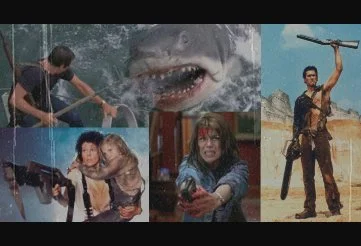
Chief Brody is afraid of the water.
Ellen Ripley isn’t trying to become a hero - she’s trying to stay alive.
Ash Williams spends half his time making terrible decisions before somehow stumbling into greatness anyway.
Even Sidney Prescott survives because she learns, adapts and refuses to quit - not because she has superpowers.
Real life works exactly the same way.
Very few of us wake up feeling brave enough to leave the relationship, start the business, change careers, ask for help or finally choose ourselves.
We do it because eventually the monster behind us becomes scarier than the unknown in front of us.
That’s the lesson horror quietly teaches over and over again.
Courage isn’t something you find before you act.
It’s usually something you discover afterwards.
Survival has never been about being fearless.
It’s about refusing to let fear make your decisions.
Surviving Changes You
The best horror films don’t end where they began.
The monster might be gone, but the person who faced it is no longer the same.
That’s true outside the cinema, too.
Nobody walks through grief unchanged.
Or burnout.
Or heartbreak.
Or anxiety.
Or failure.
The goal isn’t to become the person you were before life frightened you.
The goal is to become someone who knows they can survive frightening things.
That’s why horror resonates so deeply with people like us.
Not because we enjoy darkness.
Because we’ve learned that pretending monsters don’t exist has never made them disappear.
Horror offers something far more useful than false reassurance.
Perspective.
It reminds us that fear is temporary.
That difficult chapters eventually end.
That ordinary people can do extraordinary things when life leaves them no other choice.
And perhaps most importantly…
It reminds us that the story isn’t over just because things look hopeless.
Every horror fan knows the credits don’t roll until the survivor walks away.
So whatever monster you’re facing right now - anxiety, grief, burnout, loneliness, self-doubt or simply feeling like you don’t belong - remember this:
You have survived every chapter of your story so far.
That’s a pretty good track record.
The dark was never trying to teach you how to be fearless.
It was teaching you how to find your way through it.
Become the Hero of Your Own Horror Story
The truth is…
None of us get to choose whether monsters appear in our lives.
Some arrive as anxiety.
Some as grief.
Some wear wedding rings.
Some wear name badges.
Some live inside our own heads.
The only choice we’ve ever really had is what happens after they appear.
That’s what every great horror film has been trying to tell us.
The hero isn’t the strongest person in the story.
They’re the one who keeps going.
Laurie Strode. Ellen Ripley. Chief Brody. Sidney Prescott. Ash Williams.
Different monsters.
Same lesson.
None of them were fearless.
None of them felt ready.
None of them knew how the story would end.
They simply refused to let fear write the ending for them.
Maybe that’s why horror has always felt strangely comforting.
Not because it tells us everything will be okay.
Because it tells us that ordinary people have always survived extraordinary things.
Every haunted house.
Every monster.
Every impossible night.
Someone walked back out again.
Maybe that’s why you’ve always loved horror.
Not because you’re fascinated by monsters.
Because somewhere…
Long before you could explain it…
You recognised yourself in the survivor.
And maybe…
Just maybe…
You’ve been rehearsing for real life all along.
If horror movies have always felt strangely personal, there may be a reason. The heroes we connect with often reveal how we survive fear, uncertainty and change in our own lives. Take the Which Horror Outsider Are You? quiz and discover the survivor you’ve been all along.


IN ODD WE TRUST Presents
A FIELD NOTES FROM THE DARK Production
Starring YOU, the protagonist in your own psychological thriller
Produced by A LIFETIME OF QUESTIONABLE DECISIONS
Directed by EXISTENTIAL DREAD Story by THAT VOICE IN YOUR HEAD AT 3AM
Costume Design BOOMSTICK ENERGY TEE Music by DISSONANT SYNTH and REGRET
Feeling seen? You Belong with us, Join THE CULT OF ODD Your backstage pass to PSYCHOLOGICAL
SURVIVAL GUIDES, HORROR COPING RITUALS and EMOTIONALLY UNSTABLE T-SHIRTS