How to Silence Your Inner Critic (Before It Destroys Your Confidence)
Colour / Reading Time 9 mins Approx
There’s a voice in your head. It doesn’t kick the door down. It doesn’t make a dramatic entrance. It just… shows up. Right before you hit publish. Right before you speak up. Right before you do something that could actually move your life forward. And it whispers: “Let’s not.” And like an idiot in a horror movie who decides to investigate the weird noise upstairs… you listen.
Let’s get one thing straight: your inner critic is not some wise, all-knowing narrator guiding you toward greatness.
It’s the villain.
The kind that doesn’t kick the door down with a chainsaw like Leatherface.
No — this one’s quieter. Smarter. More insidious.
It’s more like the entity in It Follows — slow, relentless, always walking toward you. It doesn’t need to sprint. It knows you’ll eventually stop on your own.

The Voice Inside: Your Own Personal Horror Movie Villain
Think about it.
At the start of every horror movie, the monster feels unstoppable. Invisible. All-powerful. But as the story unfolds? You start to see the cracks.
That’s exactly what’s happening inside your head.
This voice — the one telling you:
“You’re not ready”
“You’re going to fail”
“People are going to judge you”
…it’s not truth.
It’s conditioning. A script. And you’ve been rehearsing it for years.
Psychologically speaking, your inner critic is built from:
past experiences
societal expectations
fear of rejection
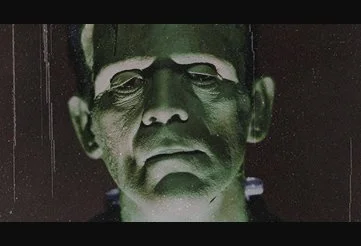
It’s basically a Frankenstein’s monster made out of every moment you were made to feel not enough.
And like any good horror villain — it only survives if you keep believing in it.
Plot Twist: The Monster Isn’t You
Here’s where things get interesting. You’ve been living like that voice is you. Like it’s your identity. Your personality. Your reality.
But it’s not.

It’s just a pattern. A very convincing, very rehearsed pattern.
Think about films like The Babadook. The monster isn’t some random external threat — it’s a manifestation of something internal. Something avoided. Something unprocessed. And it doesn’t disappear when ignored — it grows stronger. Louder. More invasive.
Same with your inner critic.
It’s not there because it’s right. It’s there because it’s been repeated. Over. And over. And over again.
Until it sounds like truth.
How the Inner Critic Keeps You Stuck
Let’s talk about what this thing is actually doing to your life. Because it’s not just “a bit of self-doubt.” It’s running the whole damn show.

1. It Keeps You Playing Small
You don’t apply.
You don’t start.
You don’t try.
Not because you can’t — but because the voice convinced you not to. Because the voice got there first.
Like that moment in Scream where the call comes before the attack. The warning always comes first. And most people never make it past that part.
2. It Turns Every Mistake Into a Character Assassination
You try something. It doesn’t go perfectly. And suddenly:
It wasn’t just a mistake
It was proof you’re not capable
You didn’t just mess up. No, no.
According to your inner critic:
👉 You are the mess-up.
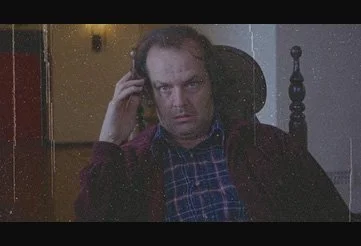
It’s like The Shining — where reality slowly warps until you don’t even trust your own perception anymore.
Instead of “All work and no play…”, it’s: “All doubt and no action makes you stuck forever.”
You spiral.
3. It Keeps You in Perfectionism Loops
Perfectionism isn’t ambition. It’s fear wearing a really expensive outfit.
Your inner critic says:
👉 “Not yet. Fix this first.”
So you tweak.
You delay.
You overthink.
Because “not good enough” is always lurking in the background.
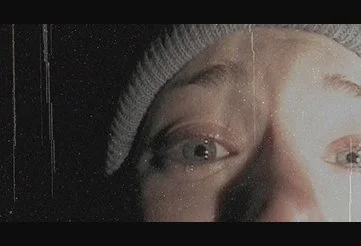
It’s like being stuck in The Blair Witch Project — walking in circles, convinced you’re making progress, but never actually getting out.
4. It Fuels Self-Sabotage
This is the most dangerous one.
Your inner critic convinces you that staying small = staying safe.
Don’t try → you won’t fail
Don’t speak → you won’t be judged
Don’t risk → you won’t lose
You procrastinate.
You avoid.
You quit early.
Not because you’re lazy — but because somewhere deep down, you’ve already decided you’re going to fail.
But what it doesn’t tell you? You also won’t live.
It’s like being in a horror movie where you keep running towards the dark hallway. Not because you want to — but because something convinced you there’s no other option.
What This Actually Looks Like in Real Life (Brace Yourself)
Let’s make this uncomfortably relatable.
Your inner critic doesn’t sound dramatic. It sounds like your own reasonable thoughts.
Scenario 1: The “I’ll Do It Later” Lie
You:
👉 “I should post that thing today”
Your inner critic:
👉 “Hmm… maybe not. It’s not your best work.”
You:
👉 “True. I’ll tweak it.”
Three weeks later:
👉 still not posted
👉 now irrelevant
👉 you’ve convinced yourself it was never a good idea anyway
Congratulations. The monster didn’t even have to show up.
Scenario 2: The “Everyone Is Judging You” Fantasy
You’re about to say something in a meeting.
Inner critic:
👉 “Don’t. That sounds stupid.”
So you stay quiet.
Meanwhile:
Dave is confidently saying absolute nonsense
and getting promoted for it
But sure. Let’s stay silent because we might sound stupid.
Scenario 3: The “I Need to Be Ready First” Scam
You want to:
start a blog
launch something
change your life in some meaningful way
Inner critic:
👉 “You need more time. More skills. More research.”
So you:
watch 47 YouTube videos
download 3 free guides
overthink yourself into paralysis
And never start.
Scenario 4: The “That One Mistake Defines Me Forever” Spiral
You mess something up.
Normal response:
👉 “Okay, not ideal.”
Inner critic:
👉 “Ah yes. This confirms you are fundamentally incompetent.”
Cool. Love that for you.
Where This Voice Comes From (And Why It Won’t Shut Up)
You didn’t wake up one day and decide:
👉 “I’d love to have a constant stream of self-doubt, please.”
This was built. Over time.
A comment from a teacher
A criticism from a parent
A moment you felt embarrassed
A time you were rejected
Your brain went:
👉 “Noted. Let’s never let that happen again.”
So it created a system. A loud, overprotective, slightly unhinged system. Like a security guard who tackles you for walking too fast near the exit.
Why Your Brain Is Doing This (And Why It’s Not Your Fault)
Before you go full exorcism mode, let’s talk about why this exists.
Your brain isn’t trying to ruin your life. It’s trying to protect you. Your inner critic is basically an overprotective security guard who thinks:
rejection = death
failure = danger
embarrassment = exile
So it steps in with: “Let’s just not do that.”
The problem? Your brain is still operating like you’re trying to survive in a prehistoric jungle.
Meanwhile, you’re just trying to:
post something online
start a project
say what you actually think
But your brain? It’s like: “ABSOLUTELY NOT. WE WILL DIE.”
But here’s the catch. Everything you actually want in life?
growth
confidence
success
visibility
…requires you to do exactly those things.
So now you’re stuck.
Safe.
And miserable.
But stuck.
How to Silence Your Inner Critic (Without Losing Your Mind)
Now we get to the part where you stop being the victim in this psychological horror story.
Because here’s the truth: You don’t destroy the inner critic. You outgrow it. You don’t wait until the voice disappears. You move while it’s still talking.
1. Name the Damn Thing (Because Right Now It Thinks It’s You)
You need psychological distance. Because right now, the voice feels like:
👉 truth
When really, it’s:
👉 Nigel. Being dramatic again.
Give it a name — and suddenly it’s just a character. Not the narrator. Name it something ridiculous.
The point? Create distance. Because once you realise:
👉 “Oh, this is just Doomsy McDoomface talking again”
…it loses authority. Because it’s hard to take life advice from something called:
👉 “Doomsy McDoomface”
2. Catch It Mid-Sentence
Most people only notice their inner critic after they’ve already obeyed it. We’re not doing that anymore.
Next time you hesitate, pause and ask:
👉 “What did I just tell myself?”
That’s the voice.
Not reality.
3. Question Everything It Says
Your inner critic thrives on one thing: Blind acceptance. So stop giving it that.
Next time it pipes up, ask:
“Is this actually true?”
“What’s the evidence?”
“Would I say this to someone I care about?”
Most of the time? It falls apart instantly.
Because the voice isn’t logical — it’s emotional. And emotional doesn’t always mean accurate.
If your inner critic were a horror script, it would be full of plot holes.
“Everyone will judge you”
👉 Everyone? All at once? Do they have a group chat?
“You’ll fail and never recover”
👉 Dramatic. Also unlikely.
“You’re not ready”
👉 Based on what? A committee meeting in your brain?
Call it out. Because the more you question it, the less convincing it becomes.
4. Flip the Script (Without Toxic Positivity)
This is where most advice goes wrong. They tell you to replace: “I’m going to fail” with: “I’m amazing and everything is perfect”
And your brain goes: “…yeah, no.”
Instead, aim for neutral truth:
“I might fail, but I’ll figure it out”
“I don’t know everything yet, but I can learn”
“This doesn’t have to be perfect to be worth doing”
You’re not trying to become delusional.
You’re trying to become realistic.
4. Stop Trying to Be Confident First. Act Anyway (This Is the Whole Plot)
Here’s the twist no one tells you: The voice doesn’t disappear before you act. It comes with you.
Let’s talk about Halloween for a second. Laurie Strode wasn’t fearless. She was terrified.
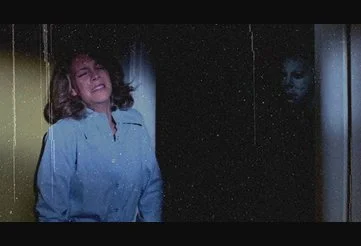
But she still moved.
Still fought.
Still survived.
That’s the energy. Because courage isn’t the absence of fear. It’s action despite it.
So the next time your inner critic starts screaming?
Do the thing anyway.
You don’t become confident before you act.
You become confident because you act.
5. Do It Badly (Yes, Really)
Perfectionism is your inner critic’s favourite weapon. So we’re taking it away.
Post the thing:
slightly messy
slightly imperfect
slightly terrifying
Because “done” beats “perfect” every single time.
6. Collect Proof (That the Voice Is Full of It)
Every time you:
take action
try something scared
survive discomfort
realise nothing catastrophic happened
…you gather evidence. And evidence weakens the voice. You weaken its argument — its authority — Because now you’ve got proof.
Now it can’t say:
👉 “You can’t handle this”
When you literally just did.
👉 You didn’t die
👉 You didn’t collapse
👉 You handled it
And that matters more than the voice.
And proof is louder than fear — if you let it be.
The Turning Point: When You Stop Being the Idiot Who Runs Upstairs
You know that moment in horror movies…
When the audience is screaming:
👉 “DON’T GO IN THERE”
…and the character goes anyway?
That’s you. Listening to your inner critic.
Walking straight into:
procrastination
playing small
But there’s another kind of moment. The turning point. The moment where everything shifts.
Where the character realises:
👉 “This thing can be beaten.”
Where the character finally goes:
👉 “No. I’m not doing this anymore.”
Not easily.
Not perfectly.
But definitely.
That’s the moment you need to create in your own life. Because the difference between:
the ones who get taken out early
and
the final girl/guy
isn’t strength.
It’s awareness.
They see the pattern. And once you see the pattern? You can break it.
Because your inner critic? It’s not some unstoppable force. It’s just been unchallenged.
Why the Voice Gets Louder Right Before You Level Up
Important. Because this is where most people quit.
The voice gets louder when you’re about to:
do something new or meaningful
be seen
take a risk
step into a new version of yourself
Because your brain is panicking.
It’s like A Nightmare on Elm Street. Freddy doesn’t show up when everything’s calm. He shows up when you’re vulnerable. When you’re asleep. When your guard is down.

Your inner critic does the same.
It gets louder when you’re about to change. Not because you’re failing. Because you’re close.
So if the voice is loud? Good. You’re probably onto something.
When You Face the Monster, You Win
Here’s the part most people don’t want to hear: Your inner critic might never fully go away.
This isn’t some magical transformation where:
👉 the voice disappears
👉 you become fearless
👉 everything is easy
No. The voice is still there. But now? It’s background noise.
But it doesn’t need to disappear. Because the goal isn’t silence. It’s power.
The kind of power where:
the voice talks… and you move anyway
the doubt shows up… and you don’t obey it
the fear exists… and you don’t shrink because of it
That’s how you win.
Not by eliminating the monster. But by refusing to let it control the story.
What Happens When You Stop Letting It Win
This is where things get interesting. When you stop letting your inner critic run the show:
You take risks you would’ve avoided
You say things you would’ve swallowed
You create things you would’ve overthought
Not perfectly. But consistently.
And consistency? That’s what changes your life.
Final Thoughts: The Voice Isn’t the Authority — You Are
Let’s end this properly. Your inner critic is not:
your identity
your truth
your limit
It’s a habit. A loud, repetitive, outdated habit. And habits can be broken.
You don’t need to silence it completely. You just need to stop treating it like it gets the final say.
Because in this story? You’re not the scared character hiding in the corner.
You’re the one who turns around.
The one who stops running.
The one deciding this ends differently.
The one who realises: 👉 the monster only had power because you kept listening
And once you stop? It’s just noise. Annoying. Persistent. But powerless.
And in this version of the story?
The monster doesn’t get the final word.
You do. And that’s when the whole damn script changes.
Your inner critic usually sounds urgent because urgency is how fear keeps control.
“This Is Not an Emergency” is designed to interrupt that spiral before it turns into another night of mental self-destruction.


IN ODD WE TRUST Presents
A FIELD NOTES FROM THE DARK Production
Starring YOU, the protagonist in your own psychological thriller
Produced by A LIFETIME OF QUESTIONABLE DECISIONS
Directed by EXISTENTIAL DREAD Story by THAT VOICE IN YOUR HEAD AT 3AM
Costume Design THE QUIET ONES TEE Music by DISSONANT SYNTH and REGRET
Feeling seen? You Belong with us, Join THE CULT OF ODD Your backstage pass to PSYCHOLOGICAL
SURVIVAL GUIDES, HORROR COPING RITUALS and EMOTIONALLY UNSTABLE T-SHIRTS