I Feel Like I Don’t Belong Anywhere: The Psychology of Being the Outsider (And Why It’s Not a Flaw)

Colour / Reading Time 6 mins Approx
There’s a specific kind of loneliness that doesn’t come from being alone. It comes from being surrounded — at work, at parties, in friendships — and still feeling slightly off-script. Like everyone else received a handbook on how to be human and you’re improvising badly. If you’ve ever thought, “I feel like I don’t belong anywhere,” this isn’t self-pity. It’s data.
Let’s say the quiet part out loud: You’ve always felt… adjacent.
Not fully in.
Not fully out.
Just orbiting.
You can socialise.
You can perform competence.
You can mirror tone and pace and humour.
But internally? You feel like you’re visiting. Like you’re studying the tribe instead of being part of it.
And because belonging is one of the most fundamental human needs — right up there with food, sleep, and Wi-Fi — your brain has likely interpreted this sensation as a flaw.
Something must be wrong with me.
But what if that’s the wrong diagnosis?
The Horror of Being the Only One Who Notices
In horror films, the outsider is usually the first one to sense something is off.
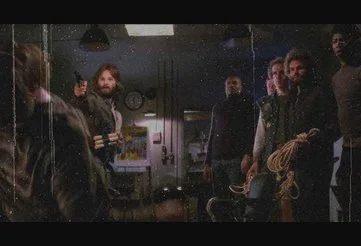
In The Thing, paranoia spreads because no one knows who is truly human anymore. The tension comes from isolation inside a group. Even when everyone is physically present, trust dissolves.
That’s outsider psychology in a nutshell. You can be surrounded by people and still feel existentially alone.
You pick up inconsistencies.
You sense social undercurrents.
You notice dynamics others ignore.
But instead of interpreting that awareness as perception, you internalise it as alienation.
You think: Why does this feel unnatural to me when it seems so easy for everyone else?
The answer is not that you’re defective. It’s that you’re observant. And observation creates distance.
Outsider vs. Outcast (They Are Not the Same)
Let’s clarify something crucial.
An outcast is excluded.
An outsider often self-identifies as separate — even when inclusion is available.
Outcasts are pushed out.
Outsiders hover at the edge.
And hovering is usually protective.
Somewhere along the line, you learned that full immersion wasn’t safe.
Maybe:
You grew up in an environment where you didn’t quite fit.
Your interests diverged early.
You matured faster (or slower) than your peers.
You felt emotionally different from your family.
You were “too much” or “not enough” in subtle ways.
So you adapted.
You became adaptable. But adaptation doesn’t erase difference.
It just masks it.
Why Belonging Feels Harder for Some People
Belonging requires shared assumptions.
If you’ve always questioned those assumptions, you’re going to feel friction.
Some people slot easily into:
Social roles
Career paths
Cultural expectations
Group identities
Others look at those same structures and think: Is this it?
That question alone creates separation. Because once you question the script, you can’t unknow that it’s a script.
The Village in the Woods
In The Witch, isolation breeds suspicion. The family exists outside society, cut off from belonging. The daughter, Thomasin, becomes the emotional focal point of that exclusion.
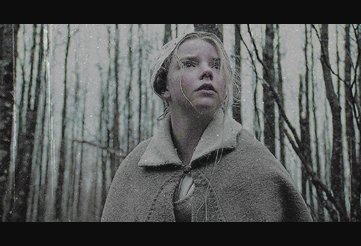
She doesn’t neatly fit inside the rigid moral framework surrounding her. And as tension escalates, she becomes both scapegoat and symbol.
Outsiders often become projection screens. When you don’t blend seamlessly, people read into you.
They fill the ambiguity with assumptions.
You feel misunderstood not because you’re unclear — but because others don’t know where to categorise you.
Humans like categories.
Outsiders resist them.
The Chronic “Almost”
The outsider experience often feels like “almost.”
Almost part of the friend group.
Almost aligned with the workplace culture.
Almost fully seen in relationships.
Almost home.
That almost becomes exhausting.
Because you’re close enough to belong — but not fully relaxed inside it.
You code-switch.
You self-edit.
You perform micro-adjustments.
Which leads to a strange double exhaustion:
Fatigue from effort.
Loneliness from distance.
And the worst part? No one sees it.
From the outside, you look socially competent.
From the inside, you feel untethered.
The Identity of the Observer
Outsiders often develop strong internal worlds. When you don’t feel fully at home externally, you cultivate depth internally.
You think more.
Notice more.
Analyse more.
You may gravitate toward:
Subcultures
Horror films (because metaphor feels safer than confession)
The observer role becomes comfortable.
But here’s the paradox: The more perceptive you are, the harder it can be to feel unselfconscious belonging.
You see the mechanics.
You see the performance.
You see the fragility of social structures.
And once you see the scaffolding, it’s hard to pretend it’s solid stone.
“Why Can’t I Just Be Normal?”
Let’s dismantle this question gently.
Normal is statistical.
Belonging is relational.
If you’ve never found a relational environment that mirrors you accurately, you won’t feel belonging — regardless of how “normal” you are.
Outsiders often aren’t abnormal. They’re misaligned with dominant environments. Which is not pathology. It’s mismatch.
And mismatch is contextual.
A puzzle piece that doesn’t fit one board isn’t defective.
It’s just on the wrong table.
The Social Sunken Place (Without the Hypnosis)
Even without referencing certain films, the metaphor stands: Outsiders often feel like they’re watching life happen instead of participating in it.
You laugh at the joke.
You contribute to the meeting.
You attend the event.
But internally? You’re slightly behind the glass.
And because you can function socially, you dismiss your discomfort as oversensitivity.
But chronic “behind the glass” living erodes self-trust.
You begin to doubt your instincts.
You assume everyone else feels at home and you missed the memo.
They didn’t receive a memo. They just happened to align more easily with the structure they’re in.
The Monster That Lives Inside Difference
In Carrie, difference becomes spectacle.
Carrie’s alienation isn’t just social — it’s existential. She doesn’t understand herself, and no one around her provides safety for that confusion.
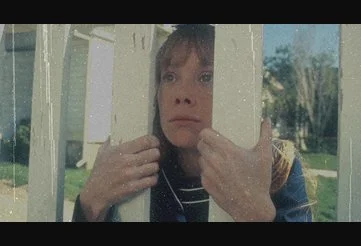
Now, your outsider experience probably does not involve telekinesis (unless you’re hiding something impressive).
But the emotional mechanism is similar.
Difference without support becomes shame.
Difference with understanding becomes identity.
The problem is not being different.
The problem is being different in isolation.
Outsider Energy Is Not Weakness
Outsiders often:
Think independently.
Resist groupthink.
Notice injustice faster.
Innovate by default.
Question inherited narratives.
Refuse shallow belonging.
That doesn’t make life easier.
But it does make it deeper.
The challenge is that depth often feels lonely before it feels empowering.
You don’t want to be “special.” You want to feel normal and included. But normal and included sometimes require self-suppression.
And your system may simply refuse that trade.
The Belonging Myth
Here’s the myth: That somewhere, there exists a single place where you will feel 100% understood, mirrored, and at ease forever.
Belonging is not a fixed location. It’s layered.
You might belong intellectually in one space.
Emotionally in another.
Creatively in another.
Culturally somewhere else entirely.
Outsiders often search for total belonging — and miss partial belonging because it doesn’t feel complete.
But layered belonging is still belonging. It just doesn’t look like homogeneity.
When You’re Too Much and Not Enough at the Same Time
This contradiction is common.
You’ve been told you’re:
Too intense.
Too quiet.
Too analytical.
Too sensitive.
Too unconventional.
And also:
Not assertive enough.
Not outgoing enough.
Not practical enough.
Not ambitious enough.
You can’t win a game with contradictory rules. So you step outside it.
And standing outside feels safer than constantly recalibrating.
The Risk of Self-Isolation
Here’s where outsider identity can become self-reinforcing.
If you decide you don’t belong anywhere, you may stop testing that assumption.
You may:
Withdraw early.
Avoid vulnerability.
Pre-empt rejection.
Over-intellectualise connection.
You become so used to standing at the edge that stepping forward feels unnatural.
Belonging requires exposure.
Exposure feels risky.
But permanent distance guarantees loneliness.
You Might Not Be Meant for the Mainstream Room
Some people are not wired for dominant culture spaces.
They thrive in:
Subcultures
Niche communities
Creative ecosystems
Intellectually curious circles
Environments that tolerate complexity
If you’ve been trying to feel at home in rooms built for conformity, of course you feel displaced.
The issue may not be you.
It may be architecture.
A Question Instead of a Conclusion
Instead of asking: “Why don’t I belong anywhere?”
Try asking: “Where have I not yet looked?”
Or: “Where am I editing myself to fit?”
Or even: “What part of me have I never allowed to be seen?”
Outsiders often belong the moment they stop performing acceptability.
But that requires courage.
And patience.
And sometimes building new rooms entirely.
A Thought to Leave You With
If you feel like you don’t belong anywhere, consider this: You might not be lost. You might be early.
Early in finding your people.
Early in finding your environment.
Early in understanding your own depth.
Belonging is not automatic.
It is discovered.
And sometimes it is built.
Your outsider experience does not disqualify you from connection. It simply means you require resonance, not proximity.
And resonance takes time.
You are not defective. You are discerning.
You are not excluded. You are specific.
And specific people don’t belong everywhere.
They belong precisely.
The question isn’t whether you belong.
It’s whether you’re willing to stop shrinking long enough to find where you do.
Sometimes the feeling of not belonging anywhere starts becoming a feeling of not
belonging inside your own life, too.
“This Doesn’t Feel Like Me” explores what happens when you become disconnected
from yourself while trying to survive the world around you.


IN ODD WE TRUST Presents
A FIELD NOTES FROM THE DARK Production
Starring YOU, the protagonist in your own psychological thriller
Produced by A LIFETIME OF QUESTIONABLE DECISIONS
Directed by EXISTENTIAL DREAD Story by THAT VOICE IN YOUR HEAD AT 3AM
Costume Design ODDCAST OF SOCIETY TEE Music by DISSONANT SYNTH and REGRET
Feeling seen? You Belong with us, Join THE CULT OF ODD Your backstage pass to PSYCHOLOGICAL
SURVIVAL GUIDES, HORROR COPING RITUALS and EMOTIONALLY UNSTABLE T-SHIRTS