Pick Up the Damn Chainsaw: Stop Waiting to Feel Ready
Colour / Reading Time 6 mins Approx
There’s a moment in almost every horror film when the hero stops looking for another way out. The doors are locked. The phone’s dead. The authorities have disappeared. Help isn’t coming. And lying on the floor, usually covered in blood, dirt or someone else’s poor decision-making… is a weapon. They hesitate. Then they pick it up. That’s the moment the story changes. Not because the monster disappears. Because the protagonist stops behaving like prey.
Most of us think our lives change when circumstances change.
When the right opportunity arrives.
When our confidence magically appears.
When the timing improves.
When the universe finally reads our vision board and decides we’ve suffered enough.
Until then, we wait.
Waiting sounds sensible. Responsible, even.
“I’m just doing a little more research.”
“I’ll start once I’ve figured everything out.”
“I just need to be one hundred percent certain.”
Congratulations.
You’ve accidentally stumbled upon the world’s most socially acceptable form of procrastination.
It even feels productive.
You buy another book.
Watch another YouTube video.
Download another planning app.
Colour-code your calendar.
Tell yourself next Monday will be different.
Meanwhile…
Life quietly keeps happening without asking whether you’ve finished preparing for it.
That’s the thing nobody tells you about waiting. It has no finish line.
Because the version of you that’s “finally ready” is always scheduled to arrive sometime after the current version has done one more course, read one more article and had one more existential crisis in the shower.
It’s a beautiful illusion.
Completely convincing.
Entirely fictional.
Horror Never Waits for Perfect Timing
One of the reasons horror heroes feel so believable is because they never look ready.
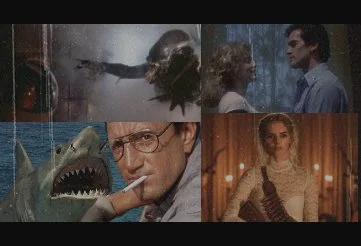
Ripley wasn’t planning on fighting a Xenomorph.
Chief Brody wasn’t trying to become shark bait.
Grace, in Ready or Not, was expecting a wedding night - not an aristocratic game of homicidal hide-and-seek.
Even Ash Williams - the patron saint of making terrible decisions - began Evil Dead II as an ordinary bloke who wanted nothing more ambitious than a romantic weekend in a cabin.
Look how that worked out.
None of them waited until they felt brave.
None of them received a motivational speech from Morgan Freeman.
None of them suddenly unlocked a hidden confidence level like it was a video game.
They acted because eventually standing still became more dangerous than moving.
That’s an important distinction.
People often assume courage comes first.
Horror has always known better.
Action comes first.
Courage is usually what turns up halfway through, slightly out of breath, wondering why nobody waited.
Confidence Is a Receipt, Not a Requirement
We spend an extraordinary amount of our lives negotiating with fear.
“I’ll do it once I feel confident.”
“I’ll leave when I’m sure.”
“I’ll apply when I’m qualified.”
“I’ll start when I know I won’t fail.”
Fear absolutely loves this arrangement. Because it knows something you don’t.
Confidence isn’t what creates action.
Action creates confidence.
You’re not waiting for confidence.
You’re waiting for proof.
Unfortunately, proof only arrives after you’ve moved.
Psychologists have known this for decades.
Your brain doesn’t build certainty by thinking. It builds certainty through evidence.
Every small action becomes another receipt proving: “I survived that.” Then another. Then another.
Eventually your brain stops asking, “What if I can’t?” because it has accumulated enough evidence to answer,
“You’ve already done harder things.”
The cruel irony is that the confidence you’ve been waiting for is trapped on the other side of the very action you’ve been avoiding.
It’s like standing outside a haunted house refusing to go in until you’ve proved there aren’t any monsters.
That’s not how horror works.
And it’s not how life works either.
It Was Never About the Chainsaw
People remember the chainsaw.
Fair enough.
It’s difficult to forget someone replacing their own hand with industrial forestry equipment.
But the chainsaw isn’t what made Ash a hero. It simply became the symbol of the moment he stopped expecting somebody else to solve the problem.
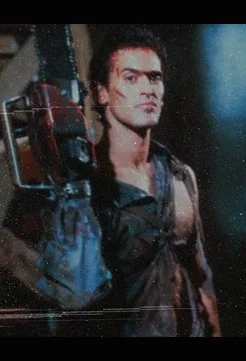
Before that moment, things just happened to him.
The cabin.
The demons.
The possessions.
The chaos.
He reacted.
Complained.
Panicked.
Made several truly spectacularly bad decisions.
Then something shifted.
Not outside.
Inside.
He stopped asking, “Why is this happening to me?” and started asking, “What am I going to do about it?”
That’s the real chainsaw moment.
And every one of us has one.
Ash’s weapon just happened to be a chainsaw.
Laurie’s was a knitting needle.
Nancy Thompson weaponised Freddy’s own dream against him.
Sidney Prescott learned the rules and kept rewriting them.
Erin (You’re Next) turned an ordinary house into a death trap.
Chief Brody had a compressed air tank and exceptionally good timing.
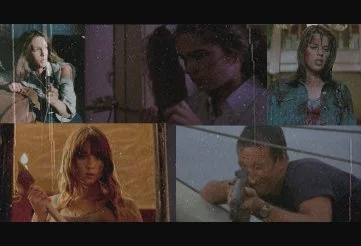
Different tools.
Same decision.
Your weapon probably won’t be made by Black & Decker.
It’ll probably look like one uncomfortable decision you’ve been avoiding for six months.
For you it might be…
Sending the application
Ending the relationship
Booking the appointment
Publishing the first article
Starting therapy
Turning off autopilot
Having the conversation you’ve rehearsed two hundred times in your head but somehow never out loud
The tool doesn’t matter.
The decision does.
Because the moment you stop waiting for permission to act… you’re no longer the person the story began with.
Why Indecision Feels Safe (But Isn’t)
Here’s the thing about indecision.
It feels responsible.
It wears a sensible cardigan.
Carries a clipboard.
Says things like, “Let’s not rush into anything.”
Meanwhile, six years quietly wanders right past you without you even realising.
Your brain has a strange habit.
It mistakes familiar for safe.
Not happy.
Not fulfilling.
Just familiar.
Which is why people…
Stay in jobs they hate
Relationships they’ve emotionally left years ago
Friendships that expired sometime around the second lockdown
Dreams they keep promising to start “once things calm down”
Your nervous system doesn’t care whether you’re thriving. It cares whether you’re surviving.
And yesterday survived just fine.
Horror has always understood this.
The characters who survive aren’t usually the ones standing perfectly still while they carefully weigh every possible outcome.
They’re the ones who eventually realise that doing nothing is still a choice.
Sometimes the house isn’t getting any safer.
The monster is just getting closer.
That’s the trap.
We tell ourselves we’re keeping our options open.
Most of the time… our options are quietly closing in on themselves.
The Monster Wants You to Stay Exactly Where You Are
Fear has one job.
Keep you alive.
Unfortunately, your nervous system isn’t especially good at telling the difference between genuine danger and mild inconvenience.
Changing careers? Possible death.
Starting a business? Certain death.
Sending an honest text? Immediate extinction.
Standing up for yourself? Pack your bags. Society has collapsed.
Your brain is adorable. And catastrophically dramatic.
It would happily keep you trapped inside the same miserable routine for thirty years if it meant avoiding ten minutes of uncertainty.
Which is exactly why so many horror films begin with characters refusing to move.
Don’t open the door.
Don’t leave the house.
Don’t investigate the noise.
Stay exactly where you are.
The irony? Sometimes staying put is what gets everyone killed.
Life works like that too.
The relationship you refuse to leave.
The dream you refuse to start.
The conversation you refuse to have.
The apology you refuse to make.
The decision you refuse to take.
Doing nothing is still a decision.
It’s just one that quietly pretends it isn’t.
Responsibility Is How You Become the Hero
Notice something about almost every great horror ending.
The hero isn’t rescued because somebody finally arrives.
They’re rescued because they become someone capable of surviving.
By the final act they’ve stopped asking, “Why is this happening to me?”…and started asking, “What do I do now?”
Those two questions create completely different lives.
The first gives your power away.
The second hands it straight back.
That’s what responsibility actually is.
Here’s where people often get accountability completely wrong.
Responsibility isn’t the same thing as blame.
Blame asks, “Whose fault was this?”
Responsibility asks, “What do I do now?”
They are completely different questions.
Some of the hardest chapters of your life genuinely weren’t your fault. The redundancy. The betrayal. The illness. The family you were born into. You don’t have to pretend those things were fair to reclaim your power.
Responsibility simply means refusing to let yesterday keep making today’s decisions.
Not blame.
Not shame.
Not carrying the weight of things that were never your fault.
Responsibility is simply accepting that while you don’t control what happened… you do control what happens next.
And that changes everything.
Because the moment you stop waiting for someone else to rewrite the ending… you pick up the pen yourself.
Final Notes
Maybe you’ve spent years believing your life would begin after the right relationship.
After more money.
After more confidence.
After more healing.
After somebody finally recognised your potential.
Maybe.
Or maybe you’ve been standing beside the exit the whole time… waiting for someone else to unlock a door that was never actually locked.
That’s the strange thing about horror.
The monster rarely disappears first.
The hero changes first.
Then suddenly the monster doesn’t seem quite so invincible anymore.
So stop waiting for certainty.
Stop waiting for permission.
Stop waiting until you feel like the sort of person who could do difficult things.
That’s never been how the story works.
The Final Girl / Guy doesn’t become brave before the final act.
The final act is what makes them brave.
And maybe the next chapter of your life doesn’t begin when somebody finally hands you the chainsaw.
Maybe it begins the moment you realise…
…it was in your hands all along.
Reading this article won’t change your life. Picking up your metaphorical chainsaw might.
If you’ve spent years waiting for confidence, permission or the perfect moment before finally becoming the person you know you’re capable of being… start here. This Is Not An Emergency isn’t about becoming fearless. It’s about getting out of survival mode long enough to start making decisions instead of waiting for life to make them for you.


IN ODD WE TRUST Presents
A FIELD NOTES FROM THE DARK Production
Starring YOU, the protagonist in your own psychological thriller
Produced by A LIFETIME OF QUESTIONABLE DECISIONS
Directed by EXISTENTIAL DREAD Story by THAT VOICE IN YOUR HEAD AT 3AM
Costume Design BOOMSTICK ENERGY TEE Music by DISSONANT SYNTH and REGRET
Feeling seen? You Belong with us, Join THE CULT OF ODD Your backstage pass to PSYCHOLOGICAL
SURVIVAL GUIDES, HORROR COPING RITUALS and EMOTIONALLY UNSTABLE T-SHIRTS