Time to Exorcise the Demons: How to Stop Being Haunted by Your Past
Colour / Reading Time 9 mins Approx
Forget spinning heads, holy water and dramatic Latin incantations. The demons most of us have to deal with are far less dramatic. They look like resentment that won’t die, regret that won’t shut up and guilt that somehow keeps finding a spare key to your conscience. The real horror isn’t that they visit. It’s that we mistake them for permanent residents.
Forgiveness has a branding problem.
It sounds suspiciously like something sold in pastel packaging between scented candles and inspirational fridge magnets.
“Release what no longer serves you.”
“Choose love.”
“Live. Laugh. Lavender.”
Lovely.
Unfortunately, none of that is particularly helpful when someone has detonated your life, lied to your face, betrayed your trust or left emotional scorch marks where your self-esteem used to be.
At moments like those, forgiveness feels less like wisdom and more like a spectacular administrative error.
Why should you have to do the emotional heavy lifting while the person who caused the damage skips off into the sunset like they’re auditioning for the final scene of Mamma Mia!?
Fair question.
But here’s the uncomfortable twist.
Forgiveness was never about giving them another chance.
It was about taking away the one thing they should never have been allowed to keep: Permanent residence inside your head.
Because that’s what resentment is.
A haunting.
Not the dramatic Hollywood kind with rattling chains and Victorian children whispering in hallways.
The quieter kind.
The one where an argument from fifteen years ago still hijacks your shower.
The one where a single sentence someone said at school somehow became your personality.
The one where a person who hasn’t thought about you in a decade still gets to dictate how safe you feel, how much you trust people, or whether you believe you deserve good things.
That’s not justice.
That’s an unfinished séance.
Resentment. Regret. Guilt.
Different demons. Same haunting.
And the longer you keep summoning it… the longer it keeps answering.
Some Stories End. Ghosts Don’t.
One of the reasons ghost stories have survived for centuries is because they understand something profoundly human.
Ghosts rarely haunt places.
They haunt unfinished business.
Think about the best supernatural horror films.
The spirits aren’t usually angry because they died. They’re angry because something was never resolved.
A truth was buried.
A betrayal ignored.
A promise broken.
A goodbye never spoken.
That’s exactly how resentment works.
Every time you replay what happened…
Every imaginary argument where you finally say the perfect comeback…
Every fantasy where they apologise and suddenly realise what they lost…
You’re performing the psychological equivalent of drawing a pentagram on the living room floor and asking the demon to come back for one more chat.
Spoiler alert: It never says anything new.
The Demon of Resentment
If you’ve ever watched a possession movie, you’ll know the demon never announces itself straight away.
It doesn’t kick the front door off its hinges, projectile vomit pea soup across the wallpaper and start speaking fluent Latin on day one.
It whispers.
It waits.
It convinces everyone it’s something else.
Resentment works exactly the same way.
At first, it feels useful.
Protective, even.
“Don’t trust them again.”
“Remember what they did.”
“Never let yourself be that vulnerable.”
Fair enough. Those are sensible survival instincts. Until one day you realise you’ve built your entire personality around a wound that should have been allowed to heal years ago.
That’s the problem with resentment.
It never stays in the room where it was created.
The person who lied to you doesn’t just become someone you don’t trust. Suddenly you don’t trust anyone.
The relationship that broke your heart doesn’t just end. It quietly starts writing the script for every relationship that comes after it.
One betrayal becomes suspicion.
One rejection becomes proof that you’re “too much.”
One cruel comment from a teacher, parent, boss or ex somehow gets promoted to Executive Director of Your Inner Monologue.
Resentment doesn’t just remember the past. It starts editing the future.
That’s why films like Candyman are so fascinating.
Candyman isn’t simply a ghost with a hook. He’s what happens when pain gets repeated for so long that it becomes a legend. A story. An identity.
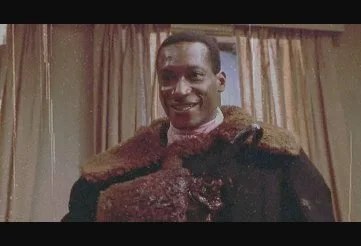
Say his name often enough, and eventually he’ll appear.
Our resentments behave in much the same way.
The more often we revisit them…
The more real they become.
Every replay strengthens the neural pathway.
Every imaginary conversation teaches your brain that this still matters.
Your brain doesn’t know you’re rehearsing fiction. It simply keeps pressing replay.
Here’s the cruel irony.
The person you’re mentally arguing with has probably moved on.
They’re buying oat milk.
Complaining about the Wi-Fi.
Wondering whether they should finally clean out the garage.
Meanwhile you’re hosting them rent-free in the most expensive property you’ll ever own: Your mind.
You have to recognise that what once protected you is now possessing you.
Because there’s a difference between remembering what happened… and continuing to let it keep happening inside your own head.
The first is wisdom.
The second is haunting.
And demons only stay powerful for as long as we keep inviting them back into the house.
The Demon of Regret
Not every demon announces itself with violence. Some wear the face of regret.
It doesn’t attack you.
It follows you. Quietly. Patiently.
Waiting for those moments when the house goes silent and your brain decides now would be the perfect time to replay every terrible decision you’ve ever made.
You know the ones.
The relationship you stayed in long after the closing credits should have rolled.
The opportunity you didn’t take because you were waiting until you felt “ready.”
The words you wish you’d said.
The words you desperately wish you hadn’t.
The version of your life that only exists in an alternate timeline your imagination insists on screening every Tuesday at 2:17 a.m.
Regret has an extraordinary talent for convincing us that the past was one different decision away from perfection.
As if we’d somehow have become happier…
Healthier…
Wealthier…
Emotionally stable enough to answer emails before they develop their own ecosystem.
Maybe.
Or maybe we’d simply have found a different way to screw it up.
That’s the thing about hindsight. It’s the only fortune teller that’s right one hundred percent of the time. Which makes it spectacularly unhelpful.
Horror has always understood this.
Take Pet Sematary.
People often remember it as the story about the place that brings the dead back. It isn’t.
It’s about what happens when grief refuses to accept that some doors are meant to stay closed.
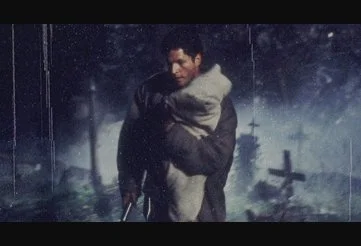
Louis Creed doesn’t make his choices because he’s evil. He makes them because he’s human.
Because somewhere deep inside him lives the fantasy we’ve all entertained at one point or another:
“If I could just go back…”
If I hadn’t sent that message.
If I’d taken the job.
If I’d left sooner.
If I’d stayed longer.
If I’d noticed.
If I’d known.
If. It’s the most dangerous word in the English language.
Because unlike memories, ifs have no ending.
They don’t ask you to remember the past. They ask you to rewrite it. Again. And again. And again.
Until you become emotionally trapped in a life that never actually happened.
That’s why regret is such a convincing demon.
It doesn’t haunt you with reality. It haunts you with fiction.
Because here’s the uncomfortable truth: The person you’re judging had none of the information you have now.
They weren’t reading the last page of the novel. They were standing on page forty-seven, doing the best they could with a plot that hadn’t unfolded yet.
Of course they made mistakes. They were alive.
The Others quietly asks one of horror’s most unsettling questions:
What if the thing keeping you trapped isn’t the house… but your refusal to leave it?
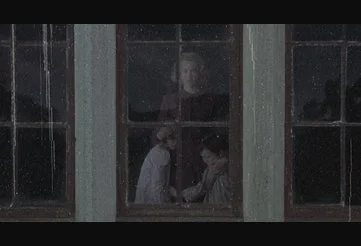
Regret works exactly the same way.
The past is a locked room.
You can visit it.
You just can’t live there.
Because while you’re staring backwards…
Life has this irritating habit of continuing without you.
Maybe that’s the cruellest trick regret ever plays.
It convinces you that honouring the past means refusing to leave it.
It doesn’t.
Sometimes the kindest thing you can do for the person you used to be…
…is stop asking them to carry today’s wisdom.
They never had it.
And they were never supposed to.
The Demon of Guilt
If resentment chains you to other people…
And regret chains you to the past…
Guilt does something even crueller.
It convinces you that you are the monster.
Not because of what happened to you.
Because of what you did.
Or didn’t do.
Or should have done.
Or somehow failed to predict with the magical powers of hindsight you absolutely did not possess at the time.
Guilt is a remarkably creative storyteller.
It doesn’t just remind you of your mistakes.
It rewrites your entire identity around them.
One failed relationship.
One business that didn’t work.
One terrible decision made on three hours’ sleep and a nervous breakdown.
One thing you wish you could take back.
Suddenly your brain behaves like a film critic who watched one scene and declared the entire movie a disaster.
That’s guilt.
Horror understands this better than almost any genre.
Take Saint Maud.
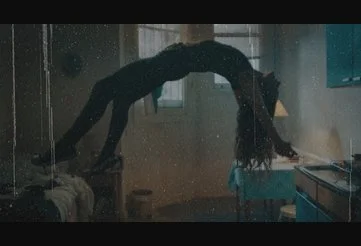
On the surface, it’s a story about faith. Underneath, it’s about something far more frightening.
The desperate belief that if you can just suffer enough…
Sacrifice enough…
Punish yourself enough…
Then maybe you’ll finally earn the right to forgive yourself.
It’s heartbreaking because it’s so recognisable.
Maybe your version isn’t religion.
Maybe it’s perfectionism.
Maybe it’s overworking.
People-pleasing.
Never resting.
Never celebrating your wins because you’re still mentally apologising for something that happened five years ago.
Different rituals.
Same haunting.
Or look at Jacob’s Ladder.
The horror isn’t just what’s chasing him. It’s the life he’s desperately refusing to let go of.
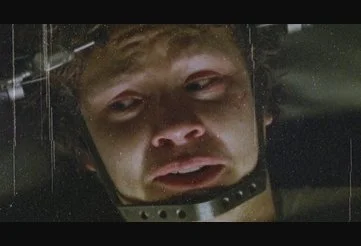
There’s a beautiful line often attributed to the film:
“The only thing that burns in Hell is the part of you that won’t let go of your life.”
Whether or not you’ve seen the film, the idea lingers.
Sometimes the fire isn’t punishment. Sometimes it’s resistance.
The more tightly we grip the version of ourselves we’re ashamed of… the more impossible it becomes to move forward.
Here’s the truth guilt never wants you to discover.
Feeling guilty and being accountable are not the same thing.
Accountability says, “I made a mistake.”
Guilt whispers, “I am the mistake.”
One helps you grow.
The other quietly convinces you that growth isn’t something you deserve.
That’s why guilt is such an effective demon.
It doesn’t need to lock the door. It simply persuades you that you’re not allowed to leave.
And maybe that’s the greatest horror of all.
Not that we make mistakes. Every Final Girl. Every Final Guy. Every survivor does.
Not because they were flawless… but because they kept going after discovering they weren’t.
Maybe that’s the lesson guilt has been trying to hide from us all along.
Your worst decision might explain part of your story.
It was never supposed to become your identity.
The Final Exorcism
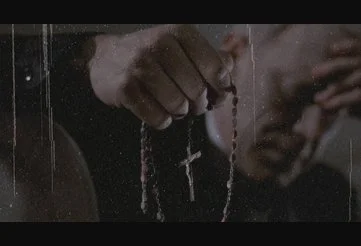
Unlike The Exorcist, psychological exorcisms rarely involve priests, crucifixes or anyone shouting, “The power of Christ compels you!” They’re usually much quieter.
We stop replaying the conversation. We stop punishing the younger version of ourselves. We stop giving yesterday permission to possess today.
Here’s the thing they never tell you about exorcisms.
The goal isn’t to pretend the demon was never there.
It’s to stop letting it run the house.
That’s what we’ve been talking about all along.
Not forgetting.
Not pretending.
Not sticking an inspirational quote over a crack in the wall and hoping nobody notices the foundations are still shaking.
Real healing has never been about developing selective amnesia.
It’s about deciding who gets to narrate the rest of your story.
Because every demon we’ve met in this article has been asking for exactly the same thing.
Resentment wants your attention.
Regret wants your imagination.
Guilt wants your identity.
Feed them long enough… and eventually they’ll convince you they are you. But they aren’t.
They’re just very persuasive storytellers.
Here’s what horror has been trying to teach us all along.
The victory was never destroying the monster.
The victory was refusing to become it.
And that’s what forgiveness really is.
Not saying, “It didn’t matter.” It did.
Not saying, “They deserved another chance.” Maybe they didn’t.
Not even saying, “I’m completely over it.”
Healing is rarely that tidy. Forgiveness is something far less glamorous.
It’s waking up one morning and quietly deciding: “I’m done carrying this for someone who isn’t carrying it with me.”
It’s closing the front door.
Changing the locks.
Stopping the séance.
Because some demons don’t leave when we ask them to.
They leave when we stop setting a place for them at the table.
That might mean forgiving someone who never apologised.
It might mean grieving the version of your life you thought you’d have.
It might mean forgiving yourself for being human in situations where no perfect answer ever existed.
Whatever form it takes… the exorcism always begins the same way.
Not by changing the past.
By withdrawing its permission to keep possessing the present.
Every haunting has a choice hidden inside it.
You can spend the rest of your life wandering the same abandoned corridors, arguing with ghosts that have nothing new to say…
…or you can step outside, lock the door behind you and let the silence feel unfamiliar for a while.
Because silence can feel strange after years of haunting.
Peace often does.
But strange isn’t the same as wrong.
And if there’s one lesson every great horror film leaves us with, it’s this:
The house isn’t what made the hero.
Walking out of it did.
So, whatever has been haunting you…
The resentment.
The regret.
The guilt.
The conversation that still echoes through your head.
The person who never came back.
The version of yourself you’re still trying to punish.
Maybe it’s time.
Not to forget.
Not to excuse.
Not even to understand.
Just… to stop inviting the demons back in.
Some stories deserve to stay in the archive. Yours doesn’t. If you’ve always found yourself drawn to the darker side of storytelling, there may be a reason. Discover your horror outsider archetype and find out what kind of survivor you’ve been becoming all along.


IN ODD WE TRUST Presents
A FIELD NOTES FROM THE DARK Production
Starring YOU, the protagonist in your own psychological thriller
Produced by A LIFETIME OF QUESTIONABLE DECISIONS
Directed by EXISTENTIAL DREAD Story by THAT VOICE IN YOUR HEAD AT 3AM
Costume Design STAY CREEPY TEE Music by DISSONANT SYNTH and REGRET
Feeling seen? You Belong with us, Join THE CULT OF ODD Your backstage pass to PSYCHOLOGICAL
SURVIVAL GUIDES, HORROR COPING RITUALS and EMOTIONALLY UNSTABLE T-SHIRTS