When You’re In The Dark: What to Do When Life Feels Hopeless
Colour / Reading Time 11 mins Approx
There is a particularly nasty moment in every dark place when your eyes haven’t adjusted yet. Nothing. No door. No path. No reassuring EXIT sign flickering conveniently above the fire escape. Just black. And your brain, being the calm and measured professional that it is, immediately concludes: Well. Apparently we live here now. But there’s an enormous difference between not being able to see the way forward and there being no way forward at all. Unfortunately, from inside the dark, they look exactly the same.
We’re very fond of transformation stories.
Someone hates their career. Then they find their calling.
Someone’s relationship ends. Then they meet The One'.
Someone burns their entire life to the ground. Cut to eighteen months later and they’re living beside the sea, making artisanal soap and apparently experiencing excellent natural light.
Lovely.
What tends to get edited out is the bit between those things.
The strange bit.
The blank bit.
The I genuinely have no fucking idea what I’m doing bit.
Because uncertainty doesn’t make a particularly satisfying before-and-after carousel.
There’s no dramatic reveal.
You don’t know what the next job is.
You don’t know whether the relationship will survive.
You don’t know where you want to live.
You don’t know whether the thing you’ve spent years building still fits.
You don’t know what you want instead.
You just know that whatever came before isn’t working anymore.
And that can feel remarkably like hopelessness.
Not because nothing can change.
But because you cannot currently imagine what the change looks like.
Those aren’t the same thing.
Your Brain Hates an Unfinished Story
Human beings are prediction machines.
We like patterns. Cause and effect. If I do X, presumably Y will happen.
We want to know what comes next because knowing gives us the delicious illusion that we’re in control.
Then life occasionally throws the script into a woodchipper.
The job disappears.
The relationship changes.
The plan doesn’t work.
Something you wanted finally arrives and turns out to be strangely empty.
You change.
Someone else changes.
You wake up one morning and realise the future you’ve been walking towards for ten years isn’t one you particularly want anymore. Now what?
Your brain would rather receive almost any answer than sit peacefully inside: I don’t know.
So it starts producing them.
You’ve ruined everything.
You’re falling behind.
You should have figured this out by now.
Everyone else knows what they’re doing.
You’ve wasted years.
Nothing is ever going to change.
Interesting.
Notice how quickly: I don’t know what happens next
becomes: Nothing good happens next.
That’s not knowledge.
That’s your brain writing an ending because it cannot tolerate the blank page.
Darkness Isn’t the Same Thing as a Dead End
The Autopsy of Jane Doe understands the horror of incomplete information beautifully.
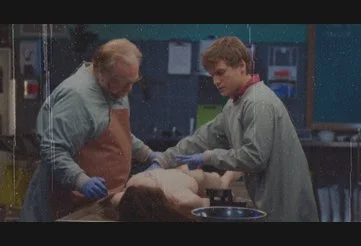
Two people are given a mystery and initially believe that if they keep examining it, everything will eventually make rational sense.
Instead, every answer produces another question. Certainty gets further away.
That’s what difficult periods of life can feel like.
You keep searching for the answer.
What am I supposed to do?
Should I leave?
Should I stay?
Should I start again?
What’s my purpose?
What’s the right decision?
Why is this happening?
When will I feel normal again?
Surely if you analyse the corpse long enough, metaphorically speaking, eventually the universe will hand over the pathology report.
Sometimes it doesn’t.
Sometimes you don’t have enough information yet.
That’s an important word.
Yet.
Because uncertainty isn’t necessarily a problem you’re failing to solve.
Sometimes uncertainty is simply where you are in the process.
Stop Demanding Answers From a Life That’s Still Changing
Imagine walking into a cinema twenty-seven minutes into a film and demanding to know the ending.
Someone says: “We don’t know yet.”
And you scream: THIS FILM IS A FAILURE.
Ridiculous.
Yet we do something remarkably similar to ourselves.
You’re in a transitional period and expect yourself to know what comes after it.
You haven’t finished grieving the old thing, but apparently you should already have selected the new thing.
You haven’t recovered from burnout, but where’s the five-year plan?
You’ve only just realised you don’t want your old life anymore, but could you please provide a detailed replacement by Friday?
No pressure.
There’s a peculiar cultural obsession with making uncertainty productive.
Lost? Find your purpose!
Confused? Set goals!
Unhappy? Reinvent yourself! Buy a planner!
Apparently stationery remains our primary defence against existential collapse.
But sometimes the healthiest response to I don’t know what comes next is: Okay.
Not forever.
Not giving up.
Just refusing to force an answer because uncertainty is making you uncomfortable.
Beware the Emergency Exit
When everything feels urgent, bad answers can look very attractive.
Any direction feels better than no direction. So you grab the first available one.
A new relationship.
A new job.
A new city.
A dramatic reinvention.
A business idea.
A course.
A five-year plan you’ve reverse-engineered from somebody on Instagram who appears to own fourteen beige blazers.
You tell yourself: This is it.
Maybe it is.
But sometimes we don’t choose the next thing because it’s right.
We choose it because not knowing is unbearable.
And that’s dangerous.
Because escaping uncertainty and moving towards something you genuinely want are not necessarily the same movement.
Sometimes the urge to “figure your life out” is really the urge to stop feeling uncomfortable.
You don’t always need a destination.
Sometimes you need enough breathing room to discover one.
The Mist and Our Desperate Need to Know
The Mist is practically built around uncertainty.
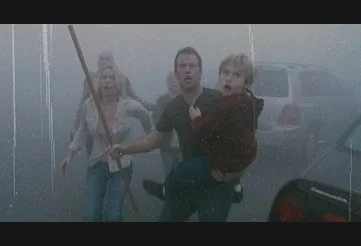
Nobody can see very far.
Nobody knows exactly what’s outside.
Information is limited.
Fear fills the gaps.
And different people respond by constructing explanations.
Certainty becomes intoxicating.
Someone who claims to know what’s happening can suddenly become extremely appealing when everyone else is terrified.
There’s something recognisable in that.
When life becomes uncertain, we become vulnerable to hasty certainty.
Tell me what this means.
Tell me what’s going to happen.
Tell me what I should do.
Tell me everything will work out.
But certainty and truth aren’t synonyms.
Sometimes: I don’t know yet
is the most truthful answer available.
That’s uncomfortable.
But it can also be liberating.
Because if you genuinely don’t know what comes next, you can stop judging yourself for failing to execute a plan that doesn’t exist yet.
Maybe You Don’t Need Hope the Way You Think You Do
We tend to imagine hope as optimism.
Everything will be fine.
Something wonderful is coming.
Trust the universe.
Your breakthrough is just around the corner.
Maybe.
Maybe not.
Personally, I become suspicious whenever the universe starts sounding like a LinkedIn coach.
You don’t have to believe something wonderful is definitely coming in order to continue. Sometimes hope is much smaller.
I don’t know how this turns out. That’s hope. Because uncertainty cuts both ways.
You don’t know that things will improve. But you also don’t know that they won’t.
Hopelessness takes incomplete information and presents the worst possible outcome as certainty.
This is permanent.
Nothing will change.
There are no options.
But unless you’ve recently acquired prophetic abilities in a freak lightning incident, you don’t know that.
You don’t need to replace: Everything is doomed
with: Everything will be wonderful.
Try: I don’t know yet.
It’s less inspirational.
It’s also considerably more honest.
The Empty Man and the Terror of Missing Answers
The Empty Man is obsessed with searching for explanations.
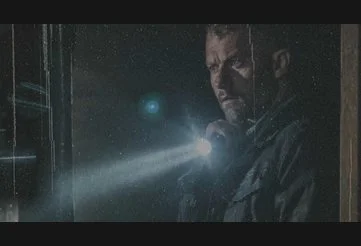
Its protagonist keeps pulling at a thread because he believes there must be something underneath everything that will finally make it make sense.
And the further he goes, the less stable certainty becomes.
That’s existential horror in a nutshell.
We want the answer beneath the answer.
Why did this happen?
Why me?
What was the point?
What am I supposed to learn?
What does this say about my life?
Sometimes there is meaning to be found.
Sometimes meaning gets created later.
And sometimes something shitty happened because life contains shitty things.
You don’t need to extract a motivational quote from every disaster.
You don’t have to transform pain into a TED Talk while you’re still bleeding.
Meaning can wait.
Your immediate job might simply be: live through today.
That’s enough.
Shrink the Size of the Future
One reason hopelessness becomes overwhelming is that we try to solve our entire future while standing inside the worst moment of the present.
Don’t.
If you can’t see five years ahead, stop looking five years ahead.
Can you see a year?
No?
A month?
A week?
Tomorrow?
This afternoon?
The next ten minutes?
Good.
Work with what you can see.
This isn’t giving up on ambition.
It’s adjusting the beam of the torch.
You don’t drive at night by illuminating the entire motorway from Manchester to Edinburgh.
You see a stretch of road.
You drive it.
Then the headlights reveal another stretch.
Then another.
Most lives work like that anyway.
We just prefer pretending we have satellite navigation.
Ask Smaller Questions
When you’re lost, “What should I do with my life?” is an appalling question.
It’s enormous.
It contains careers, relationships, geography, money, identity, purpose, mortality and probably whether you should finally learn Italian.
Your brain understandably blue-screens.
Ask smaller questions.
What is making things worse right now?
What would make tomorrow 5% easier?
What am I continuing purely because I’ve already invested years in it?
What do I need less of?
What gives me even a flicker of curiosity?
What decision doesn’t need to be made yet?
What information am I missing?
What can I try without committing my entire future to it?
These questions don’t require prophecy.
They create movement without demanding certainty.
And sometimes movement is what allows information to appear.
You don’t always think your way into clarity.
Sometimes you live your way into it.
Stop Treating Experiments Like Life Sentences
This is especially useful when you don’t know what you want.
Try things.
Not everything needs to be THE ANSWER.
Take the class.
Apply for the role.
Visit the place.
Make the thing.
Talk to the person.
Spend a month doing something differently.
See what happens.
We put ridiculous pressure on decisions because we imagine every choice carving itself permanently into the stone tablet of our identity.
It isn’t.
You can choose something and later discover it wasn’t right.
You can change your mind.
You can stop.
You can pivot.
You can go: “Well, that was educational.” And never speak of pottery again.
Experiments generate information.
Information creates options.
Options create movement.
You don’t need to know where the road ends before taking one step down it.
Skinamarink and What Darkness Actually Does to Us

Whatever you think of Skinamarink, it understands something primitive about darkness.
Ordinary rooms become threatening when you can’t see properly.
A doorway becomes terrifying. A hallway becomes endless.
Your imagination supplies whatever the darkness withholds.
That’s what uncertainty does psychologically.
Missing information doesn’t remain empty. Your brain fills it.
And anxious brains aren’t exactly famous for submitting restrained proposals.
They don’t say: “Perhaps circumstances will evolve in several plausible ways.”
They say: YOU WILL DIE ALONE UNDER A BRIDGE AND SOMEHOW EVERYONE FROM SCHOOL WILL KNOW ABOUT IT.
Thanks, brain.
This is why learning to distinguish between what you know and what darkness is making you imagine, matters.
You know: I don’t currently know what I want to do.
You imagine: I’ll never know what I want to do.
You know: This relationship has ended.
You imagine: Nobody will ever love me again.
You know: This attempt failed.
You imagine: Everything I attempt will fail.
You know: I’m struggling right now.
You imagine: This is who I am now.
Catch the difference?
One is information.
The other is prophecy dressed as information.
You are Allowed to Stop Performing Optimism
There’s another exhausting thing we do when life gets dark.
We perform recovery.
We reassure everyone…
“I’m sure it’ll work out.”
“Everything happens for a reason.”
“I’m staying positive.”
“I’ve learned so much.”
Have you?
Or would you currently like to throw a mug through a wall?
Because that’s also data.
You don’t owe anyone a beautiful interpretation of a difficult period.
You can be disappointed. Angry. Confused. Scared. Fed up.
You can admit: I don’t know what I’m doing next and I hate that.
Acceptance doesn’t mean enjoying uncertainty.
It means stopping the secondary fight where you insist you shouldn’t be experiencing it.
The first problem is: I don’t know what comes next.
The second problem is: I SHOULD KNOW WHAT COMES NEXT. WHAT IS WRONG WITH ME?
Guess which one you can remove immediately?
Don’t Confuse Rest With Surrender
Sometimes when you’ve been fighting uncertainty for months, what you actually need isn’t another strategy.
You need to stop.
Not forever.
Long enough for your nervous system to stop treating every unanswered question like a hostage negotiation.
Rest can look suspiciously like doing nothing when you’ve been trained to measure worth through forward motion.
But there are seasons where forcing progress creates more noise.
You don’t have to monetise the pause. Optimise the pause. Turn the pause into a personal-growth project with colour-coded worksheets.
You can just pause.
The answer may still not arrive. But you may become better able to hear yourself without panic shouting over everything.
The Way Out Might Not Look Like an Exit
This is perhaps the strangest part.
Sometimes you don’t “get your old life back.”
You don’t return to the person you were.
You don’t solve the problem and resume the original plan.
You adapt around what happened.
Your priorities change.
Something ends.
Something unexpected becomes important.
A version of you that made complete sense five years ago stops making sense.
The way out becomes a way through.
And you may not recognise it while it’s happening.
That’s why demanding that your future resemble something you already understand can keep you stuck.
The next thing might not look like anything you’ve imagined yet. Which means you couldn’t possibly have planned for it.
So What Do You Do When You Genuinely Don’t Know What Comes Next?
You stop demanding a map of territory you haven’t reached
You separate what you know from what you fear
You make the future smaller
You ask questions you can actually answer
You make reversible decisions
You experiment
You notice what gives you energy and what drains it
You let things end without immediately replacing them
You rest when you’re exhausted
You ask for help when the darkness becomes too much to navigate alone
And you allow I don’t know to remain an answer for a while
Not knowing isn’t nothing.
It’s an open space.
Uncomfortable? Absolutely.
Terrifying? Sometimes.
But open.
You Don’t Need to See the Ending
Maybe this isn’t the part where you dramatically find the exit.
Maybe nobody hands you the torch.
Maybe the music doesn’t swell.
Maybe you don’t suddenly understand why everything happened.
Maybe you’re simply standing somewhere unfamiliar thinking: Well. Fuck.
And maybe that’s where we leave the grand transformation narrative alone.
Because your job isn’t to know how the whole story ends.
Your job isn’t even to convince yourself there’s definitely a spectacular ending waiting.
Your job is to respond to what’s actually here.
The next conversation.
The next experiment.
The next boundary.
The next morning.
The next small piece of information.
The next few feet illuminated in front of you.
Because darkness does something incredibly convincing.
It makes what you cannot currently see feel as though it doesn’t exist.
The road.
The options.
The future version of you who understands things you don’t understand yet.
None of them are visible from here.
But invisible isn’t the same as impossible.
And perhaps you don’t need to find your way out today.
Maybe you only need to find your way to the next visible thing.
Then you can see what appears from there.
Sometimes “I don’t know what comes next” begins with a quieter realisation… I know I don’t want to keep going this way.
This Doesn’t Feel Like Me helps you separate the roles, expectations and identities you’ve accumulated from the things that still genuinely belong to you, so you can start finding direction without simply replacing one inherited script with another.


IN ODD WE TRUST Presents
A FIELD NOTES FROM THE DARK Production
Starring YOU, the protagonist in your own psychological thriller
Produced by A LIFETIME OF QUESTIONABLE DECISIONS
Directed by EXISTENTIAL DREAD Story by THAT VOICE IN YOUR HEAD AT 3AM
Costume Design EMBRACE THE DARKNESS TEE Music by DISSONANT SYNTH and REGRET
Feeling seen? You Belong with us, Join THE CULT OF ODD Your backstage pass to PSYCHOLOGICAL
SURVIVAL GUIDES, HORROR COPING RITUALS and EMOTIONALLY UNSTABLE T-SHIRTS