Colour / Reading Time 8 mins Approx
There’s a particular kind of horror that doesn’t involve blood, monsters or somebody investigating a suspicious noise in the basement. It’s the moment you look at your life and realise you don’t particularly recognise the person living it.
You know your name. You know your responsibilities. You can probably tell someone your favourite film, what you had for dinner and which household appliance is currently making a noise it shouldn’t.
But ask yourself what you actually want from life, and suddenly you’re staring into the existential equivalent of a blank screen.
You haven’t disappeared.
You’re just not entirely sure who’s been operating the machinery.
And that’s a rather unsettling thing to discover.
I Don’t Know Who I Am Anymore
People talk endlessly about finding themselves, as though there’s a fully formed version of you hiding behind a waterfall, waiting to be discovered.
Perhaps they’re wearing linen trousers. Perhaps they’ve achieved inner peace. Perhaps they’ve finally worked out what to do with their life savings.
Lovely for them.
But what if you’re not lost in the conventional sense?
What if you’ve simply become disconnected from yourself?
You go through the motions. You fulfil your responsibilities. You do what needs doing. From the outside, everything might look perfectly ordinary.
Yet something feels missing.
Things you used to enjoy don’t seem particularly interesting anymore.
Decisions that should be straightforward feel strangely difficult.
You struggle to identify what you want beyond getting through the week without somebody asking you to do something.
You might even feel like you’re watching your own life rather than actively participating in it.
And when someone asks how you’re doing, you automatically say, “Fine.”
Because explaining that you feel like a slightly underwhelming guest in your own existence seems unnecessarily complicated.
This experience is more common than you might think. Feeling disconnected from yourself can develop gradually, particularly during prolonged stress, major life changes or periods when your attention has been consumed by everything except your own needs and interests.
It doesn’t necessarily mean you’ve lost your identity.
But it might mean you’ve lost touch with the things that make your life feel like yours.
The Horror of Becoming Someone You Don’t Recognise

In Invasion of the Body Snatchers (1978), people are gradually replaced by emotionless duplicates. They look exactly like the originals, occupy the same homes and carry on with the same routines. But something essential has disappeared.
That’s what makes the film so unsettling. The people you know are still standing in front of you, but they’re no longer quite themselves.
There’s an uncomfortable psychological question underneath the premise: How much of the person you are today is genuinely yours?
Not because somebody has secretly replaced you with an alien pod person, obviously. Although some workplace performance reviews might suggest otherwise.
But consider how easily we absorb ideas about who we’re supposed to be.
What a successful person looks like. What we should have achieved by a certain age. What interests are worthwhile. What constitutes a sensible career, a respectable lifestyle or an acceptable amount of ambition.
Eventually, those expectations can become so familiar that we stop questioning them.
You might pursue something because it looks like the right thing to want.
You might dismiss an interest because it doesn’t seem productive.
You might continue living according to a plan that made perfect sense ten years ago but no longer reflects the person you’ve become. And because you’ve invested so much time in that version of your life, changing direction can feel almost like admitting you’ve made a terrible mistake.
But people aren’t static.
Your interests change. Your priorities change. Your circumstances change.
The problem isn’t that you’re no longer the person you used to be.
It’s expecting yourself to remain a person you’ve already outgrown.
When You Become Someone You Don’t Recognise

In The Fly (1986), scientist Seth Brundle begins a seemingly ordinary experiment that goes horribly wrong. As his body gradually transforms, he becomes increasingly alienated from the person he once was.
What’s particularly disturbing is that the transformation doesn’t happen all at once. There are moments when he still recognises himself, moments when he tries to convince himself that everything is fine, and moments when the person looking back from the mirror becomes increasingly difficult to accept.
It’s a rather spectacular horror-film version of a question many people eventually face: When did I become someone I don’t recognise?
Most of us aren’t going to experience a catastrophic genetic mutation, thankfully. But we can change so gradually that we don’t notice how different we’ve become.
Our priorities shift. Our interests disappear. The things we once cared about become distant memories. We continue living according to routines and expectations that no longer feel particularly connected to us.
Perhaps you don’t know what music you like anymore because you haven’t chosen what to listen to in years.
Perhaps you can’t remember the last time you did something simply because it interested you.
Perhaps your weekends are full, your calendar is organised and your responsibilities are being handled, but none of it feels particularly connected to you.
You know what you do.
You’re less certain about who you are.
Why You Feel Disconnected From Yourself
Feeling disconnected rarely arrives with a dramatic announcement.
More often, it’s the accumulated result of living on autopilot.
Life gets busy. Responsibilities multiply. Work demands attention. Relationships change. Unexpected circumstances require you to adapt.
You become very good at responding to whatever is happening around you.
But when was the last time you stopped to consider what was happening inside you?
There are several reasons this disconnection can develop.
1. You’ve been living on autopilot.
When every day revolves around obligations and routines, there’s very little space to explore what you actually enjoy.
You wake up, work, organise, respond, prepare, repeat.
Eventually, life becomes something you manage rather than something you actively experience.
2. You’ve outgrown your old identity.
The person you were in your twenties might have wanted completely different things from the person you are now.
But sometimes we keep pursuing old ambitions simply because we’ve never stopped to question whether they still matter.
You aren’t necessarily failing to become who you were supposed to be.
Perhaps you’ve become someone different.
3. You’ve lost confidence in your own judgement.
If you constantly question your decisions, compare yourself with other people or seek reassurance before acting, it’s easy to lose confidence in what you actually think.
You start looking outside yourself for answers that require some inward investigation.
4. You’re mentally exhausted.
When you’re overwhelmed, everything can start feeling flat.
Interests become obligations. Choices become effort. Even things you previously enjoyed can feel like another item on an already unreasonable to-do list.
Sometimes the problem isn’t that you’ve lost your personality.
It’s that you’re running on fumes.
These experiences can overlap, and feeling disconnected isn’t a diagnosis in itself. If the feeling is persistent, distressing or affecting everyday life, it’s worth speaking to a qualified health professional rather than assuming it’s simply an identity issue.
The Strange Experience of Becoming a Stranger to Yourself
In The Shining (1980), Jack Torrance takes a job as the winter caretaker of the isolated Overlook Hotel. What begins as an opportunity to work on his writing gradually descends into psychological horror as isolation, resentment and his deteriorating mental state consume him.
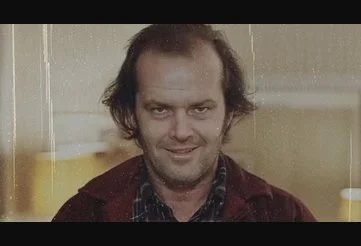
Part of the film’s unease comes from watching someone become increasingly unfamiliar, even to the people who know him best.
The face is recognisable. The voice is familiar. But the person seems to be disappearing beneath something darker.
It’s an extreme fictional portrayal, but it raises an unsettling question: What happens when you become so disconnected from yourself that even your own life starts to feel unfamiliar?
You don’t need to experience anything remotely as dramatic to recognise a milder form of disconnection.
You might feel detached from your own decisions.
You might struggle to remember what genuinely makes you happy.
You might look at your life and think, Is this actually what I wanted?
Or perhaps you simply feel as though something is missing, without being able to explain exactly what.
The temptation is to immediately search for a solution.
A new career. A new hobby. A new relationship. A dramatic change of scenery.
And sometimes a change really is needed.
But before you start dismantling your entire existence like a particularly enthusiastic property developer, it might be worth finding out what you’ve actually become disconnected from.
How to Reconnect With Yourself
You don’t need to disappear into the wilderness, shave your head or purchase an expensive journal with the word transform embossed across the cover.
Reconnecting with yourself is less about dramatic reinvention and more about paying attention.
Here are five places to start.
1. Remember What You Actually Enjoy
Forget what you’re supposed to enjoy.
What genuinely interests you?
What makes you curious?
What do you find yourself reading about, watching or wanting to learn?
Think about things you enjoyed before life became a collection of responsibilities.
Perhaps you used to draw, explore, read, make things or spend hours learning about something completely unnecessary.
You don’t have to become your younger self again. But revisiting old interests can remind you that you’re allowed to have a life beyond being useful.
2. Notice What Gives You Energy and What Drains It
Start paying attention to how different parts of your life make you feel.
Which activities leave you interested and engaged?
Which ones leave you exhausted, irritated or strangely empty?
You don’t need to immediately change everything you dislike. The first step is recognising the difference between what genuinely matters to you and what you’re simply accustomed to doing.
3. Make Decisions Without Asking Everyone Else
Choose something without seeking reassurance.
Pick the restaurant. Decide what to watch. Choose how to spend an afternoon.
You don’t need to get every decision right.
Self-trust develops through experience, including discovering that you can make a less-than-perfect choice and survive the consequences.
4. Stop Comparing Your Life With Someone Else’s
It’s difficult to recognise what you want when you’re constantly measuring your life against somebody else’s.
Their career, home, relationship, appearance or apparent achievements might look wonderful.
But you’re comparing your entire existence with the carefully selected information you can see about theirs.
Your life doesn’t need to resemble anybody else’s to be worthwhile.
5. Ask Yourself Better Questions
Instead of repeatedly asking, What’s wrong with me? try something more useful.
What have I stopped doing that I used to enjoy?
What am I curious about?
What would I change if I weren’t worried about getting it wrong?
What matters to me now that perhaps didn’t matter five years ago?
What would make my ordinary Tuesday feel a little more like my own?
You don’t need immediate answers. Sometimes asking the question is the first indication that you’ve started paying attention again.
You Don’t Need to Become Someone Else
Perhaps the most exhausting part of searching for yourself is the assumption that there’s something missing.
That somewhere out there is a better, more confident, more authentic version of you, and if you could only find the right book, routine, relationship, career or life-changing experience, everything would finally make sense.
But you don’t need to turn yourself into a renovation project.
You don’t need to discover an entirely new personality.
You need to develop a relationship with the one you already have.
You need to become curious about your own interests again. To recognise what matters to you. To make decisions without demanding impossible certainty.
And to accept that the person you are today doesn’t have to be the person you were five, ten or twenty years ago.
You are allowed to change.
You are allowed to want different things.
You are allowed to discover that the life you once imagined isn’t the life you want anymore.
Perhaps you haven’t lost yourself.
Perhaps you’ve simply become so busy living the life you thought you were supposed to have that you haven’t stopped to consider whether it still belongs to you.
The person in the mirror isn’t a stranger.
They’re just someone you haven’t spent enough time getting to know lately.
And perhaps it’s time you made the introduction.
DID THIS ONE SPEAK TO YOU? HEART IT.
You’ve questioned the decision. Reconsidered the alternatives. Imagined seventeen possible outcomes and asked three different people what they think. And somehow, you’re still no closer to deciding what you actually want. Sometimes you don’t need another hour of thinking. You need to interrupt the mental noise long enough to hear yourself again.
This Is Not An Emergency — The Reset Protocol is a practical five-minute guide designed to help you interrupt overthinking, step out of spiralling thought patterns and regain a little breathing room. No elaborate morning routine. No forced positivity. Just something useful when your brain has turned an ordinary decision into a full-scale psychological disaster.


IN ODD WE TRUST Presents
A FIELD NOTES FROM THE DARK Production
Starring YOU, the protagonist in your own psychological thriller
Produced by A LIFETIME OF QUESTIONABLE DECISIONS
Directed by EXISTENTIAL DREAD Story by THAT VOICE IN YOUR HEAD AT 3AM
Costume Design NO PLACE LIKE HOME TEE Music by DISSONANT SYNTH and REGRET
Feeling seen? You Belong with us, Join THE CULT OF ODD Your backstage pass to PSYCHOLOGICAL
SURVIVAL GUIDES, HORROR COPING RITUALS and EMOTIONALLY UNSTABLE T-SHIRTS