Who Taught You to Be You? The Identity You Never Chose
Colour / Reading Time 10 mins Approx
There’s a particular kind of horror where the terrifying discovery isn’t that something is inside the house. It’s that it’s been there the entire time. Watching. Learning your habits. Knowing exactly which buttons to press. And then you realise the thing making the decisions might not be a monster at all. It might be a version of you that learned how to survive a long time ago — and never got the message that the danger was over.
That’s the uncomfortable part of self-awareness.
You think you’re getting to know yourself. But sometimes you’re actually discovering how much of yourself was assembled without your permission.
The fears you inherited.
The rules you absorbed.
The roles you slipped into.
The coping mechanisms that once kept you safe.
The desires you assumed were yours because everyone around you told you they should be.
The identity you built because it was easier to become who people needed than figure out who the hell you actually were.
And if that sounds slightly sinister…
Good.
Because this is where things get interesting.
You May Not Know Yourself as Well as You Think
Most of us assume self-awareness means knowing our personality.
I like horror movies
I hate small talk
I’m an introvert
I’m ambitious
I’m a people person
I’m independent
I’m the responsible one
I’m not good at relationships
I’m terrible with money
I’ve always been this way
Lovely. Congratulations on completing the BuzzFeed personality quiz version of knowing yourself.
But real self-awareness goes considerably deeper.
It asks why.
Why do you need everyone to like you?
Why does criticism feel like a personal attack?
Why do you keep choosing people who need rescuing?
Why do you become completely different around certain people?
Why do you panic when someone is disappointed in you?
Why do you keep saying you want freedom while building a life with absolutely no room for it?
Why do you want something desperately… and then find seventeen ingenious ways not to have it?
That’s where the fun begins.
Because beneath the personality you present to the world are layers of adaptations.
Some were conscious. Most weren’t.
You learned what got approval.
You learned what caused conflict.
You learned when to speak.
When to shut up.
When to perform.
When to disappear.
When being funny made things easier.
When being useful made you valuable.
When being perfect kept criticism away.
When being independent meant nobody could disappoint you.
Eventually those adaptations stop feeling like strategies.
They start feeling like you.
And that’s where self-awareness becomes less like looking in a mirror… and more like finding out the mirror has been lying to you all along.
The Roles You Didn’t Realise You Were Playing
Horror loves a hidden identity.
Someone thinks they know who they are, only to discover there’s an entirely different story underneath.
That’s part of what makes The Stepford Wives so unsettling.

The horror isn’t simply that something is wrong with the women.
It’s the idea of having an identity imposed upon you so gradually that the transformation starts to look normal.
And while most of us aren’t going to wake up mysteriously replaced by a suspiciously cheerful domestic robot, the psychological version happens all the time.
You become the good daughter.
The reliable friend.
The successful one.
The difficult one.
The funny one.
The peacemaker.
The black sheep.
The one who never needs help.
The one who always has it together.
The one who doesn’t fit in.
The one who can handle anything.
And eventually you stop asking whether the role still fits. You just keep performing it.
This is where self-awareness gets uncomfortable. Because some of the identities you’re most attached to may have originally been survival strategies.
Being independent might have protected you from relying on people
Being agreeable might have protected you from conflict
Being hyper-competent might have protected you from criticism
Being funny might have helped you survive uncomfortable situations
Being invisible might once have been safer than being noticed
None of those things make you broken.
They make you adaptive.
But something that helped you survive one chapter can become a prison in another.
And the question isn’t: “What’s wrong with me?”
It’s: “When did I learn that I had to be this way?”
That’s a much more interesting question.
Your Coping Mechanisms Have a Dark Side
Here’s where self-awareness stops being a nice little personality exercise and starts becoming genuinely useful.
Because your coping mechanisms are often brilliant.
Until they’re not.
Avoidance can protect you from overwhelm. Until it keeps you from making decisions.
Perfectionism can protect you from criticism. Until nothing ever gets finished.
People-pleasing can protect you from rejection. Until nobody knows what you actually want.
Control can protect you from uncertainty. Until your entire life becomes one giant risk-management spreadsheet.
Emotional detachment can protect you from getting hurt. Until you’re standing in a perfectly safe room wondering why you still can’t let anyone in.
The problem isn’t that these behaviours exist. The problem is when they become automatic.
You don’t choose them anymore.
They choose for you.
That’s the difference between using a coping mechanism and being run by one.
And this is where the horror metaphor gets particularly useful.
Think about The Invisible Man.
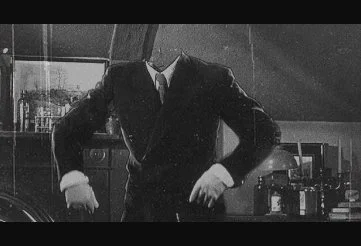
The terror isn’t simply that there’s an invisible person in the room. It’s that you can’t see what’s controlling the situation.
That’s what an unconscious pattern does.
You can’t challenge what you can’t see.
If you don’t recognise that you automatically retreat whenever you’re criticised, you’ll keep calling yourself “someone who doesn’t like confrontation”
If you don’t recognise that you automatically overwork whenever you’re anxious, you’ll keep calling yourself “ambitious”
If you don’t recognise that you choose emotionally unavailable people because intimacy makes you uncomfortable, you’ll keep calling yourself “unlucky in love”
The label becomes the camouflage.
And once you see the pattern?
You can’t unsee it.
Which, admittedly, is both useful and deeply irritating.
Your Fears May Be Older Than Your Problems
One of the strangest things about fear is that it often outlives the thing that created it.
You can be an adult with a completely different life, different circumstances and vastly more resources than you had years ago… and still react as though you’re the same person standing in the same room.
That’s because fear isn’t particularly interested in calendars.
Your nervous system can learn: This is dangerous. And then continue behaving as though it is.
Someone being disappointed in you
Making a mistake publicly
Being rejected
Being abandoned
Looking stupid
Failing
Being successful enough that people start watching
Being seen
Being ordinary
Being different
Being alone
Even being happy can feel strangely dangerous if you’re accustomed to waiting for the other shoe to drop.
This is one reason self-awareness matters.
You don’t simply need to know what you’re afraid of.
You need to know what your fear makes you do.
Do you avoid?
Overprepare?
Overthink?
Control?
Please?
Run?
Freeze?
Pick fights?
Shut down?
Make jokes?
Convince yourself you never wanted the thing in the first place?
That last one is particularly sneaky.
Because sometimes we don’t abandon our desires because we stop wanting them.
We abandon them because wanting them makes us vulnerable.
And telling yourself, I didn’t really want it anyway is considerably easier than admitting: I wanted it, but I was terrified I might not get it.
The Things You Want Might Not Even Be Yours
Here’s another uncomfortable one.
How much of what you want did you actually choose?
Not your parents.
Not your teachers.
Not your friends.
Not your culture.
Not the algorithm.
Not the imaginary audience you’ve been performing for since approximately 1998.
You were handed an awful lot of instructions about what a successful life was supposed to look like.
Good job.
Nice house.
Partner.
Family.
Career.
Money.
Status.
Productivity.
Youth.
Beauty.
Achievement.
More achievement.
A tasteful amount of leisure so you don’t completely collapse.
And somewhere along the way, “What do I actually want?” got replaced with: “What am I supposed to want?”
That’s a dangerous substitution.
Because you can spend years climbing a ladder only to discover it was leaning against somebody else’s house.
And then comes the existential crisis.
But if I don’t want this anymore, who am I?
Excellent question. Terrible timing. Important question anyway.
Self-awareness isn’t simply identifying your problems.
It’s also identifying your desires.
The things that make you feel alive.
The things you keep coming back to.
The things you secretly want even though they make absolutely no sense on paper.
The interests you’ve abandoned because they weren’t “useful.”
The parts of yourself you’ve hidden because they didn’t fit neatly into the life you were building.
Sometimes self-awareness doesn’t reveal a monster.
Sometimes it reveals a person you’ve been ignoring.
The Horror of Realising You Have a Pattern
There’s a moment in Midsommar when the familiar rules of reality start becoming increasingly unreliable.
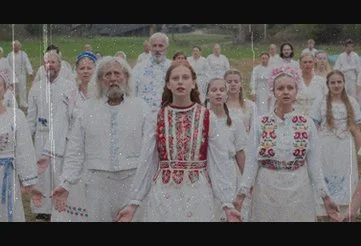
What looks normal at first becomes strange.
Then disturbing.
Then you realise the characters are inside an entire system with rules they don’t understand.
That’s a useful metaphor for unconscious patterns.
When you’re inside them, they feel like reality.
This is just how relationships work
This is just what work is like
Everyone feels like this
I’m just bad at making decisions
I’m naturally anxious
I’m a procrastinator
I’m terrible at boundaries
That’s just my personality.
Maybe.
Or maybe you’ve been living inside a pattern for so long that you’ve mistaken it for a personality trait.
This is why noticing patterns can feel strangely destabilising. Because suddenly you have to reconsider the story.
Maybe you’re not “bad at relationships.” Maybe you’ve learned to confuse unpredictability with chemistry.
Maybe you’re not “lazy.” Maybe you’re exhausted from pursuing things you don’t actually care about.
Maybe you’re not “too sensitive.” Maybe you’ve spent years ignoring your own boundaries until everything feels like an emergency.
Maybe you’re not “indecisive.” Maybe you’ve learned that making the wrong choice has consequences, so you keep trying to find a choice with zero risk.
And maybe you’re not fundamentally broken.
Maybe you’re just incredibly well-practised at being someone you once needed to be.
That distinction matters.
Because if something is who you are, you’re stuck with it.
If something is something you learned, you can examine it.
And once you can examine it, you can decide whether you still want it.
Self-Awareness Isn’t Self-Surveillance
There is, however, a trap here.
You can become so obsessed with understanding yourself that you turn self-awareness into another form of self-criticism.
Now you’re analysing every text message.
Every reaction.
Every relationship.
Every childhood memory.
Every awkward conversation from 2007.
Why did I say that?
What does that mean about me?
Was that a coping mechanism?
Am I emotionally unavailable?
Is this an attachment issue?
Am I the problem?
Jesus. Put down the psychological magnifying glass.
Self-awareness isn’t about putting yourself permanently on trial.
It’s about becoming curious.
Instead of: “What’s wrong with me?”
Try: “What’s happening here?”
Instead of: “Why do I always do this?”
Try: “What usually happens just before I do this?”
Instead of: “Why can’t I change?”
Try: “What is this behaviour trying to protect me from?”
That shift is enormous.
Because curiosity creates space.
And space creates choice.
You don’t have to immediately fix every pattern you discover.
You don’t have to excavate your entire childhood before breakfast.
You don’t even have to like everything you find.
You simply need to see it.
Because you can’t consciously choose what you haven’t consciously noticed.
The Mirror Isn’t There to Judge You
This is the part where self-awareness becomes something far more hopeful than a psychological horror story.
The point isn’t to discover that you’re secretly the villain.
It’s to realise you’re not required to keep playing the same character.
You can notice the fear.
Notice the pattern.
Notice the role.
Notice the story.
Notice the desire underneath the noise.
And then ask the question that changes everything: “Do I still choose this?”
Do I still want to be the person who never asks for help?
Do I still want to make myself smaller so other people stay comfortable?
Do I still want success if it comes with a life I don’t actually enjoy?
Do I still want to be endlessly available?
Do I still want to keep proving something to people who aren’t even watching anymore?
Do I still want the identity I’ve spent years defending?
Maybe the answer is yes.
That’s fine.
Self-awareness isn’t about rejecting your past.
Sometimes you discover that a trait you thought was a problem is actually part of your strength.
Your independence might be genuine.
Your sensitivity might be valuable.
Your ambition might be yours.
Your weirdness might be exactly what makes your life interesting.
The point is that you get to choose.
Not your fear.
Not your conditioning.
Not your old survival strategy.
Not the version of you who learned what was acceptable before you were old enough to question it.
You.
Final Notes
There is a particular freedom that comes from realising you don’t have to believe every story you’ve been told about yourself.
You don’t have to remain the responsible one.
The difficult one.
The invisible one.
The successful one.
The people-pleaser.
The outsider.
The failure.
The perfectionist.
The one who always copes.
The one who never does.
Those may be chapters.
They don’t have to be the title of the book.
And maybe that’s the real purpose of self-awareness.
Not becoming perfectly enlightened.
Not analysing yourself into oblivion.
Not finally discovering the one magical personality profile that explains every terrible decision you’ve ever made.
It’s much simpler than that.
It’s noticing.
Oh, I do that when I’m afraid
I say yes when I mean no
I disappear when I feel rejected
I become controlling when I feel uncertain
I keep chasing things I don’t actually want because I think I should want them
I’ve been calling this “who I am” when it’s actually something I learned
That’s the moment the lights come on.
And sometimes what you see in the mirror won’t be pretty.
Good.
It doesn’t need to be.
Because self-awareness isn’t about becoming someone new.
It’s about finally seeing the person who’s been there all along — underneath the roles, the rules, the fear, the coping mechanisms, the expectations and all the other psychological furniture you’ve accumulated along the way.
Some of it you’ll keep.
Some of it you’ll throw out.
Some of it you’ll look at and wonder, What the hell was I thinking?
That’s okay.
You’re allowed to redecorate.
Because the most unsettling thing you may discover isn’t that you’ve been living on autopilot.
It’s that the person you’ve been waiting to become has been sitting in the driver’s seat the whole damn time.
You just hadn’t thought to ask where they were going.
DID THIS ONE SPEAK TO YOU? HEART IT.
And if the person you’ve become doesn’t quite feel like you… That’s not necessarily a breakdown. It might be recognition.This Doesn’t Feel Like Me is a guide to figuring out what’s yours, what’s been inherited, what’s no longer serving you — and what the hell you want to do about it. Because you don’t need to become a better version of someone you never consciously chose to be. You might just need to find your way back to yourself.


IN ODD WE TRUST Presents
A FIELD NOTES FROM THE DARK Production
Starring YOU, the protagonist in your own psychological thriller
Produced by A LIFETIME OF QUESTIONABLE DECISIONS
Directed by EXISTENTIAL DREAD Story by THAT VOICE IN YOUR HEAD AT 3AM
Costume Design NOW YOU SEE ME TEE Music by DISSONANT SYNTH and REGRET
Feeling seen? You Belong with us, Join THE CULT OF ODD Your backstage pass to PSYCHOLOGICAL
SURVIVAL GUIDES, HORROR COPING RITUALS and EMOTIONALLY UNSTABLE T-SHIRTS