What If They See You? The Price of Hiding
Colour / Reading Time 11 mins Approx
There is a particular kind of horror that doesn’t involve a masked killer, a haunted house or something scratching its way out of the basement. It involves someone looking directly at you. Really looking. Seeing what you want. What you believe. What you’re capable of. What you’re afraid of. The weird little parts you’ve spent years carefully keeping behind the curtain. And suddenly the terrifying question isn’t “What if they reject me?” It’s: “What if they see me first?” Because hiding can feel remarkably safe. Until you realise you’ve built such an effective disguise that nobody can reject the real you… because nobody ever gets to meet them.
Maybe you’re familiar with this.
You have an opinion. You don’t say it.
You have an idea. You don’t share it.
You want to make something. You convince yourself it’s not quite ready.
You want to ask for more. You decide you should be grateful for what you’ve got.
You want to tell someone how you actually feel. You make a joke instead.
You want to put yourself forward for something. Suddenly you’re very interested in researching whether you’re really qualified. For the next six months. With seventeen browser tabs open. And somehow you’ve ended up watching a documentary about Victorian wallpaper.
Excellent work. You’re safe.
And that’s the problem.
Because hiding doesn’t always look like hiding.
Sometimes it looks like being sensible.
Being private.
Being low-maintenance.
Being agreeable.
Waiting until you’re more confident.
Waiting until you’re thinner.
Smarter.
More experienced.
Less awkward.
Less emotional.
Less weird.
Less likely to piss somebody off.
Less likely to fail.
Less likely to be laughed at.
Less likely to be judged.
Less likely to discover that the thing you’ve secretly wanted all along was actually possible.
So you make yourself smaller.
Not dramatically.
Just enough.
Then a little more.
Then a little more.
Until one day you look around your life and realise you’ve become extraordinarily good at being unnoticed.
And nobody even had to force you.
You did it yourself.
Why Being Seen Feels so Damn Dangerous
Being seen creates vulnerability. Because once something is visible, it can be evaluated.
Your work can be criticised.
Your opinion can be challenged.
Your body can be judged.
Your ambition can be mocked.
Your boundaries can be disliked.
Your weirdness can be misunderstood.
Your enthusiasm can be dismissed.
Your feelings can be rejected.
And your dreams?
Oh, those are particularly delicious targets for the human tendency to say something spectacularly unhelpful like: “Are you sure that’s realistic?”
Which is why hiding can feel like genius.
If nobody sees you, nobody can hurt you.
If nobody knows what you want, nobody can tell you that you shouldn’t want it.
If you never show your work, nobody can tell you it’s shit.
If you never make the first move, nobody can reject you.
If you never admit you care, nobody can use that information against you.
It’s emotional Fort Knox.
Unfortunately, Fort Knox is also a terrible place to live.
The Invisible Man problem
One of the reasons The Invisible Man works so well as psychological horror is that invisibility isn’t actually freedom.
It’s terror.
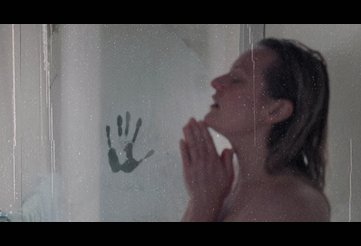
The protagonist can’t see what is watching her, but the audience understands the horror immediately: Something can see you when you can’t see it.
But there’s another kind of invisibility that’s much quieter.
The kind you create yourself.
You don’t have to disappear completely.
You simply make sure nobody gets close enough to see anything that matters.
You become selectively invisible.
You show the competent version.
The funny version.
The helpful version.
The “I’m fine” version.
The version that doesn’t need anything.
The version that doesn’t cause trouble.
The version that can walk into a room, read everyone else’s needs within approximately four seconds and then conveniently forget that they have any of their own.
It’s a remarkably effective survival strategy.
Until it becomes an identity.
When Protection Becomes a Prison
Here’s the uncomfortable bit.
A lot of the ways we hide, began for perfectly understandable reasons.
Maybe being outspoken got you criticised
Maybe being sensitive got you mocked
Maybe making mistakes got you humiliated
Maybe wanting too much made someone pull away
Maybe being different made you the odd one out
Maybe you learned that keeping the peace was safer than telling the truth
Maybe you discovered that people liked you more when you were useful than when you were honest
So your brain did what brains do.
It noticed.
It adapted.
It created rules.
Don’t draw attention to yourself
Don’t ask for too much
Don’t be difficult
Don’t get excited too soon
Don’t let people know how much you care
Don’t make yourself a target
Don’t give them ammunition
And at some point those rules stop feeling like rules.
They start feeling like personality.
“I’ve just always been private.”
“I’m not really an ambitious person.”
“I don’t like attention.”
“I don’t need anyone.”
“I’d rather stay behind the scenes.”
“I’m just not someone who puts themselves out there.”
Maybe.
Or maybe those are adaptations that have been running the show for so long you’ve forgotten to question them.
That’s the interesting part about self-awareness.
Sometimes the thing you call “who I am” is actually “what I learned was safest.”
You Can Be Terrified of Rejection Without Ever Being Rejected
This is where things get properly sneaky.
You don’t actually need evidence that people will reject you. Your brain can run the entire horror movie internally.
You imagine the conversation.
The criticism.
The awkward silence.
The raised eyebrow.
The person thinking you’re ridiculous.
The people laughing.
The people unfollowing.
The client saying no.
The family member making a comment.
The person you admire deciding you’re not good enough.
Congratulations. You’ve experienced rejection without anyone having to do a thing. Your nervous system has already sent the flowers.
And because the imagined consequence feels real, you retreat.
You don’t submit the application.
You don’t publish the work.
You don’t say what you need.
You don’t ask.
You don’t pitch.
You don’t flirt.
You don’t tell them.
You don’t try.
Then you get to tell yourself: “See? Nothing bad happened.”
Of course nothing bad happened. Nothing happened at all.
That’s the trick.
Avoidance protects you from rejection. But it also protects you from possibility.
The Horror of Becoming a Spectator in Your Own Life
This is one reason Pearl is such an interesting horror reference.
At the centre of Pearl’s story is an enormous hunger to be seen. To be special. To escape. To become something more.
And underneath the ambition is something painfully human:
Please notice me.
Please tell me I matter.
Please tell me I’m capable of becoming someone.
The horror is what happens when that hunger collides with frustration, repression and the unbearable gap between the life you imagine and the life you’re actually living.
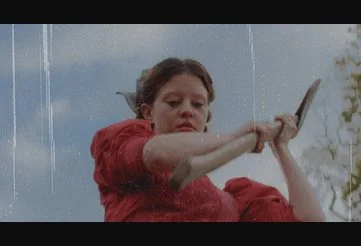
Most of us aren’t going to go full Pearl.
Thankfully.
But we can understand the emotional engine. Because wanting to be seen isn’t narcissism.
It’s human.
We want our work to matter.
We want our voices to count.
We want someone to understand us without requiring a 47-slide PowerPoint presentation.
We want to be loved as the person underneath the performance.
We want our lives to feel like ours.
And yet we can simultaneously be terrified of anyone actually seeing us.
So we create an absurd little contradiction: “I desperately want to be seen.” followed immediately by: “OH GOD, NOT LIKE THAT.”
The Cost of Hiding Isn’t Just Loneliness
This is where I think we need to stop talking about hiding as though it’s merely a confidence problem. Because the cost is bigger than that.
Hiding costs you information.
You never discover what people actually think of your idea because you never show it to them.
You never discover whether you’re capable because you never attempt the thing.
You never discover whether that person would have said yes because you never ask.
You never discover who actually likes the real you because you’ve only shown them the edited version.
Hiding costs you opportunities.
Someone can’t recommend you for something they don’t know you want.
Someone can’t buy something you’ve made if you never release it.
Someone can’t collaborate with you if you’ve never raised your hand.
Someone can’t fall in love with the real you if the real you is currently under witness protection.
Hiding costs you confidence.
This one is particularly vicious.
We often think: I’ll put myself out there when I’m confident. But confidence rarely arrives beforehand, wearing a tasteful little blazer and carrying a clipboard.
Confidence usually comes after evidence.
You do the frightening thing.
You survive.
You learn.
You realise you didn’t spontaneously combust.
You do it again.
Your brain updates the file.
Apparently we can do this.
That’s confidence.
Not magic.
Evidence.
And Rejection Isn’t Always The Worst Thing That Can Happen
Here’s the part nobody puts on the inspirational mug.
Sometimes you will be rejected.
There.
We survived it.
You might publish something and someone hates it
You might ask and hear no
You might reveal something about yourself and discover that someone doesn’t understand it
You might take a risk and watch it fall flat on its face
It happens.
But rejection gives you something hiding never can: information.
Now you know…
That opportunity wasn’t yours
That person wasn’t your person
That audience wasn’t your audience
That version didn’t work
That approach needs changing
That relationship isn’t safe enough for you
That idea needs another attempt
Rejection can hurt.
But it doesn’t necessarily destroy you.
Sometimes it simply removes a possibility that wasn’t going to work anyway.
Hiding, meanwhile, leaves you permanently trapped in the realm of maybe.
And “maybe” is a surprisingly effective haunted house.
Being Seen Doesn’t Mean Showing Everyone Everything
Let’s clear up another misconception.
Becoming more visible does not mean turning yourself inside out on the internet.
You don’t have to broadcast your childhood wounds
You don’t need to tell strangers your deepest secrets
You don’t have to become a human oversharing machine because someone on Instagram said vulnerability is your superpower
Privacy is healthy.
Not everyone deserves access to you.
Being seen isn’t about being exposed. It’s about being authentic where it matters.
There’s a difference.
You can have privacy without hiding.
You can have boundaries without disappearing.
You can be selective without being invisible.
The question isn’t: “How can I make everyone see me?”
It’s: “Where am I deliberately making myself invisible when I actually want to be seen?”
That’s a much more useful question.
So What Are You Actually Afraid They’ll See?
This is where things get interesting.
Sometimes we’re not afraid they’ll see our weaknesses.
We’re afraid they’ll see our potential.
Think about that for a second.
What if people realise you’re actually good at something? Now you have expectations.
What if people discover you’re ambitious? Now you might have to act on it.
What if people see that you’re unhappy? Now you can’t keep pretending everything is fine.
What if people realise you want more? Now the life you’ve built might need changing.
What if they see that you’re different? Now you might have to stop pretending you aren’t.
What if they see what you really want? Now you might have to admit that you’re the one standing between yourself and it.
Sometimes invisibility isn’t protecting us from other people’s judgement.
It’s protecting us from our own accountability.
Because once you’ve said the thing out loud, you can’t unknow it.
Once you’ve shown the work, you’re officially someone who makes things.
Once you’ve admitted you want something, “I don’t know what I want” becomes harder to hide behind.
Being seen can force you to see yourself.
And that can be considerably more frightening.
The Invitation: What Happens When You Stop Performing?
The Invitation plays brilliantly with the discomfort of social situations where something feels wrong long before you can prove that anything is wrong.
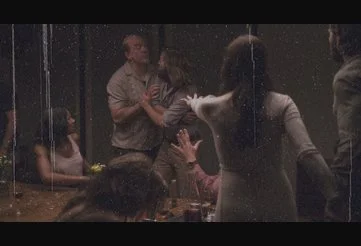
That sensation is useful here.
Because there are moments in life when you can feel the gap between the person you’re presenting and the person underneath.
You laugh when you aren’t amused.
Agree when you don’t agree.
Stay when you want to leave.
Say you’re fine when you’re absolutely fucking not.
You become so skilled at managing the atmosphere that you stop noticing what the atmosphere is doing to you.
Self-awareness interrupts that.
It asks:
What am I actually feeling?
What do I actually want?
What am I pretending not to know?
Where am I performing?
Who am I afraid of disappointing?
What would I say if I knew nobody was going to be angry?
And perhaps the most revealing question: What would I do differently if I wasn’t trying so hard to remain acceptable?
Start Small. You Don’t Need to Kick Down The Front Door.
You don’t have to suddenly become the loudest person in the room.
You don’t need a leather jacket, a new personality and a dramatic soundtrack.
This isn’t a makeover montage.
Start smaller.
Say the opinion.
When you normally say, “I don’t mind,” say what you actually prefer.
Publish the imperfect thing
Let something exist before you’ve polished every molecule of life out of it.
Ask for what you want
Not aggressively. Not apologetically. Just clearly.
Stop automatically explaining yourself.
“I don’t want to” is occasionally a complete sentence. Wild concept.
Let someone see you care
Tell them. Support the thing. Admit you’re excited. Wear the ridiculous outfit. Make the weird thing. Give a shit.
Notice where you disappear
This might be the biggest one. Pay attention to the situations where you suddenly become quieter, smaller, more agreeable or strangely uninterested in things you normally care about. Ask yourself: What am I protecting myself from right now? Don’t judge the answer. Just find it.
The Person Underneath The Hiding Isn’t Waiting For Permission
There’s a particular sadness in spending years trying not to be judged by people who may not even be thinking about you that much.
Meanwhile, you’re editing your clothes.
Your voice.
Your opinions.
Your ambitions.
Your body.
Your work.
Your relationships.
Your choices.
Your entire fucking existence.
For an imaginary panel of judges who apparently have nothing better to do than review your life.
They probably don’t.
And even if they do? You still don’t get your time back.
The goal isn’t to become fearless. You won’t. Neither will I.
Fear gets a seat at the table. It just doesn’t get to chair the meeting.
The goal is to become willing to be seen despite the possibility of rejection.
To let yourself become visible enough that people can actually respond to the real thing.
And yes, some people won’t like it.
Some people won’t understand it.
Some people will have opinions. People have opinions about pineapple on pizza. We’re clearly dealing with an unpredictable species.
But some people will get it.
Some will recognise you.
Some will be relieved that someone else is strange in exactly the way they are.
Some will love what you make.
Some will love what you say.
Some will finally meet the person you’ve been hiding.
And some of the most important changes in your life may begin the moment you stop trying to make sure nobody can see you fail.
Because they might see you succeed instead.
What If Hiding Is Costing You More Than Rejection Ever Could?
Maybe you’ve been calling it caution.
Maybe it’s privacy.
Maybe it’s perfectionism.
Maybe you’re “just not that kind of person.”
Maybe you’re waiting until you’re ready.
But if you’ve been waiting for the moment when being visible stops feeling uncomfortable, I’ve got some unfortunate news.
That moment may not be coming.
Being seen is inherently vulnerable.
That’s the deal.
But there is another kind of vulnerability nobody talks about:
The vulnerability of never finding out what your life could have been because you were too busy protecting yourself from finding out.
That’s a much quieter horror.
No dramatic music. No monster in the doorway.
Just years passing. And the slow realisation that you were present for your entire life… but never quite allowed yourself to arrive in it.
So maybe the question isn’t: “How do I stop being afraid of being seen?”
Maybe it’s: “Where am I willing to be seen anyway?”
Start there.
One opinion.
One boundary.
One idea.
One honest conversation.
One ridiculous dream you stop pretending you don’t have.
One piece of yourself you stop shoving backstage.
You don’t have to reveal everything.
You just have to stop hiding everything that matters.
Because the world doesn’t need a more polished version of you. And frankly, neither do you.
It needs the version that’s actually there.
And if you’ve started wondering whether the person you’re hiding is actually the person you are… that’s the uncomfortable question underneath all of this after all, isn’t it? Then This Doesn’t Feel Like Me might be for you. Because maybe you don’t need another guide telling you how to become a better version of yourself. Maybe you need to work out which version is actually yours in the first place.


IN ODD WE TRUST Presents
A FIELD NOTES FROM THE DARK Production
Starring YOU, the protagonist in your own psychological thriller
Produced by A LIFETIME OF QUESTIONABLE DECISIONS
Directed by EXISTENTIAL DREAD Story by THAT VOICE IN YOUR HEAD AT 3AM
Costume Design NOW YOU SEE ME TEE Music by DISSONANT SYNTH and REGRET
Feeling seen? You Belong with us, Join THE CULT OF ODD Your backstage pass to PSYCHOLOGICAL
SURVIVAL GUIDES, HORROR COPING RITUALS and EMOTIONALLY UNSTABLE T-SHIRTS