Brain Fog but Make it Gothic: The Art of Functioning While Half-Dead

Colour / Reading Time 6 mins Approx
Drowning in brain fog and burnout? Learn how to function while half-dead — gothic style. From vampire-level fatigue to zombie workdays, it’s time to reclaim your mind, mood, and monstrous magic.
Ever felt like your soul took a smoke break and forgot to come back?
Welcome to brain fog: that glamorous little limbo between “I’m fine” and “I’ve been dead for 200 years but haven’t had the decency to lie down yet.”
It’s not just tiredness. It’s not just burnout. It’s that eerie state where your brain is a haunted house — lights flickering, something scratching in the walls, and every thought feels like it’s wading through molasses in stilettos.
But here’s the thing about functioning while half-dead: you get good at it. You become a gothic professional — balancing exhaustion with dark humour, dressing your decay in velvet, and calling it “aesthetic.”
So, since we’re already halfway to the underworld, let’s make it useful.
What follows isn’t a self-help checklist — it’s more like a survival guide for the mildly undead. These are the lessons I’ve learned from trying to exist when your brain feels like an abandoned asylum. Call them commandments, coping mechanisms, or gothic gospel — whichever fits your mood. Think of it as your handbook for functioning through the fog, one haunted heartbeat at a time.
This isn’t about fixing yourself. It’s about surviving the fog like a final girl who hasn’t had her morning coffee yet.
Lesson One: You’re Not Broken — You’re Becoming
There’s a certain poetry to being half-alive. Think of every ghost story you’ve ever loved — the ones where the spirit lingers, not because it’s cursed, but because it has unfinished business.
That’s you, darling. You’re not malfunctioning. You’re transforming.
You’re in that weird chrysalis stage between burnout and rebirth — where nothing makes sense, everything’s blurry, and your Google search history includes “can exhaustion kill you” and “how to live deliciously with no energy.”
You’re not lazy. You’re processing.
You’re not failing. You’re fermenting.
And one day, all this slow-motion madness will become muscle memory for thriving on your own haunted terms.
Just like in The Others (2001), when Nicole Kidman realises she’s not living — she’s lingering — your “fog” moment might just be your revelation. Sometimes you need to walk through your own mist to realize you’re not lost. You’re in transition.
Lesson Two: Romanticise the Rot
If you can’t escape the fog, you might as well make it cinematic.
Light a candle that smells like “Library of the Damned”
Put on that black lace robe that looks like it’s seen too many seances
Drink your coffee like it’s a sacrament
The world tells you to “optimise” your mornings. I say: haunt them.
Be the slow-moving apparition that refuses to rush for capitalism. If you wake up and feel like a 19th-century widow trapped in a modern workday — lean in.

Channel your inner Morticia Addams: graceful, unbothered, a little dangerous. Because functioning doesn’t always mean speed. Sometimes, it’s about the performance of composure.
In Crimson Peak, the heroine doesn’t just survive the haunted mansion — she learns to move through it elegantly. That’s you in your fog.
You don’t need to escape it immediately. You just need to move like you own the place.
Lesson Three: Rebellion Is Rest
Brain fog has a way of making you feel like you’re slacking off in a world that worships hustle. But here’s your dark little secret: rest is a radical act.
Every time you choose to do less — to stare at the wall, to not reply, to nap like a gothic queen in a velvet coffin — you’re rebelling against a culture that confuses exhaustion for accomplishment.
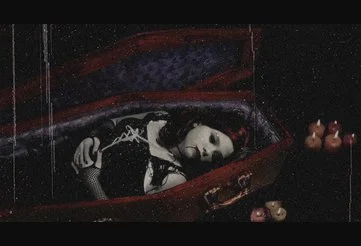
This isn’t laziness. It’s strategy. You’re conserving energy for your resurrection.
In Interview with the Vampire, Lestat doesn’t apologise for his decadence. He takes his sweet, immortal time. Because when you’ve been through hell, the most luxurious thing you can do is linger.
So, next time you feel like you “should be doing more,” remember this: you are literally reanimating yourself. You are gathering your pieces like Frankenstein’s monster after a mental breakdown. And the lightning strike — that’s coming.
Lesson Four: You Can’t Think Your Way Out of the Fog — You Have to Feel Through It
We all want the hack, the quick fix, the “10 steps to clarity.” But brain fog doesn’t respond to logic. It’s not a puzzle — it’s a possession.
When you’re in it, your mind isn’t malfunctioning. It’s overwhelmed. And like every good haunted house, it’s asking to be felt, not fixed. You can’t spreadsheet your way back to yourself. You have to exorcise it emotionally.
Cry. Journal. Walk in the rain. Let yourself unravel without calling it unproductive.
The only way out is through — slowly, tenderly, like fog lifting from a graveyard at dawn.
Remember The Ring? You can’t escape the curse by ignoring it. You have to watch the tape — face the horror head-on — to understand it. Your tape is your feelings. Watch them. Don’t turn away. That’s how the curse breaks.
Lesson Five: Keep Rituals, Not Routines
When everything feels formless, routines can feel like cages. So, instead, make rituals.
Rituals honour your existence, even when it’s messy. They give shape to the shapeless.
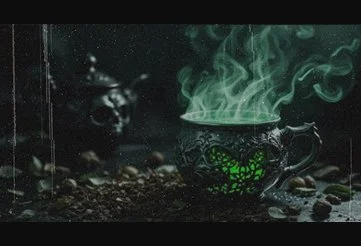
Make your morning tea like a witch mixing a potion
Take your walks like a ghost retracing her favourite haunt
Write your to-do list on paper that feels ancient, with handwriting that looks like a spell
You’re not just managing your day — you’re conjuring it.
In The Witch, Thomasin finds her power not in running from her darkness but in claiming it. That’s what your rituals do: they make peace with your shadow instead of pretending it doesn’t exist.
Lesson Six: Stop Performing “Fine”
There’s a special kind of hell in pretending to be okay when your brain feels like wet cement. And yet, that’s what most of us do — smiling like Stepford Wives with soul decay behind the eyes.
Stop it.
Stop apologising for being human in a culture that wants you to be a productivity robot. Stop saying, “I’m just tired,” when you mean “I’m existentially hollow but holding it together with eyeliner.”
Your exhaustion is not a failure — it’s a message. You’ve been living at the speed of survival. It’s time to slow down to the pace of resurrection.
In Hereditary, the scariest thing isn’t the demon — it’s how much the family hides their pain. The horror festers in silence. Don’t let that be you. Let your weirdness and weariness be seen. Speak it. It’s not shameful — it’s sacred.
Lesson Seven: Dress for the Apocalypse You Already Survived
There’s something healing about reclaiming your appearance when your mind feels messy.
Put on lipstick like it’s war paint
Wear black because it feels like armour
Adorn yourself with silver rings and dark humour
It’s not vanity — it’s identity maintenance.
When your inner world feels fogged over, external expression becomes your lighthouses. Even Lydia Deetz knew it — “I myself am strange and unusual.” And that’s a power move.
Style isn’t about impressing anyone. It’s about announcing: “I’m still here, darling. Still standing. Still styling my decay.”
Lesson Eight: You’re Allowed to Find Beauty in the Bleak
The fog doesn’t mean failure. Sometimes it’s where you finally see the world differently — softer, slower, more surreal.
You start to notice the way light hits your chipped mug. The way silence hums like a spell. The way you’ve learned to live even when everything feels half-erased.
You start finding beauty in the breakdown — because it’s proof you’re still breathing. Even ghosts crave wonder.
In Pan’s Labyrinth, the heroine finds magic in horror. That’s the point — beauty and darkness aren’t opposites. They coexist. They make each other real.
So when the fog rolls in again (and it will), don’t panic. Light your candle, pour your tea, and whisper: “I’ve lived through worse hauntings than this.”
Conclusion: The Resurrection Isn’t a Moment — It’s a Mood
You don’t “recover” from brain fog in one miraculous burst of clarity. You rise, slowly. You resurrect yourself in daily increments.
Each small act — a deep breath, a shower, a sentence written — is a summoning spell.
You’re not waiting to be reborn. You’re doing it right now.
The gothic truth is this: functioning while half-dead isn’t a weakness. It’s an art form. And every time you choose to keep going — to exist, to persist, to feel your own pulse — you become your own ghost story with a happy ending.
Because the real monsters don’t win in the end. The survivors do. And baby, you’ve been surviving like it’s a full-time job.
Brain fog has a strange way of making you feel haunted by your own life.
“This Doesn’t Feel Like Me” is a psychological recovery guide for people who feel
disconnected from themselves, their identity, or the person they used to be.


IN ODD WE TRUST Presents
A FIELD NOTES FROM THE DARK Production
Starring YOU, the protagonist in your own psychological thriller
Produced by A LIFETIME OF QUESTIONABLE DECISIONS
Directed by EXISTENTIAL DREAD Story by DEAD INSIDE, DOING FINE
Costume Design NO PLACE LIKE HOME TEE Music by DISSONANT SYNTH and REGRET
Feeling seen? You Belong with us, Join THE CULT OF ODD Your backstage pass to PSYCHOLOGICAL
SURVIVAL GUIDES, HORROR COPING RITUALS and EMOTIONALLY UNSTABLE T-SHIRTS