Your Safe House or Your Haunting? The Company You Keep Writes More of Your Story Than You Realise
Colour / Reading Time 9.5 mins Approx
Some hauntings don’t begin with creaking floorboards. They begin with a text message. A phone call. A “friend” who somehow leaves you feeling smaller every single time you see them. Not because they punched you. Not because they screamed at you. Because they quietly convinced you to doubt yourself. Funny thing about horror movies… The monster usually isn’t the house. It’s whoever convinced everyone to stay inside it.
There’s a reason every great horror movie has that one character who says, “Maybe we shouldn’t go down there.”
They’re not there to ruin everyone’s fun.
They’re there to make you question the people you’re following.
Because in horror…
The quickest way to die is usually trusting the wrong group.
And life isn’t all that different.
The people around you - your friends, your colleagues, your family, your partner - quietly shape almost everything.
Your confidence.
Your standards.
Your beliefs.
Your ambitions.
Your emotional health.
Even your nervous system.
That’s why one evening with certain people leaves you buzzing with ideas…
…while another leaves you staring at the ceiling at 2 a.m., replaying every conversation and wondering whether you’re somehow the problem.
Here’s the uncomfortable truth:
Your environment is always changing you.
The only question is… Is it making you bigger? Or smaller?
Horror Movies Have Been Warning Us About This for Years
Think about almost every horror classic you’ve ever watched.
The monster rarely wins on its own. It usually has help.
Someone ignores the warning.
Someone dismisses the red flags.
Someone convinces everyone to split up.
Someone opens the cellar door.
Someone says, “It’s probably nothing.”
And then… Everyone pays for that one person’s terrible judgement.
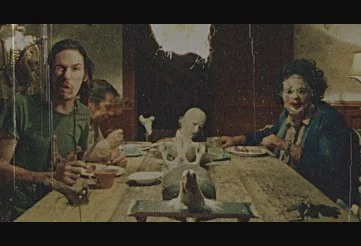
Take The Texas Chainsaw Massacre.
People often remember Leatherface. But Leatherface wasn’t the whole nightmare.
His entire family created it.
One psychopath is terrifying. A whole ecosystem built around madness? That’s almost impossible to escape.
That’s what unhealthy social circles look like.
No single person seems that bad.
But together?
The culture becomes toxic.
Negativity becomes normal.
Gossip becomes entertainment.
Complaining becomes personality.
Growth becomes suspicious.
Dreams become something to mock.
After a while…
You stop noticing. Because whatever we’re surrounded by eventually starts to feel normal.
Even when it isn’t.
You Become More Like Your Circle Than Your Goals
Here’s something most people don’t want to hear.
Your future isn’t determined only by your motivation.
It’s determined by your environment.
Because motivation comes and goes. Environment stays.
Spend enough time around people who constantly complain… Eventually you’ll complain.
Spend enough time around people who criticise every ambitious idea… Eventually you’ll stop sharing yours.
Spend enough time around people who think self-improvement is “cringe”… Eventually you’ll apologise for wanting more from life.
Human beings absorb attitudes the same way houses absorb cigarette smoke.
Slowly.
Quietly.
Until one day…
You can’t remember what the place smelled like before.
This isn’t weakness.
It’s neuroscience.
Your brain is constantly asking one question: “What behaviours help me belong here?”
Then it adapts.
Which means if your group rewards cynicism… You’ll become more cynical.
If they reward gossip… You’ll gossip.
If they reward victimhood… You’ll unconsciously keep finding evidence that you’re powerless.
Your social circle doesn’t just influence your behaviour.
It rewires your definition of normal.
Your Nervous System Knows Before Your Brain Does
Ever noticed how some people leave you feeling exhausted… even when nothing obviously bad happened?
No arguments.
No shouting.
No drama.
You simply feel…
Flat. Heavy.
Like someone quietly unplugged your batteries while you weren’t looking.
Then there are other people. You spend two hours with them… and suddenly you’re full of energy.
Ideas.
Optimism.
Curiosity.
Your shoulders drop.
You laugh more.
You breathe differently.
You stop monitoring every word before it leaves your mouth.
That’s because your nervous system is constantly scanning for safety. Long before your conscious mind catches up.
Psychologists call this co-regulation.
Your nervous system naturally synchronises with the people around you.
Which means some people constantly keep you in a low-level state of stress.
You over-explain.
Over-apologise.
Second-guess yourself.
Walk on eggshells.
Meanwhile…
Healthy people create the opposite effect.
They don’t make you perform.
They don’t make you earn your place.
They don’t make you audition for acceptance.
They simply make it safe to exist.
And honestly? That’s rarer than most people realise.
Pay attention to how your body feels after spending time with someone.
Your nervous system keeps better receipts than your memory ever will.
The Real-Life Poltergeists
Some relationships don’t explode. They erode. Which is somehow worse.
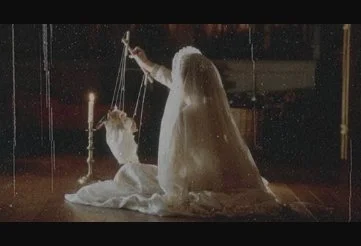
Think about The Others.
Nothing dramatic happens for a long time.
Just… unease.
Things slightly out of place. A feeling you can’t quite explain.
That’s how emotional vampires operate.
They rarely announce themselves.
They’re charming.
Funny.
Helpful.
Loyal…
Until they’re not.
Little by little they become emotional poltergeists.
Not destroying your house…
Occupying your head.
They drain.
They criticise.
They subtly compete.
They disappear when you need them.
They celebrate your failures just a little too enthusiastically.
They minimise your wins.
Then somehow…
You leave every interaction wondering if you’re the difficult one.
That’s their masterpiece.
Not controlling your behaviour.
Controlling your perception of yourself.
Some People Don’t Break Your Heart. They Break Your Confidence.
Not every unhealthy relationship is abusive.
Some are simply… chronically diminishing.
They interrupt you.
Correct you.
Make jokes at your expense.
Roll their eyes at your excitement.
Treat your dreams like they’re adorable little hobbies you’ll eventually grow out of.
Individually? Tiny moments.
Collectively? Psychological erosion.
Death by a thousand paper cuts.
The perfect example?
Get Out.
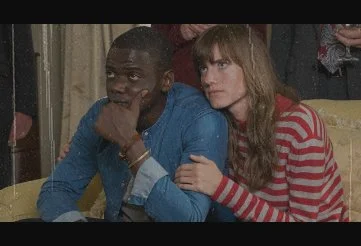
Chris isn’t immediately attacked.
He’s gradually separated from his own instincts.
His reality.
His judgement.
Until he no longer trusts himself.
That isn’t just brilliant horror writing.
It’s brilliant psychology.
Because unhealthy relationships rarely begin by taking your freedom. They begin by making you question your perception.
“Maybe I’m overreacting.”
“Maybe I’m too sensitive.”
“Maybe they’re right…”
Once you stop trusting yourself… you’ll start relying on everyone else’s version of reality.
That’s when the haunting truly begins.
The Final Girl Effect: You’re Allowed to Be Selective
One of my favourite horror tropes is the Final Girl.
Not because she’s perfect.
Not because she’s fearless.
And definitely not because she has some supernatural ability to dodge machetes.
She survives because she pays attention.
She notices what everyone else ignores.
She trusts her instincts when everyone else laughs them off.
She doesn’t keep walking into the creepy basement because everyone else is doing it.
She leaves.
She adapts.
She chooses differently.
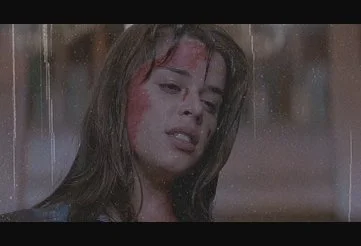
Think about Sidney Prescott in Scream.
She doesn’t survive because she’s the strongest person in Woodsboro. She survives because she eventually stops letting other people define reality for her.
She questions everything. Including the people closest to her.
Now compare that to real life.
How many friendships exist purely because they’ve always existed?
You’ve known them since school.
You used to work together.
You shared a flat once.
You don’t even enjoy spending time together anymore…
…but somehow you’re still carrying the relationship around like an old piece of furniture you forgot you owned.
History is not compatibility.
Read that again.
History is not compatibility.
Just because someone has been in your life for ten years doesn’t automatically mean they deserve the next ten.
People change.
You change.
Priorities change.
Dreams change.
And sometimes the bravest thing you can do isn’t fighting to keep every relationship alive…
It’s accepting that some stories have reached their natural ending.
The Final Girl understands something most people don’t: Not everyone is supposed to survive into the sequel.
Find the People Who Clap When You Get Weird
Here’s something I wish more people realised.
The right people won’t just tolerate your weirdness.
They’ll absolutely love it.
They’re the people who don’t blink when you excitedly explain an obscure horror theory you’ve been thinking about for three days.
They don’t ask why you collect odd things.
They don’t tell you to “tone it down.”
They don’t make you apologise for being enthusiastic.
They lean in.
They ask questions.
They make your strange feel safe.
That’s incredibly rare.
Most people don’t ask us to become our best selves.
They ask us to become more convenient.
Less opinionated.
Less ambitious.
Less emotional.
Less weird.
Less… us.
But the people worth keeping?
They don’t hand you a smaller box to fit inside. They hand you more room.
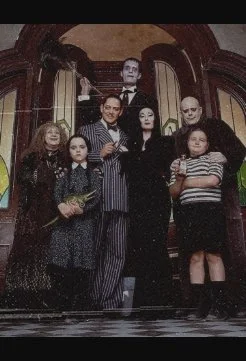
Think about The Addams Family.
To outsiders, they’re bizarre.
Morbid.
Completely unhinged.
To each other? They’re simply family.
Nobody’s pretending.
Nobody’s performing.
Nobody’s apologising for who they are.
And isn’t that what we’re all secretly looking for?
Not popularity.
Not approval.
Not another hundred followers.
We’re looking for somewhere our nervous system can finally unclench.
Where we don’t have to translate ourselves before speaking.
Where being ourselves isn’t the bravest thing we’ll do all day.
That’s belonging.
Your Friendships Are Tiny Emotional Ecosystems
Here’s a thought that completely changed how I look at relationships.
Friendships aren’t just people. They’re environments.
Every friendship creates a psychological climate.
Every group develops an emotional ecosystem.
Some ecosystems reward curiosity.
Some reward gossip.
Some reward courage.
Some reward staying small.
Some reward growth.
Some reward complaining.
Some reward pretending everything’s fine while quietly falling apart.
Spend enough time inside any ecosystem… and you’ll eventually adapt to survive there.
Imagine putting an exotic tropical plant into freezing temperatures. It doesn’t suddenly become weak. It’s simply trying to survive the environment it’s been placed in.
Humans aren’t much different.
If your entire friendship group mocks ambition… you’ll slowly hide yours.
If everyone treats self-improvement as embarrassing… you’ll stop talking about the books you’re reading.
If vulnerability is laughed at… you’ll keep everything to yourself.
If everyone bonds by complaining… you’ll unconsciously become more negative just to stay connected.
Now imagine the opposite.
Imagine friendships where people celebrate each other’s wins without secretly competing.
Where ideas are exchanged instead of gossip.
Where someone says, “That sounds terrifying… you should absolutely go for it.”
Where growth isn’t treated like betrayal.
Where your success doesn’t threaten anyone else’s identity.
That’s an ecosystem worth protecting.
Because before you start questioning yourself…
Ask a different question first.
Is this environment actually capable of growing the person I’m trying to become?
Sometimes the problem isn’t the seed.
It’s the soil.
Audit Your Ecosystem Before You Audit Yourself
This might be the most important part of this entire article.
Whenever life feels heavy… we instinctively ask, “What’s wrong with me?”
Maybe that’s the wrong question.
Maybe the better question is, “Who’s around me?”
Who’s influencing my thinking?
Who’s constantly reinforcing my self-doubt?
Who’s encouraging me to play small?
Who’s celebrating my progress?
Who’s quietly draining every ounce of emotional energy I have?
Because here’s something we massively underestimate:
People are contagious.
Not just emotionally.
Mentally.
Behaviourally.
Financially.
Creatively.
Spend enough time around optimistic people…
You’ll begin seeing opportunities.
Spend enough time around people who believe life is impossible…
You’ll eventually stop trying.
Your inner circle is quietly programming your future every single day. Whether you realise it or not.
So before you assume you’re lazy…
Broken…
Unmotivated…
Or incapable…
Audit your ecosystem.
You might discover you’ve simply been trying to grow in poisoned soil.
Sometimes the Scariest Thing Isn’t Leaving. It’s Realising You’ve Already Outgrown Them.
Nobody really prepares you for this.
Sometimes nobody did anything terrible.
Nobody betrayed you.
Nobody lied.
Nobody became a villain.
You simply…
Changed.
You became curious.
Started reading more.
Dreaming bigger.
Thinking differently.
Protecting your peace.
Meanwhile, the conversations never evolved.
The same gossip.
The same complaints.
The same stories.
The same weekends.
The same excuses.
Suddenly you realise…
You’ve been trying to fit into a chapter you’ve already finished reading.
That doesn’t make anyone a bad person.
It just means your direction has changed.
We tend to treat friendships like permanent contracts.
Maybe they’re more like seasons.
Some people arrive to teach you confidence.
Some teach you boundaries.
Some teach you resilience.
Some simply remind you who you never want to become.
Every character serves the story.
Not every character reaches the final page.
Build Your Safe House
Every horror film has one place that feels different. The safe house.
The place where everyone finally breathes.
Where they can think clearly.
Where someone says, “Okay… what’s the plan?”
Your friendships should feel like that.
Not perfect.
Not drama-free.
But safe.
Safe enough to tell the truth.
Safe enough to fail.
Safe enough to change your mind.
Safe enough to admit you’re scared.
Safe enough to become someone new.
The right people don’t constantly test your worth. They remind you of it.
They don’t compete with your success. They celebrate it.
They don’t make you feel like too much. They remind you how exhausting it was pretending to be less.
Those people are rare.
Fight for those relationships.
Invest in those relationships.
Become that person for someone else.
Because life gets infinitely less frightening when you stop trying to survive it alone.
Final Thoughts: Choose Your Cast Carefully
Every horror movie teaches the same lesson in a different disguise.
Who you trust matters.
Who you follow matters.
Who you listen to matters.
And who you keep beside you when everything falls apart? That matters most of all.
The people closest to you are quietly shaping your identity every single day.
They’re influencing what you believe is possible.
What’s normal.
What’s acceptable.
What’s worth dreaming about.
Choose people who expand you.
Choose people who calm your nervous system instead of constantly activating it.
Choose people who tell you the truth without making you feel small.
Choose people who clap when you succeed instead of quietly keeping score.
Choose people who remind you who you are when the world tries to convince you otherwise.
Because eventually…
You’ll become a little like everyone you spend your life with.
Make sure that’s a future version of yourself you’ll actually want to meet.
Sometimes the hardest part isn’t changing yourself. It’s separating who you really are… from who you’ve slowly become around everyone else. That’s exactly why I created This Doesn’t Feel Like Me. It’s a guide for anyone who’s tired of shrinking, shape-shifting and second-guessing themselves just to fit into rooms they’ve already outgrown.
Because the right people won’t ask you to become less of yourself to belong. They’ll remind you who you were before the world convinced you to forget.


IN ODD WE TRUST Presents
A FIELD NOTES FROM THE DARK Production
Starring YOU, the protagonist in your own psychological thriller
Produced by A LIFETIME OF QUESTIONABLE DECISIONS
Directed by EXISTENTIAL DREAD Story by THAT VOICE IN YOUR HEAD AT 3AM
Costume Design MONSTERS MAKE THEIR OWN RULES TEE Music by DISSONANT SYNTH and REGRET
Feeling seen? You Belong with us, Join THE CULT OF ODD Your backstage pass to PSYCHOLOGICAL
SURVIVAL GUIDES, HORROR COPING RITUALS and EMOTIONALLY UNSTABLE T-SHIRTS