Colour / Reading Time 8.5 mins Approx
There’s a particularly unpleasant moment in personal growth when you realise that not everyone is coming with you. You start changing. Thinking differently. Wanting different things. Becoming a little less willing to play the part you’ve been assigned. And suddenly, certain people seem strangely uncomfortable with the new arrangement.
Conversations feel different. Old friendships become awkward. Invitations dry up. Someone makes a joke about how you’ve changed, and you’re left wondering whether becoming more yourself has somehow made you less likeable.
Congratulations. You’ve entered the haunted house of personal growth. And unfortunately, some of the ghosts have your phone number.
When The Old You Starts Disappearing
There’s a popular idea that becoming yourself is an entirely positive experience.
You discover who you are. You become more confident. You find your people. Everyone claps. The soundtrack swells.
Lovely.
What they tend to leave out is that becoming yourself can also change the relationships you’ve spent years building.
Because relationships aren’t formed in isolation. They’re built around shared experiences, familiar behaviours, expectations and unspoken agreements about who everyone is.
You’re the funny one. The dependable one. The one who organises everything. The one who never complains. The one who can always be relied upon to go along with the plan.
And everyone knows their part.
But what happens when you stop playing yours?
Perhaps you no longer find the same conversations interesting
Perhaps you don’t want to spend every weekend doing the same things
Perhaps you’ve developed interests, opinions or ambitions that don’t fit particularly neatly into your existing social circle.
Nothing dramatic has happened.
You’ve simply changed.
Yet sometimes that small change can make an entire relationship feel unfamiliar.
Because people don’t always miss who you were. Sometimes they miss how things worked when you were that person.
And those are two very different things.
The Friendship That Only Worked When Everyone Played Their Part
In The Craft (1996), a teenage outsider joins a group of girls who practise witchcraft. Initially, the friendship offers something she desperately wants: belonging, acceptance and the feeling of finally having found her people.
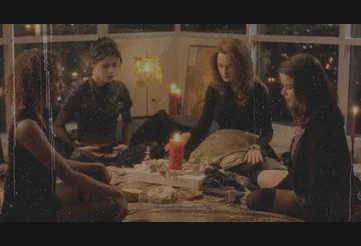
But as the group gains power and individual personalities begin to emerge, the dynamic changes.
What began as a shared connection becomes increasingly complicated by jealousy, control and competing desires.
It’s a useful reminder that belonging can be intoxicating, particularly when you’ve spent a long time feeling like an outsider.
But belonging and being accepted as an individual aren’t necessarily the same thing.
Sometimes a friendship works because everyone knows their role.
You provide the entertainment. They provide the approval.
You listen. They talk.
You organise. They turn up.
You make the compromises. They get what they want.
Nobody has necessarily sat down and agreed to this arrangement. It simply develops over time.
Then one day, you start behaving differently.
You express an opinion you would previously have kept to yourself.
You decline an invitation.
You stop automatically agreeing.
You become interested in something your friends don’t understand.
And suddenly, the atmosphere changes.
Perhaps someone accuses you of becoming difficult
Perhaps they tell you that you’ve changed
Perhaps they make a few little jokes about your new interests, ambitions or priorities
And perhaps you start wondering whether you’re doing something wrong.
But here’s an uncomfortable possibility: Perhaps the friendship was more comfortable when you were easier to predict.
That doesn’t automatically make the other person a villain. People can struggle with change without having malicious intentions.
But it is worth noticing whether someone is interested in getting to know the person you’re becoming, or simply wants the old arrangement back.
The Strange Grief of Outgrowing People
In The Lost Boys (1987), Michael is drawn into a new world that offers excitement, identity and belonging, but it also pulls him away from his existing family life.

The film plays with the tension between two worlds: the familiar one you’ve come from and the unfamiliar one you’re being drawn towards.
That tension is an interesting metaphor for changing relationships.
When you start becoming a different version of yourself, you can find yourself caught between two social worlds.
The people who knew you before.
And the people who might understand who you’re becoming.
Sometimes there’s no dramatic falling-out. No betrayal. No spectacular argument involving a wine glass and somebody’s questionable behaviour.
You simply begin to have less in common.
The things you used to enjoy together don’t interest you in quite the same way
Your priorities diverge
Your conversations become increasingly repetitive.
You might still care about each other enormously.
But the relationship no longer fits quite as naturally as it once did.
And that can be surprisingly sad.
We tend to associate grief with something ending abruptly. But there’s another kind of grief that comes from recognising that something is changing, even though nobody has actually left.
You miss the easy familiarity.
The shared history.
The version of yourself who belonged there without having to think about it.
You might even miss people you no longer particularly want to spend time with.
That’s the awkward thing about outgrowing relationships:
You can recognise that something isn’t right for you anymore and still feel sad about losing it.
Both things can be true.
You don’t have to turn somebody into a monster to acknowledge that the relationship has changed.
When You Realise You Were Never Quite One of Them
It’s not necessarily that you were never one of them. It’s that belonging came with conditions you didn’t fully recognise until you stopped meeting them.
In The Stepford Wives (2004), Joanna moves with her family to the seemingly idyllic town of Stepford. At first, everything appears perfectly pleasant. The neighbours are friendly, the houses are immaculate and the wives seem devoted to making domestic life look like a particularly well-organised advert for happiness.
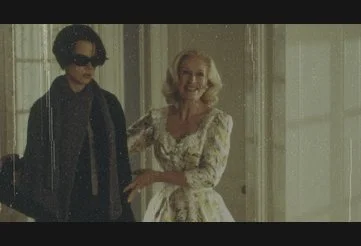
But Joanna begins to notice something unsettling. The women around her are becoming strangely alike: agreeable, accommodating, obsessively domestic and seemingly uninterested in anything beyond keeping their husbands happy.
The more Joanna questions what is happening, the more isolated she becomes.
It’s a disturbing premise because Stepford doesn’t appear to reject difference outright. It simply has no intention of making room for it.
And sometimes changing yourself means recognising that some of the people around you were only comfortable with a particular version of you.
Perhaps you’ve always felt slightly out of step with your social circle.
You laughed at jokes that didn’t particularly amuse you. You participated in conversations that left you feeling disconnected. You maintained friendships largely because of history, convenience or the fear of having nobody else.
You weren’t necessarily unhappy. You just weren’t entirely yourself.
Then, as you begin changing, the differences become harder to ignore.
You start wanting conversations with more depth
You become interested in different things
You find yourself questioning assumptions that everyone else seems perfectly comfortable accepting
And suddenly, the gap becomes visible.
This can be uncomfortable because familiarity has its own gravitational pull. Even when something doesn’t fit, you know how to exist inside it.
You know the jokes. The routines. The social rules. You know which version of yourself to bring along.
The unfamiliar alternative is considerably less reassuring.
You might have to meet new people
Find new interests
Risk being the outsider again
And if you’ve spent years trying to avoid that feeling, it’s understandable that you might hesitate.
But fitting in and belonging aren’t the same thing.
One requires you to understand the rules. The other allows you to be yourself without constantly checking whether you’re breaking them.
Not Everyone Who Dislikes Your Change is a Bad Person
This is where I want to make an important distinction.
It’s tempting to turn personal growth into a dramatic sorting exercise.
Anyone who doesn’t support your changes must be toxic. Anyone who questions your decisions must be jealous. Anyone who prefers the old you must be holding you back.
It’s a satisfying narrative.
Also, potentially complete nonsense.
Sometimes people are genuinely worried about you
Sometimes they don’t understand your decisions
Sometimes you’re changing in ways that affect them, too
And sometimes you’re being a bit of an insufferable arse because you’ve recently discovered a new perspective and would like everybody to hear about it.
Growth doesn’t automatically make you right.
You can change your mind without dismissing everyone else’s.
You can develop new interests without treating old friends as intellectually inferior.
You can establish different priorities without assuming everyone who doesn’t share them is somehow less evolved.
The question isn’t whether everyone approves of your changes.
It’s whether you can remain yourself within the relationship.
Can you disagree without being ridiculed?
Can you pursue different interests without being made to feel foolish?
Can you grow without constantly having to defend the fact that you’ve changed?
And can the other person be different from you without either of you treating that difference as a threat?
Healthy relationships have room for people to evolve.
They don’t require everyone to remain permanently recognisable.
How to Handle Losing People When You Change
If becoming more yourself is changing your relationships, you don’t need to immediately start burning bridges or issuing dramatic declarations of independence.
There are a few things worth considering first.
1. Stop Assuming Every Awkward Change Means Something Is Wrong
Relationships have adjustment periods.
People need time to get used to new circumstances, different interests and changing priorities.
Not every uncomfortable conversation is evidence that a friendship has reached its natural conclusion.
Give people the opportunity to understand the person you’re becoming.
2. Notice Which Relationships Allow You to Grow
Pay attention to how you feel around different people.
Do you feel comfortable expressing new opinions? Can you talk about your interests without embarrassment? Do you feel supported when something matters to you?
You don’t need universal approval.
But you should be able to exist without constantly editing yourself.
3. Allow Some Relationships to Change Shape
Not every friendship needs to end just because it no longer occupies the same place in your life.
Perhaps you see someone less frequently. Perhaps you connect over different things. Perhaps the relationship becomes more occasional but remains meaningful.
You don’t have to preserve every friendship in its original form.
Sometimes a different relationship is still a worthwhile one.
4. Make Space for New Connections
If your interests and priorities have changed, look for people who share some of them.
Join a group. Explore a new hobby. Start a conversation. Spend time in places where you don’t have to explain why you enjoy the things you enjoy.
You don’t need to replace everyone you’ve lost.
You need to create opportunities for relationships that reflect who you are now.
5. Let Yourself Feel the Loss
Don’t pretend you aren’t sad simply because you believe the change is necessary.
You can miss someone and still recognise that the relationship isn’t working.
You can appreciate what a friendship gave you without insisting it must continue forever.
And you can grieve a familiar part of your life without going back to it.
Not Everyone is Meant to Come With You
Perhaps the strangest part of becoming yourself is discovering that some relationships were built around a version of you that no longer exists.
That doesn’t mean the memories were false.
It doesn’t mean the friendship was worthless.
And it certainly doesn’t mean you should spend the rest of your life treating everyone from your past as a supporting character in your personal development story.
It simply means people change.
Sometimes together.
Sometimes in different directions.
Sometimes one person moves towards something new while the other is perfectly happy where they are.
And occasionally, you discover that the relationship only worked because neither of you was changing very much.
That’s sad.
But it isn’t necessarily a tragedy.
You don’t need to become smaller to preserve a familiar arrangement. Equally, you don’t need to discard everyone who doesn’t immediately understand your latest evolution.
Give people room to adjust.
Give relationships room to change.
But give yourself permission to keep growing.
Because the goal isn’t to arrive somewhere with nobody left behind.
It’s to build a life in which you no longer have to leave yourself behind just to keep everyone else comfortable.
Some people will come with you.
Some will take a different road.
And some, you may discover, were only ever comfortable with the person you used to be.
Let them keep their memories.
You have a life to get on with.
DID THIS ONE SPEAK TO YOU? HEART IT.
Sometimes the hardest part of changing your life isn’t making the decision. It’s dealing with everything that comes afterwards. The uncertainty. The second-guessing. The conversations you replay at 2am. The nagging suspicion that you’ve made a terrible mistake because somebody isn’t particularly pleased with your new direction. Your brain has a spectacular talent for turning an uncomfortable situation into an end-of-the-world production.
This Is Not An Emergency — The Reset Protocol is a practical five-minute guide designed to help interrupt overthinking, step out of catastrophic thought loops and regain a little breathing room when everything starts feeling urgent. No forced positivity. No pretending change is easy. Just something useful when your thoughts become louder than the facts.


IN ODD WE TRUST Presents
A FIELD NOTES FROM THE DARK Production
Starring YOU, the protagonist in your own psychological thriller
Produced by A LIFETIME OF QUESTIONABLE DECISIONS
Directed by EXISTENTIAL DREAD Story by THAT VOICE IN YOUR HEAD AT 3AM
Costume Design THE LONE HOWLER TEE Music by DISSONANT SYNTH and REGRET
Feeling seen? You Belong with us, Join THE CULT OF ODD Your backstage pass to PSYCHOLOGICAL
SURVIVAL GUIDES, HORROR COPING RITUALS and EMOTIONALLY UNSTABLE T-SHIRTS