The Rules of Surviving a Horror Movie
Colour / Reading Time 7 mins Approx
You hear a noise downstairs. It’s 2:47 a.m. The power has gone out. Your phone has mysteriously dropped to 3%. And rather than locking the bedroom door and calling someone with access to weapons and electricity, you whisper: “Hello?” Congratulations. You have approximately seven minutes left to live.
Horror movies have spent decades teaching us exactly what not to do in dangerous situations, and yet fictional humans remain remarkably committed to investigating basements, reading cursed books and separating from the group.
But buried beneath all the screaming, bloodshed and spectacularly poor decision-making are some surprisingly useful rules for staying alive.
And, inconveniently, quite a few of them work outside horror movies too.
So grab a torch.
Preferably one with fresh batteries.
Here are the rules.
RULE #1: If Something Feels Wrong, Stop Trying to Be Polite
You arrive somewhere.
The atmosphere is strange.
Nobody is technically doing anything wrong.
But your nervous system has quietly started packing a suitcase.
This is normally the point where horror characters say: “I’m sure it’s fine.”
It is almost never fine.
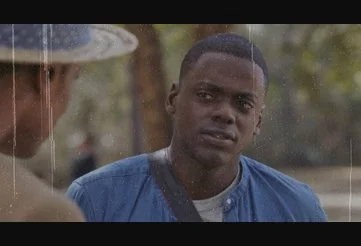
Get Out built an entire nightmare around this.
Chris notices the strange behaviour. The inappropriate comments. The staff. The party guests. The increasingly enormous collection of red flags flapping around the Armitage estate.
But social conditioning is powerful.
Don’t overreact.
Don’t be rude.
Don’t make things awkward.
Real life obviously doesn’t require you to treat every uncomfortable dinner party as preparation for brain transplantation.
But there’s something worth stealing here:
You are allowed to leave before you can prove why you want to leave.
A person can feel wrong.
A situation can feel wrong.
A job can feel wrong.
A room can feel wrong.
You don’t need Exhibit A, twelve witnesses and a signed confession before you’re permitted to pay attention.
Sometimes the smartest person in the horror movie is simply the one who says: “Nope.”
Be that person.
RULE #2: Never Split Up
This one should have been settled decades ago.
And yet: “We’ll cover more ground if we split up.”
No, Kevin. You’ll provide the killer with a convenient tasting menu.
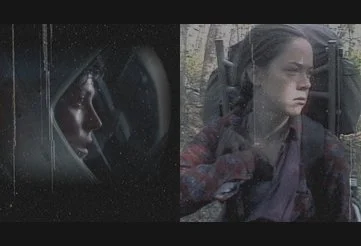
From Alien to The Blair Witch Project to approximately nine million slashers, isolation tends to be when things go spectacularly sideways.
There is, unsurprisingly, a real-life lesson hiding under all those intestines.
Stop trying to do everything alone.
We’re weirdly obsessed with self-sufficiency.
Handle it yourself.
Don’t bother anyone.
Figure it out.
Keep functioning.
Meanwhile you’re crawling through the metaphorical ventilation shaft with no backup while something with two mouths is hunting you.
Ask for help.
Tell someone you’re struggling.
Borrow expertise.
Bring reinforcements.
There is no trophy at the end for having made everything unnecessarily difficult.
And if there is?
It’s probably cursed.
RULE #3: Don’t Go Back Into the House You’ve Already Escaped
This is perhaps horror’s greatest recurring offence.
Character escapes house. Character reaches road. Freedom!
Then: “Wait. I have to go back.”
Do you? Do you really? Because we’ve just spent eighty minutes getting you out of there.
This applies beautifully to real life.
The relationship you finally escaped.
The habit you finally broke.
The environment that made you miserable.
The dynamic you spent three years trying to understand.
Sometimes nostalgia appears wearing a very convincing little outfit and whispers: Maybe it wasn’t that bad.
It was.
You left for a reason.
Not everything needs another chance.
Sometimes the haunted house remains haunted.
Keep driving.
RULE #4: Believe People When They Show You the Monster
Horror protagonists receive astonishing amounts of useful information and immediately disregard all of it.
“Don’t go into the woods.”
Into the woods.
“Whatever you do, don’t open the box.”
Box opened.
“That hotel is evil.”
Lovely. We’ll take it for the winter.
In real life, warnings aren’t always delivered by a trembling old man at a petrol station.
Sometimes people simply show you who they are.
Repeatedly.
They lie.
They disrespect your boundaries.
They disappear when you need them.
They make promises and don’t keep them.
Then we become forensic investigators looking for evidence that perhaps what we’ve repeatedly observed isn’t actually what we’ve repeatedly observed.
Listen.
If someone keeps showing you the monster, stop insisting it’s probably just bad lighting.
RULE #5: Don’t Read the Weird Latin Out Loud
Honestly. This shouldn’t need explaining.
If you discover an ancient book wrapped in questionable material, covered in demonic illustrations and hidden beneath a floorboard…
maybe make a cup of tea instead.
The Evil Dead franchise has been exceptionally clear on this.
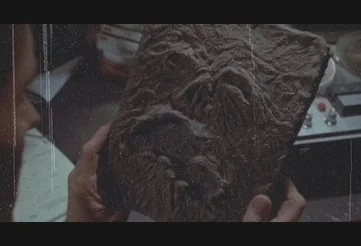
But the broader rule?
You don’t have to engage with everything you encounter.
Every argument.
Every provocation.
Every horrible comment.
Every opinion about you.
Every internet stranger who has apparently cleared their afternoon to misunderstand something you said.
You can keep scrolling.
You can refuse the invitation.
You can leave the message unanswered.
You can decline to summon the demon.
Engagement is optional.
A revolutionary concept.
RULE #6: Stop Ignoring the Obvious Problem Because the Timing is Inconvenient
There’s a shark in the water.
Chief Brody knows there’s a shark in the water.
Mayor Vaughn would prefer there not to be a shark in the water because summer tourism.
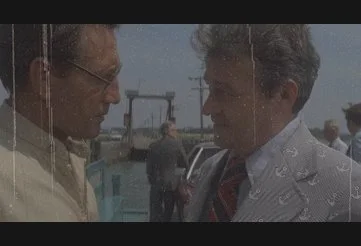
And thus Jaws gives us one of horror’s most enduring lessons:
Problems don’t disappear because acknowledging them would be inconvenient.
Debt.
Burnout.
A relationship that’s dying.
A job you hate.
A weird lump.
The ceiling making a noise ceilings generally shouldn’t make.
We postpone things because dealing with them will create disruption.
Then the shark eats another swimmer.
The uncomfortable conversation rarely becomes less uncomfortable because you left it fermenting for six months.
Deal with the shark.
Then reopen the beach.
RULE #7: If the Plan Clearly Isn’t Working, CHANGE THE DAMN PLAN
Horror characters are surprisingly loyal to terrible strategies.
The door won’t open? Try it fourteen more times.
The killer keeps finding you upstairs? Go upstairs again.
Weapons haven’t worked? Perhaps shouting his name will.
Real humans do this too.
We mistake persistence for progress.
We keep applying the same strategy because we’ve already invested so much time in it.
Career.
Business.
Relationship.
Routine.
Goal.
Plan.
Sometimes determination is admirable.
Sometimes you’re repeatedly headbutting a locked door while an unlocked window sits three feet away.
Changing the plan isn’t the same as abandoning the goal. And sometimes abandoning the goal is also allowed.
Nobody gets bonus points for dying beside Plan A.
RULE #8: Don’t Assume the Monster is Dead After One Hit
You knocked it down.
Excellent.
Now why are you standing directly beside it? WHY ARE YOU PUTTING YOUR FACE NEAR IT?
Move.
Horror understands something deeply annoying:
Problems have sequels.
You set a boundary once. Wonderful. Now you have to maintain it.
You start exercising. Great. Apparently you have to keep doing that too.
You clean your house. And somehow, against all known principles of justice, it becomes dirty again.
You confront an old pattern. It returns wearing a hat.
Change isn’t usually one heroic blow followed by credits.
It’s repetitive. Unglamorous. Occasionally tedious.
The monster gets back up.
So do you.
RULE #9: If Everyone Around You is Acting Strange, Consider the Possibility that it Isn’t You
Invasion of the Body Snatchers gives us a uniquely horrible premise: Everyone around you looks normal. But something is wrong.
And eventually you’re the strange one simply because you haven’t become like them.
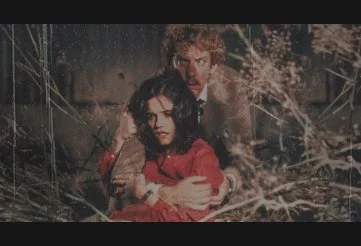
Hello, outsider psychology.
Sometimes you’re not failing to fit into a healthy environment.
Sometimes the environment is deeply weird.
A workplace where exhaustion is treated as ambition.
A friendship group built around cruelty disguised as banter.
A family where nobody is allowed to say what everyone knows.
A culture where buying things you don’t need with money you don’t have is considered normal, but taking an afternoon off apparently signals moral collapse.
Before deciding you’re the problem, inspect the pod people.
Metaphorically.
Please don’t start stabbing your neighbours while shouting about spores.
Legal has asked me to make that clear.
RULE #10: Stop Waiting Until You’re Not Scared
This may be the most useful horror rule of all.
The people who survive aren’t usually fearless.
Ripley isn’t wandering around the Nostromo thinking: What a wonderful opportunity for personal growth.
Laurie Strode isn’t calmly practising manifestation while Michael Myers crosses the road.
Nancy Thompson isn’t delighted about Freddy.
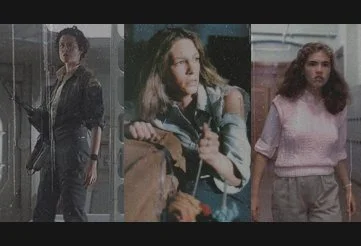
They’re terrified.
And they act anyway.
That’s the bit motivational culture frequently gets backwards.
You don’t necessarily become brave and then do the frightening thing.
Sometimes doing the frightening thing is how bravery gets made.
Make the call scared.
Apply scared.
Leave scared.
Start scared.
Say no scared.
Say yes scared.
Walk into the room with your knees doing whatever humiliating thing knees do when you’re terrified.
Fear doesn’t automatically mean: Stop.
Sometimes it means: Pay attention.
Then decide.
BONUS RULE: For God’s Sake, Turn the Light On
Why is nobody turning lights on?
Whole house dark.
Suspicious noise upstairs.
Possible murderer.
And apparently we’re preserving electricity now.
This is less metaphorical.
I simply want horror protagonists to discover lamps.
Thank you.
So, Would You Survive a Horror Movie?
Probably.
Unless you hear scratching beneath the floorboards and immediately decide to investigate wearing socks and carrying one candle.
Then I can’t help you.
But horror’s survival rules work surprisingly well because beneath the supernatural bits, horror is mostly about decision-making under pressure.
Who do you trust?
When do you leave?
What warning signs do you ignore?
When do you fight?
When do you stop fighting?
When do you change the plan?
When do you ask for help?
When do you accept that the thing chasing you isn’t going away simply because you’d prefer not to deal with it?
Maybe that’s why horror protagonists are so satisfying to watch.
They make terrible decisions so we can yell better ones at the screen.
DON’T GO IN THERE.
GET OUT OF THE HOUSE.
STOP TALKING TO THAT MAN.
WHY HAVE YOU DROPPED THE KNIFE?
And occasionally, somewhere between the blood, screaming and aggressively unreliable torch batteries, you realise: Huh. Might want to take my own advice.
So here’s your official survival checklist:
Trust the weird feeling.
Bring backup.
Don’t return to places you’ve already fought to escape.
Believe patterns.
Don’t engage with every demon.
Deal with obvious problems.
Change bad plans.
Expect old problems to require maintenance.
Question environments that require you to become less yourself.
And don’t wait to feel fearless.
There.
You are now approximately 34% more likely to survive a horror movie.*
*Statistic entirely fabricated.
Although still considerably more reliable than shouting “I’ll be right back” before wandering alone into the woods.
Your next survival lesson:


IN ODD WE TRUST Presents
A FIELD NOTES FROM THE DARK Production
Starring YOU, the protagonist in your own psychological thriller
Produced by A LIFETIME OF QUESTIONABLE DECISIONS
Directed by EXISTENTIAL DREAD Story by THAT VOICE IN YOUR HEAD AT 3AM
Costume Design BOOMSTICK ENERGY TEE Music by DISSONANT SYNTH and REGRET
Feeling seen? You Belong with us, Join THE CULT OF ODD Your backstage pass to PSYCHOLOGICAL
SURVIVAL GUIDES, HORROR COPING RITUALS and EMOTIONALLY UNSTABLE T-SHIRTS