Why we Like Being Scared: The Strange Psychology of Fear for Fun
Colour / Reading Time 6 mins Approx
There is a man with a chainsaw behind you! You scream! Your heart starts hammering. Your muscles tense. Your nervous system launches the emergency evacuation procedure. And then, approximately eleven seconds later, you’re laughing. Even stranger? … You paid for this.
Human beings spend an extraordinary amount of time trying to feel safe, secure and comfortable.
Then October arrives and apparently we’d like to be chased through a cornfield by Gary from Accounts wearing somebody else’s face.
Why?
Welcome to the deeply sensible psychology of being scared for fun.
Fear has a fairly straightforward job.
Something might kill us. Do something about it.
Your body doesn’t wait for a committee meeting.
Your attention sharpens.
Your heart rate changes.
Your muscles prepare for action.
Your brain becomes extremely interested in whatever just moved behind that curtain.
Useful when the threat is real.
Slightly excessive when the threat is a £12.99 streaming rental and you’re sitting under a blanket with a bowl of popcorn.
Yet millions of us deliberately seek this feeling out.
Horror movies.
Haunted houses.
Ghost tours.
Rollercoasters.
True crime.
Terrifying video games.
That inexplicable decision to investigate a noise downstairs at 2:13 a.m. despite having watched enough horror to know absolutely nothing good has ever followed this decision.
Psychologists sometimes call the deliberate pursuit of frightening entertainment recreational fear. And the interesting part isn’t that we enjoy fear despite being frightened.
It’s that, under the right circumstances, the fear itself appears to be part of the enjoyment.
Your Brain Knows Leatherface Isn’t Coming Home With You
Consider The Texas Chain Saw Massacre.
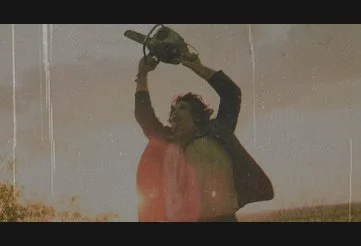
Everything about that film is designed to make you want to leave. Immediately.
The noise. The house. The dinner table. Leatherface. Franklin screaming. And whatever the hell is happening with Grandpa.
Your nervous system can react to what you’re seeing while another part of your brain understands: I am actually sitting on my sofa.
That’s the magic trick.
The threat feels real enough to generate fear, but you’re safe enough to enjoy what happens.
Researchers studying visitors to a commercial haunted attraction found something fascinating: enjoyment and fear didn’t simply increase together forever. Instead, enjoyment appeared to peak somewhere around a sweet spot of fear.
Too little? Boring.
Too much? Get me the fuck out of here.
Somewhere between the two? Again!
The researchers described it as a “just right” level of arousal.
Goldilocks. But with chainsaws.
Horror Gives Fear Boundaries
Real fear is horrible partly because you don’t control it.
You don’t choose when the phone call comes.
You don’t schedule the redundancy.
You don’t buy a ticket for turbulence.
Real fear barges into your life without knocking, drinks your milk and apparently has no plans to leave.
Horror is different.
You pressed play.
You walked into the haunted house.
You bought the ticket.
And crucially: you can leave.
That boundary changes the experience.
Fear becomes something you can approach instead of something simply happening to you.
You can sit inside an uncomfortable emotion while knowing that, in ninety minutes, the credits will roll and somebody called Second Assistant Prosthetic Slime Technician will appear on screen.
There’s something beautifully contained about that.
The monster has an ending.
Real life rarely offers the same courtesy.
Then There’s Morbid Curiosity
Why does everyone tell you not to look… and then you immediately look?
Because we’re curious about threatening things.
Researchers use the term morbid curiosity for our interest in information involving danger, death, violence and other threatening phenomena. It’s not necessarily evidence that you should be placed on some kind of watchlist. Research suggests it varies normally between people, just like other traits.
Horror gives that curiosity somewhere safe to go.
What would happen if civilisation collapsed?
What would a human being do to survive?
What happens when somebody becomes obsessed?
What does death look like?
What if something was standing outside your bedroom door?
What if your boyfriend invited you to his family’s secluded estate and everyone was behaving slightly too politely?
Horror lets us open doors we’d rather keep firmly locked in real life.
And peer through.
Fear Turns Ordinary Life Up to Eleven
This might be one of the simplest reasons horror is fun.
It makes you feel something. Very loudly.
Think about The Funhouse. Another film directed by Tobe Hooper.
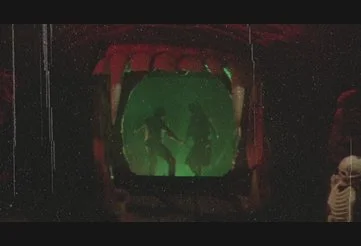
A carnival is already designed around sensory overload: lights, noise, distorted faces, rides, crowds, games.
Then horror says: Lovely. Let’s make it murderous.
Fear pulls you into the present.
You’re not thinking about Thursday’s dentist appointment.
You’re not mentally composing an email.
You’re not wondering whether you remembered to cancel that subscription.
There is a thing behind the curtain. We are dealing with the thing behind the curtain now.
For a little while, the mental tabs close.
Horror demands attention.
And for people whose brains normally resemble seventeen browser windows fighting over the same RAM, there’s something weirdly refreshing about that.
Why Do We Laugh After Being Terrified?
Watch people leaving a haunted house.
They’re often laughing.
Not polite little chuckles. Unhinged laughter.
Someone has just spent twenty minutes screaming while being pursued by a blood-covered stranger and now they’re doubled over beside the gift shop having the best evening they’ve had in months.
Part of that is release.
The scare happens.
The danger passes.
Your body comes back down. And suddenly the whole thing is ridiculous.
There’s also a social component to recreational fear. Being scared together can become play.
You grab someone’s arm.
They scream.
You scream because they screamed.
Neither of you knows what happened.
Now everyone is laughing.
The monster didn’t get you.
Again.
Horror Lets Us Practise Terrible Things Without Having Terrible Things Happen
Here’s where it gets particularly interesting.
One theory about frightening fiction is that stories can act as simulations. They let us mentally explore threatening situations without actually having to experience them.
Zombie outbreak? Let’s see how that goes.
Home invasion? Noted.
Alien organism aboard spaceship? Perhaps establish a more rigorous quarantine policy next time.
Do not split up.
Do not investigate basement.
Do not read Latin aloud.
If a child announces that someone called Mr Whispers lives inside the wall, move house immediately.
There.
Horror education complete.
But underneath the jokes, there’s a legitimate psychological idea here.
One study conducted during the COVID-19 pandemic found that horror fans reported less psychological distress, while fans of apocalypse / zombie / alien-invasion “prepper” genres reported greater preparedness as well. The study was correlational, so it doesn’t prove that watching horror makes someone resilient, but the findings were consistent with the possibility that frightening fiction gives us opportunities to mentally simulate threatening circumstances and practise dealing with negative emotions.
Which is considerably more impressive than your mother telling you horror would rot your brain.
We Also Like Proving That We Can Take It
There’s another little pleasure buried inside fear: I survived that.
It’s why people dare each other to watch certain films.
Why children gradually test scarier stories.
Why somebody who couldn’t finish a horror film five years ago can become the person calmly eating crisps while everybody else hides behind cushions.
Fear becomes a challenge.
Haunt plays beautifully with this because its characters deliberately enter an extreme haunted attraction believing they’re participating in controlled fear.
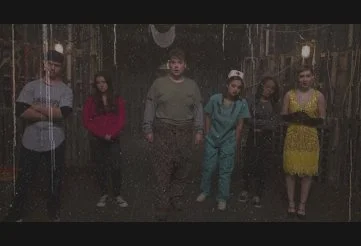
Initially, the fun comes from wondering: How much can I handle? Admittedly, things deteriorate somewhat from there.
Occupational health would have questions.
But that initial impulse is familiar.
Sometimes we don’t watch horror because we want to avoid fear.
We watch because we want to meet it.
Why Some People Absolutely Hate Horror
Of course, none of this means everybody secretly wants to spend Saturday night watching a possessed grandmother crawl across a ceiling.
People differ.
Tolerance for arousal differs.
Sensitivity differs.
What feels thrilling to one person can feel genuinely unpleasant to another.
Context matters too.
A movie you find deliciously creepy one night might hit completely differently when you’re already stressed, grieving or anxious.
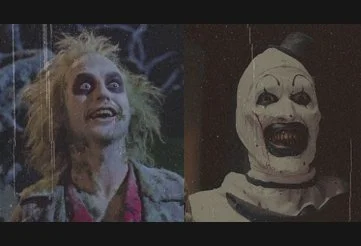
And remember that “just right” fear?
Your just right might be Beetlejuice.
Someone else’s might be Terrifier.
Humanity contains multitudes. And several questionable DVD collections.
There’s no psychological medal for watching the nastiest thing available.
The point isn’t more fear = better.
It’s that fear can become enjoyable when it exists inside the right psychological frame.
Maybe Being Scared Isn’t the Opposite of Feeling Safe
That’s the strange contradiction at the centre of horror.
We usually think safety means the absence of fear.
But recreational fear gives us something more interesting: fear experienced from within safety.
For a couple of hours, we can approach the things human beings normally avoid.
Death.
Violence.
Isolation.
Loss of control.
The unknown.
Monsters.
Our own capacity to become monstrous.
Then the lights come up.
We look around.
We’re still here.
Maybe that’s why horror has survived every attempt to dismiss it as trash, corruption, cheap thrills or something enjoyed exclusively by people with suspicious basements.
It gives us a controlled encounter with the uncontrolled.
A place where terrible things can happen… without it happening to us.
And sometimes, strangely, that’s fun.
So this October, when someone asks why you’d voluntarily spend two hours watching people make catastrophically poor decisions while something breathes heavily in the attic, you can tell them:
It’s recreational fear.
It’s psychological simulation.
It’s an exploration of human threat-processing and emotional regulation.
Or: I like spooky shit.
Both can be true.
Want to know what horror does to your brain? You might be interested in:
How Horror Movies Help You Deal With Real Life: The Psychology Behind Why Horror Heals.


IN ODD WE TRUST Presents
A FIELD NOTES FROM THE DARK Production
Starring YOU, the protagonist in your own psychological thriller
Produced by A LIFETIME OF QUESTIONABLE DECISIONS
Directed by EXISTENTIAL DREAD Story by THAT VOICE IN YOUR HEAD AT 3AM
Costume Design FEAR ME NOT FEAR TEE Music by DISSONANT SYNTH and REGRET
Feeling seen? You Belong with us, Join THE CULT OF ODD Your backstage pass to PSYCHOLOGICAL
SURVIVAL GUIDES, HORROR COPING RITUALS and EMOTIONALLY UNSTABLE T-SHIRTS