Facing the ‘F’ Word: The Dark Art of Bombing
Colour / Reading Time 9 mins Approx
You know that cold, sinking feeling when something crashes and burns so spectacularly you briefly consider moving to a remote cabin and changing your name? Yeah. That. Failure has a funny way of making you feel like the final survivor in a horror movie — bloody, exhausted, emotionally feral, and wondering where it all went wrong. But here’s the twist nobody tells you: bombing at something might actually be the most important thing you ever do.
Failure. We say it like it’s a curse word.
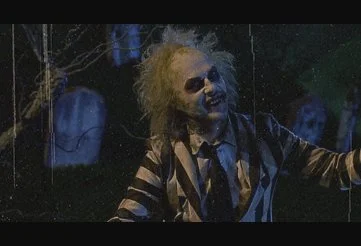
Like it’s Beetlejuice and if we say it three times in front of the mirror, we’ll summon some grotesque, failure-riddled version of ourselves who’ll stick around forever.
But failure isn’t just a Halloween-night ghoul out to ruin your reputation.
It’s a rite of passage, a trial by fire, a training ground for the kind of strength you never knew you had.
Every legend, from Rocky Balboa to Ripley in Aliens, has failed, bled, and learned the hard way.
And if they can stare down relentless villains, killer xenomorphs, and face plants, so can you.
You’re here because you’re human. Which means you’re here to fail.
The trick is learning how to let that failure fuel you, even when it feels like it’s winning.
Why Failure Feels Like Facing Your Own Horror Movie Villain
Let’s talk horror flicks.
One of the most gruelling tests of survival comes from The Descent.
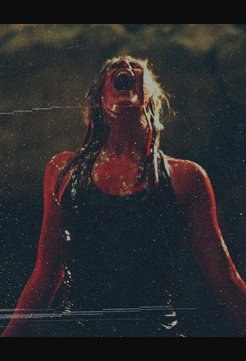
Here’s our girl Sarah, surrounded by a labyrinth of darkness, claustrophobic caves, and literal monsters.
Every setback has you thinking, “There’s no way she’ll get out of this.” But spoiler alert: she does — just not without bruises, a new set of nightmares, and survival skills honed like a blade.
Failure is a descent of its own kind.
You get knocked down, buried in the dark, and confronted with parts of yourself that are dying to retreat.
But just like Sarah’s journey, there’s a way out.
It just happens to look like the least likely route.
Failure forces us to crawl through our limits, revealing new ways of thinking and daring us to rise from rock bottom.
The Hidden Upside to Your Downfall: What Failure Teaches That Success Never Will
The beauty of failure is that it’s brutal, honest, and cuts out all the niceties.
It’s the drill sergeant of life that’ll make you reframe your strategies and face up to the raw truth about what didn’t work and why.
When you fail, you get a front-row seat to what you’re really made of.
Not the person you hope you are. But the one who emerges when things go sideways.
And that? That’s irreplaceable.
Success, on the other hand, has a tendency to gloss over our weaknesses.
When things are easy, we’re in cruise control.
But failure is where you uncover the core truths. The gritty details of what works and what doesn’t.
It’s only when you’re face-first in the dirt that you can see where the gaps were and what you’ll do differently next time.
“Final Girl Energy”: Why Survivors Make the Best Champions
In horror, there’s a trope called the “Final Girl”.
She’s the last one standing. The one who’s run, screamed, fought, and ultimately faced down the monster.
Think Laurie Strode from Halloween. She’s been through hell, and by the end of the movie, she’s all but immune to fear.
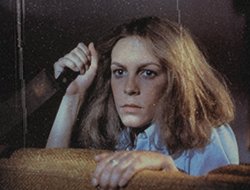
That’s the power of failure: it forces you to face your “monsters” until they don’t terrify you anymore.
It makes you the Final Girl (or guy) of your own story, someone who has earned resilience through every painful, bruising setback.
When you’re used to failing, you get used to survival.
Failure becomes something you can laugh in the face of, because you’ve been through it so many times that you don’t even flinch.
You start to realise that it’s not your successes that make you strong.
It’s the scars you got along the way.
Like Laurie, who’s faced down a knife-wielding Michael Myers more times than any of us would willingly count, you become someone who doesn’t break under pressure.
You bend, snap back, and get smarter with every encounter.
The Psychology of Resilience: Rewiring Your Brain to Love Failure
Psychologically, failure is a mixed bag of cognitive dissonance, shattered confidence, and, ironically, motivation.
Research on resilience shows that those who experience adversity become more adaptive, recalibrating expectations and developing emotional immunity over time.
In fact, post-traumatic growth is real. People who face down their worst days often come back stronger, not because they’re immune to pain but because they’ve learned to integrate it into their narrative.
In terms of brain chemistry, failures give us a nice little boost of cortisol, that stress hormone that makes us feel anxious and alert.
This is evolution’s way of sharpening your senses, pushing you to react differently next time.
Failure quite literally rewires your brain to recognise mistakes as lessons rather than threats.
How to Wield Your Failures as Tools Instead of Weapons
Stop Judging, Start Learning:
Stop looking at failure as a personal indictment and start looking at it as an invitation.
Ask yourself:
What could I have done differently? This isn’t about being nicer to yourself (though self-compassion always helps) it’s about not wasting a perfectly good setback.
Separate Yourself from the Failure:
One of the most dangerous things we tend to do, is identify ourselves with our failures.
So here’s the deal:
You are not your failures.
You are someone who has failed — and there’s a world of difference.
Just because something didn’t go well doesn’t mean you are flawed.
Just look at Carrie. She was pushed, prodded, and cornered, but at her core, she was more powerful than anyone knew.

Don’t confuse a bad chapter with a bad story.
See Failure as a Step, Not the End:
Failure is a chapter in your story, not the end. The real horror is in never trying.
When you fail, you’re just figuring out what doesn’t work, so you can course-correct.
Edison “failed” a thousand times to invent the light bulb, and yet every time, he was one step closer.
Take your failures and stack them up like the stepping stones they are.
Failure Is Basically Your Nervous System Getting Possessed
One of the cruelest things about failure is how physical it feels.
Your stomach drops.
Your chest tightens.
Your brain starts replaying every awkward moment like a cursed VHS tape from The Ring.
Suddenly your
failed launch
awkward conversation
rejected pitch
disastrous life decision
Feels less like “an event” and more like proof that you should probably disappear into the woods forever.
Which, coincidentally, is exactly how half the characters in horror movies end up possessed.
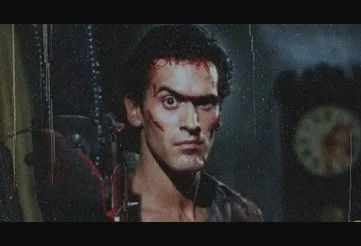
Take Evil Dead II for instance. Poor Ash Williams starts out as an ordinary guy having a terrible weekend in a cabin.
By the end? He’s chainsaw-handed, sleep-deprived, screaming into the void, and fighting demons with the energy of someone who’s missed three therapy appointments and a rent payment.
And honestly? That’s failure.
Not the polished Instagram quote version of failure where entrepreneurs smile and say things like, “I learned so much.” No.
Real failure feels like your hand is possessed and trying to murder you while the furniture laughs.
But here’s what matters: Ash adapts.
Messily.
Loudly.
Covered in blood and bad decisions.
But he adapts.
That’s resilience.
Not elegance.
Not perfection.
Adaptation.
The Cabin in the Woods Was Right: Most People Are Following a Script
One of the sneakiest reasons failure hurts so badly is because most of us think life is supposed to follow a neat little narrative arc.
Work hard.
Get rewarded.
Find purpose.
Become wildly successful.
While somehow maintaining hydrated skin and inbox zero.
Cute.
But The Cabin in the Woods understood something deeper:
Most people are unconsciously following scripts they didn’t even write.
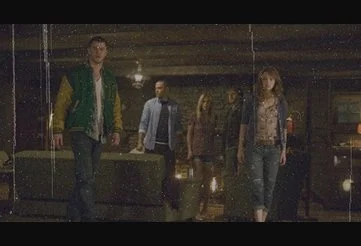
The athlete.
The scholar.
The virgin.
The fool.
Everyone shoved into roles, moving predictably toward disaster.
Sound familiar?
Failure often happens when your real self collides with the script you were handed.
The career everyone said made sense suddenly drains your soul.
The relationship you fought to keep becomes emotionally unliveable.
The “safe” path starts feeling like a slow psychological haunting.
And when that script falls apart, it feels catastrophic because you think you failed.
But maybe the role failed you.
Maybe the collapse wasn’t punishment.
Maybe it was interruption.
Maybe your life detonated because some part of you could no longer survive inside the wrong story.
That’s not weakness.
That’s the beginning of awareness.
Shaun of the Dead and the Danger of Sleepwalking Through Your Own Life
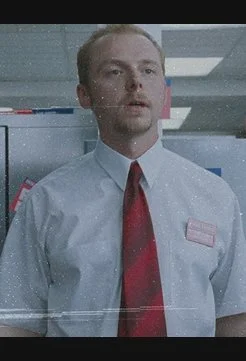
What makes Shaun of the Dead brilliant isn’t just the comedy — it’s that Shaun is already living like a zombie before the apocalypse even starts.
Wake up.
Go to work.
Zone out.
Repeat.
Honestly? Terrifying.
Failure often barges into our lives because we’ve been emotionally sleepwalking for years.
Sometimes the failed relationship, burnout, career disaster, or identity crisis isn’t the horror story it seems… it’s the alarm clock.
Without failure, plenty of people would stay stuck forever in lives that barely fit them.
That doesn’t mean failure feels good. It means it wakes you up.
And waking up is loud.
It’s uncomfortable.
It ruins the illusion.
But once you’ve seen the truth — really seen it — you can’t unsee it.
Suddenly you realise you were:
And yes, that revelation may arrive wearing sweatpants and existential dread at 2 AM.
Still counts.
Why Perfectionists Secretly Fear Failure More Than Anyone
Perfectionists don’t actually fear failure. They fear exposure.
Failure threatens the carefully constructed identity they’ve built around being competent, reliable, smart, talented, “the one who has it together.”
Which is why even small mistakes can feel emotionally apocalyptic.
One rejection email? And suddenly your brain acts like the villagers in a Dracula movie.
Torch the castle.
We ride at dawn.
Everything is doomed.
Perfectionism turns failure into identity theft. It whispers: “If you fail, people will finally see who you really are.”
But horror movies teach us something interesting about survival:
The characters who adapt survive.
The ones obsessed with maintaining control usually don’t.
The hyper-confident guy who ignores the warnings? Gone by Act II.
The character convinced they’re untouchable? Absolutely getting dragged into the darkness.
Meanwhile, the survivors are usually the ones willing to learn, pivot, improvise, and accept reality quickly.
In other words:
Resilience beats perfection every time.
Failure Builds a Weird Kind of Courage
Not motivational-speaker courage.
Not “rise and grind” courage.
Real courage.
The kind where you realise: “Oh. I survived that. Interesting.”
There’s something psychologically powerful about discovering you can survive embarrassment, rejection, disappointment, uncertainty, or things not going according to plan.
Because once you survive failure, fear loses some of its authority.
You stop treating discomfort like death.
You stop catastrophising every wrong turn.
You stop believing mistakes are the end of the story.
And eventually? You become harder to control.
That’s the real transformation.
People who’ve never failed often live cautiously because they’re terrified of losing what they have.
But people who’ve failed — and survived — develop a strange freedom.
They know they can rebuild.
That confidence is earned in the dark.
The Real Reason Failure Makes You Feel So Alone
Failure isolates people because we live in a culture obsessed with performance.
Nobody posts the nervous breakdown before the win.
Nobody posts the crying-on-the-bathroom-floor phase.
Nobody posts the emotional equivalent of crawling through a haunted basement with one flashlight battery left.
So when you fail, it feels like everyone else has life figured out except you.
But that illusion falls apart quickly when you look closer.
Every creative person you admire has bombed.
Every successful person has doubted themselves.
Every interesting life contains chaos somewhere in the middle chapters.
Failure isn’t evidence that you’re broken. It’s evidence that you participated.
And honestly? Participation is rare.
A shocking number of people never risk enough to fail spectacularly in the first place.
Embracing Failure as Part of the Journey
Imagine if every character in a horror movie ran from the first sign of trouble. It would be a very short film.
But the heroes we remember - the ones who make it through - are the ones who face the darkness head-on, fail spectacularly, and still come back swinging.
You might be working on a dream, a relationship, or a version of yourself that feels like it’s still miles away.
And when you fail, it’s easy to think you’re somehow “behind” or doing something wrong.
But that’s a trap.
Failure is part of the path, and if you’re doing it right, you’ll fail again. And again.
Until one day you don’t.
And that’s where the magic happens.
The Monsters Were Never the Point
Here’s the thing horror movies understand better than self-help books:
The monster is rarely the real story.
The zombie.
The demon.
The masked killer.
They’re just the thing that forces the character to become someone new.
Nobody walks into the woods as the Final Girl.
Nobody starts the movie resilient.
Nobody begins the story knowing exactly what they’re capable of.
They find out because everything goes wrong.
Because they get lost.
Because they fail.
Because the plan explodes.
Because reality refuses to cooperate.
That’s why failure feels so awful in the moment.
It’s not just showing you what broke.
It’s showing you what needs to evolve.
And evolution is rarely comfortable. Ask any werewolf.
So the next time you’re in that dark basement of failure…
Face your monsters, pick yourself up, and remind yourself that failure isn’t where your story ends.
It’s where it starts to get good.
Failure isn’t where your story ends.
It’s where it starts to get interesting.
And if you’re staring at the ruins wondering why your old life suddenly feels like it belongs to somebody else…
This Doesn’t Feel Like Me was written for exactly that moment.
Because sometimes the most terrifying thing isn’t failing.
It’s realising you’ve outgrown the person you were trying so hard to be.


IN ODD WE TRUST Presents
A FIELD NOTES FROM THE DARK Production
Starring YOU, the protagonist in your own psychological thriller
Produced by A LIFETIME OF QUESTIONABLE DECISIONS
Directed by EXISTENTIAL DREAD Story by THAT VOICE IN YOUR HEAD AT 3AM
Costume Design BOOMSTICK ENERGY TEE Music by DISSONANT SYNTH and REGRET
Feeling seen? You Belong with us, Join THE CULT OF ODD Your backstage pass to PSYCHOLOGICAL
SURVIVAL GUIDES, HORROR COPING RITUALS and EMOTIONALLY UNSTABLE T-SHIRTS