Why the Monster is Usually More Interesting Than the Hero
Colour / Reading Time 7 mins Approx
Nobody leaves a horror movie saying: “You know who I couldn’t stop thinking about? The emotionally stable man with good cardiovascular health.” We remember the monster. The teeth. The claws. The mask. The tragic backstory involving villagers, laboratories or extremely questionable parenting. Let’s Be Honest… You Didn’t Buy the T-Shirt for the Final Guy.
We remember Dracula standing at the top of the staircase looking like he hasn’t paid council tax since 1897.
We remember Frankenstein’s Monster stumbling through the village.
We remember The Creature rising from The Black Lagoon.
We remember Pinhead arriving dressed like the regional manager of Hell.
The hero? Lovely person. Hope they’re doing well.
But the monster gets the poster.
The monster gets the action figure.
The monster gets tattooed on someone’s thigh thirty years later.
Which raises an interesting question: Why are horror movie monsters so much more interesting than the heroes trying to kill them?
Because the best horror movie monsters get to do something heroes rarely can.
They get to be strange.
Heroes Have a Terrible Job
Being the hero sounds glamorous until you look at the actual job description.
Maintain audience sympathy.
Make sensible decisions.
Demonstrate courage.
Protect innocent people.
Develop emotionally.
Survive.
Preferably don’t eat anybody.
It’s restrictive.
The traditional hero exists partly to represent the world as it should be. They’re the person trying to put everything back where it belongs.
Then the monster crashes through the wall wearing somebody’s spleen as a scarf.
Now we have a movie.
Monsters don’t have to be aspirational.
They don’t have to be pleasant.
They don’t have to demonstrate excellent communication skills.
They can be grotesque, excessive, furious, needy, sexually confusing, socially unacceptable and covered in swamp vegetation.
They are allowed to be too much.
And “too much” is almost always more interesting than “appropriately adjusted.”
The Monster Gets the Better Entrance
Consider The Creature From The Black Lagoon.
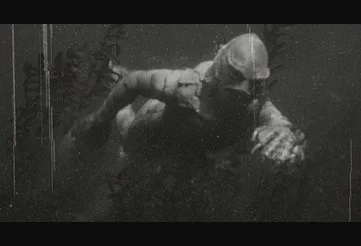
The humans arrive with boats, equipment and sensible khaki clothing. Perfectly respectable.
Meanwhile, beneath them, a prehistoric fish-man is silently swimming through the murky water like the world’s least appropriate synchronized swimmer.
Who are you watching?
Exactly.
Monster entrances have always understood the importance of branding.
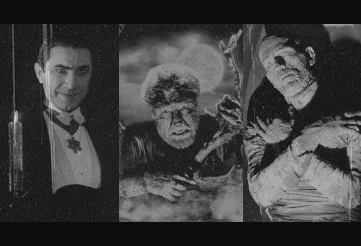
Dracula doesn’t pop round at 2 p.m. carrying a Tesco bag. He appears at midnight. There are candles. Possibly wolves. Definitely a cape.
The Wolf Man gets a full moon.
The Mummy gets an ancient curse.
Frankenstein’s Monster gets lightning.
Humans enter rooms.
Monsters make an entrance.
Frankly, there’s a lesson in commitment here.
If you’re going to become an immortal creature of darkness, at least develop a visual identity.
Monsters Have Lore
Heroes have biographies.
Monsters have lore.
There’s a difference.
A hero might have a job, a difficult relationship with their father and an apartment they absolutely could not afford on their stated salary.
A monster gets: Born during an eclipse. Buried beneath the ruined abbey. Awakened every hundred years when the bells ring thirteen times.
Immediately more interesting.
We want to know:
Where did it come from?
Why does it look like that?
What does it want?
Can it be killed?
Why is there a portrait of it dated 1647?
Why did nobody mention the basement?
Good monsters create questions merely by existing.
And humans are terrible at leaving mysteries alone.
Tell us there’s a locked door and we’ll spend ninety minutes yelling at somebody not to open it while desperately wanting to know what’s behind it.
The Best Horror Monsters Aren’t Completely Monstrous
This is where things get interesting.
The monsters that endure usually aren’t just ‘Things That Kill People’.
There’s something recognisable underneath.
Loneliness.
Rage.
Hunger.
Grief.
Rejection.
Shame.
Desire.
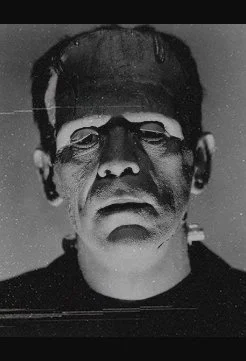
Frankenstein’s Monster is frightening. He’s also abandoned almost immediately after being brought into existence and then discovers that the world is horrified by him.
Bit of a rough first week.
The tragedy isn’t simply that he’s monstrous. It’s that other people decide what he is before he gets much chance to decide for himself.
Suddenly the enormous stitched corpse isn’t quite so alien.
The most memorable horror movie monsters aren’t frightening simply because they’re evil. They’re frightening because there’s often something painfully human underneath the teeth, claws and questionable personal hygiene.
You’ve probably never been assembled from stolen body parts during a thunderstorm.
Hopefully.
But being judged before someone knows you?
Being rejected because you’re different?
Wondering whether there’s somewhere you might actually belong?
Ah.
There’s the human part.
Sometimes the Monster is Having a Perfectly Reasonable Reaction
This is particularly true when you revisit horror as an adult.
At fifteen: “My God! The monster!”
At forty: “Well, to be fair, everybody did break into its house.”
The monster was sleeping peacefully for 400 years. Then some archaeologist named Gerald ignored seventeen warnings, opened the sacred tomb and stole the amulet.
And now we’re surprised there’s been an incident?
Even King Kong basically begins with humans discovering an enormous creature, kidnapping him, shipping him across the world and putting him on stage.
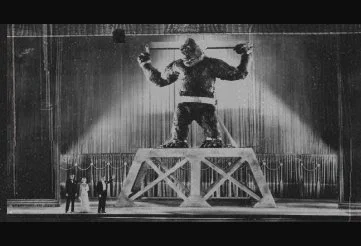
Then everybody acts astonished when the evening doesn’t go according to schedule.
Maybe Kong didn’t need to be destroyed.
Maybe Kong needed boundaries.
And a solicitor.
Monsters Say the Things Polite Society Doesn’t Want to Say
This is where horror gets clever.
Because monsters have always carried our uncomfortable stuff.
Our fears about disease.
Sex.
Death.
Bodies.
Ageing.
Violence.
Difference.
People we don’t understand.
Parts of ourselves we’d rather pretend aren’t there.
A monster can take something abstract and give it teeth.
That’s why they change with us.
One generation’s monster is foreign invasion.
Another’s is nuclear radiation.
Another’s is infection.
Technology.
Environmental collapse.
The neighbours.
The children.
Your own body.
That suspiciously inexpensive smart speaker currently listening from the corner.
Monsters reveal what we’re frightened of.
But sometimes they reveal something else: what we’ve decided shouldn’t be allowed to exist.
And those aren’t always the same thing.
The Monster Doesn’t Fit In
Here’s where things get particularly interesting for the Cult of Odd.
Horror monsters are outsiders by definition. And many of the most iconic monsters in horror movies became unforgettable precisely because they don’t fit comfortably into the human world.
They exist beyond the acceptable boundary.
Too strange.
Too ugly.
Too dangerous.
Too unnatural.
Too different.
They don’t belong in the village.
Or the suburb.
Or the laboratory.
Or polite society.
And horror has spent more than a century asking a fascinating question: What happens when the thing that doesn’t belong refuses to disappear?
Sometimes, admittedly, it eats six teenagers. We’re not endorsing every aspect of the methodology here. But it’s not difficult to understand why outsiders have often found monsters compelling.
Because if you’ve ever felt strange in a room full of people who seem to understand rules you never received, the monster occupies familiar territory.
Everyone else seems to agree on what’s normal.
And there you are.
Standing slightly outside it.
Hopefully with fewer bolts in your neck.
Being Monstrous Can Look Suspiciously Like Refusing to Behave
Look at Ginger Snaps.
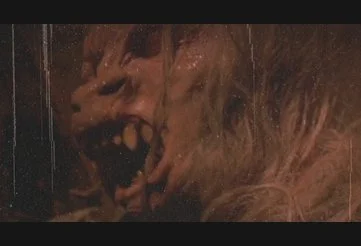
Ginger’s transformation is monstrous, yes.
There are claws. Blood. Hair in new and inconvenient places.
But the film also gleefully tangles monstrosity with puberty, female anger, sexuality and the sheer horror of becoming something the world suddenly has opinions about.
Or take May.
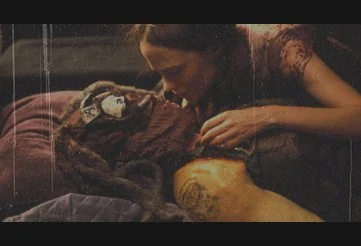
She’s awkward. Lonely. Socially misaligned. Desperate for connection. And yes, she eventually makes several decisions that would be difficult to defend in a tribunal.
But long before May becomes frightening, other people already find her weird.
That’s important.
Because horror often blurs the line between: This person is dangerous and This person makes us uncomfortable because they don’t behave correctly.
Those are very different things.
Society isn’t always brilliant at telling them apart.
Villagers are Extremely Confident for People Carrying Flaming Sticks
Monster movies love a mob.
Something unusual appears. Within minutes somebody has located pitchforks. Where are these people storing all these pitchforks? Is there a cupboard?
EMERGENCY MOB SUPPLIES
Torches
Rope
Pitchforks
Strong opinions about anybody different
The mob is interesting because it transforms normal people into something frightening.
Individually, they’re villagers.
Collectively, they’re absolutely certain they know who the monster is.
Horror repeatedly plays with this reversal.
Sometimes the creature is dangerous.
Sometimes the humans are worse.
Frequently everybody could benefit from having a sit down.
But ambiguity is precisely why monsters stay with us.
A villain you completely understand stops being frightening fairly quickly.
A monster that makes you wonder who you’re supposed to sympathise with follows you home.
Horror Movie Heroes Win. Monsters Linger.
Here’s the real difference.
Heroes usually resolve the story. Monsters haunt it.
You leave the cinema wondering about them.
Maybe they deserved what happened.
Maybe they didn’t.
Maybe they were evil.
Maybe they were wounded.
Maybe they represented something.
Maybe you recognised something in them that you weren’t entirely comfortable recognising.
That’s why horror movie monsters can become more culturally powerful - and more memorable - than the heroes fighting them.
The hero tells us: This is who you should be.
The monster asks: What are you afraid you might be?
Or worse: What if the thing you’ve been taught to hate isn’t actually the worst thing in the room?
Much more interesting question.
And Let’s Face it: The Merchandise is Better
There is also a less psychologically sophisticated explanation.
Monsters look cool.
You can write 3,000 words about cultural otherness and repression, but at some point you have to acknowledge that a nine-foot biomechanical alien with acid blood simply has an advantage in the merchandising department.
Nobody wants a lunchbox featuring: MAN WHO MADE RESPONSIBLE DECISION
We want fangs.
Tentacles.
Masks.
Claws.
Impossible anatomy.
Dramatic silhouettes.
Maybe a tasteful amount of ectoplasm.
Heroes tend to look like people.
Monsters get design departments.
It’s not a fair fight.
Maybe We Were Never Supposed to Hate the Monster
Not every monster is misunderstood. Some of them really are bastards.
This is horror, not a rehabilitation programme for chainsaw enthusiasts.
But the best monsters complicate things. They make us look twice.
At fear.
At difference.
At what society calls normal.
At what gets pushed outside.
At the parts of ourselves we’ve been encouraged to hide because they’re inconvenient, strange, embarrassing or simply difficult to explain at dinner.
Perhaps that’s why we keep coming back to them.
The hero survives the movie.
The monster survives the culture.
Decades later, we’re still drawing them.
Dressing as them.
Collecting them.
Defending them.
Writing essays about why they were actually misunderstood.
Putting them on T-shirts.
Maybe it’s because heroes show us the person we’re supposed to want to become.
But monsters?
Monsters have always belonged to everyone who looked at normal and thought: Yeah. I’m not sure I want to be that.
And frankly?
They usually have better outfits.
DID THIS ONE SPEAK TO YOU? HEART IT.
Still rooting for the weird ones? There’s a reason horror keeps handing survival to the people who never quite fit in.
→ Read: Why Outsiders Are Always the Heroes in Horror (And What That Says About You)


IN ODD WE TRUST Presents
A FIELD NOTES FROM THE DARK Production
Starring YOU, the protagonist in your own psychological thriller
Produced by A LIFETIME OF QUESTIONABLE DECISIONS
Directed by EXISTENTIAL DREAD Story by THAT VOICE IN YOUR HEAD AT 3AM
Costume Design MONSTER ORIGINS COLLECTION Music by DISSONANT SYNTH and REGRET
Feeling seen? You Belong with us, Join THE CULT OF ODD Your backstage pass to PSYCHOLOGICAL
SURVIVAL GUIDES, HORROR COPING RITUALS and EMOTIONALLY UNSTABLE T-SHIRTS